For industrial applications involving the handling of gypsum ash, efficient and reliable material transport is crucial. The gypsum ash pneumatic conveying system, provided by Shandong HeadPowder Engineering Co., Ltd., offers a sophisticated solution that ensures smooth operation and optimal performance. This system is designed to handle the unique characteristics of gypsum ash, such as its density, moisture content, and particle size, while maintaining high levels of efficiency and safety. The system is engineered to meet the demands of various industrial sectors, including power plants, cement production, and construction material processing, where the handling of gypsum ash is a common requirement.
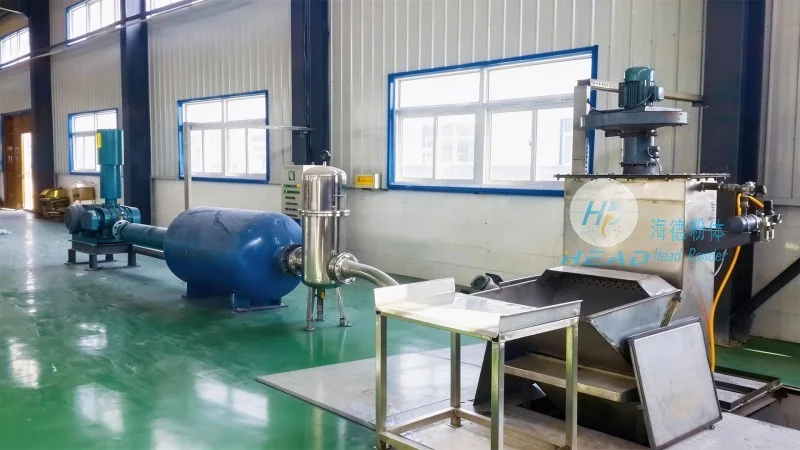
Key Components and Their Roles
The gypsum ash pneumatic conveying system consists of several critical components that work in tandem to achieve effective material transport. These components include the hopper, which serves as the material storage and feeding unit; the conveyor pipeline, which transports the material through the system; the air compressor, which generates the necessary air pressure for conveying; the control system, which regulates the operation of the entire process; and the discharge unit, which releases the material at the destination. Each component plays a vital role in ensuring the system operates as intended, with the hopper providing a consistent feed, the pipeline facilitating the movement of material, the air compressor maintaining the required pressure, the control system overseeing the entire operation, and the discharge unit ensuring the material is delivered to the correct location. The materials used for the components are selected to withstand the corrosive and abrasive nature of gypsum ash, ensuring long-term durability and minimal maintenance.
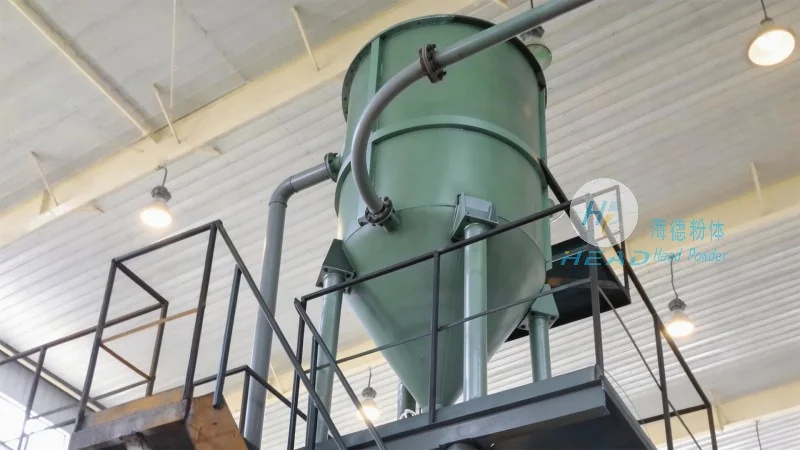
Operation Process of the Gypsum Ash Pneumatic Conveying System
The operation of the gypsum ash pneumatic conveying system follows a systematic process that ensures the efficient transport of gypsum ash from the source to the destination. The process begins with the material being fed into the hopper from the storage area. The hopper is equipped with a feeding mechanism, such as a screw feeder or a rotary valve, which controls the flow rate of the material into the system. The feeding mechanism ensures that the material is introduced into the system at a consistent rate, preventing overloading or underloading of the conveyor pipeline. Once the material is in the hopper, the air compressor is activated, generating high-pressure air that is introduced into the conveyor pipeline. The high-pressure air creates a flow that pulls the gypsum ash particles through the pipeline, moving them from the hopper to the discharge point. The control system monitors the pressure and flow rates, adjusting the air compressor output as needed to maintain optimal conveying conditions. The material is then discharged from the pipeline into the receiving hopper or storage area at the destination. The discharge unit ensures that the material is released smoothly and without blockages, preventing any material buildup or system downtime. Throughout the process, the system ensures minimal material loss and high conveying efficiency, making it an ideal solution for industrial applications.
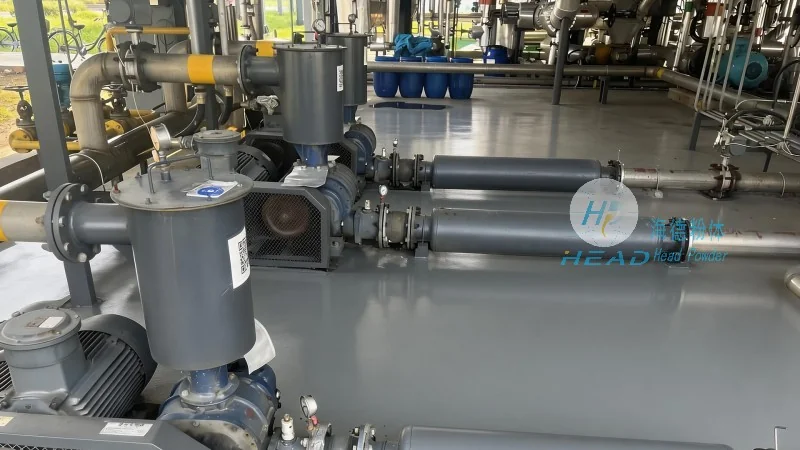
Working Principle of the Gypsum Ash Pneumatic Conveying System
The working principle of the gypsum ash pneumatic conveying system is based on the principle of pneumatic transport, where material is conveyed through a pipeline using a gas stream. In this system, the air compressor generates a high-pressure air stream that is introduced into the conveyor pipeline. The gypsum ash particles are then entrained by the air stream and carried through the pipeline to the discharge point. The system utilizes positive pressure or negative pressure (or a combination of both) to achieve the desired conveying effect. The positive pressure system involves the air compressor blowing air into the pipeline, pushing the material forward, while the negative pressure system involves creating a vacuum at the discharge end, pulling the material through the pipeline. The combination of these principles allows for flexible and efficient material transport, adapting to different operational requirements and material characteristics. The system is designed to handle various particle sizes and moisture contents of gypsum ash, ensuring consistent performance and reliability. The air flow rate and pressure are carefully controlled to maintain the optimal conveying velocity, which is crucial for preventing material deposition and ensuring smooth operation.




