HeadPowder, a leading engineering company based in Shandong, China, specializes in the design, manufacturing, and installation of advanced pneumatic conveying systems for the cement industry. The company's expertise lies in providing efficient and reliable solutions for transporting cement raw materials, which are crucial for the production of high-quality cement. This article delves into the operation process and working principle of a cement raw material pneumatic conveying machine, highlighting its key components, operational steps, and technical advantages.
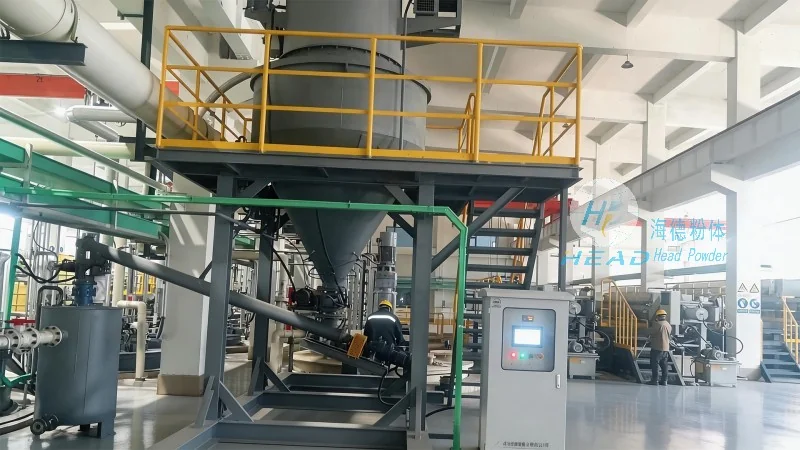
Overview of Cement Raw Material Pneumatic Conveying Systems
Cement raw material pneumatic conveying machines are essential equipment in modern cement production facilities. These systems are designed to transport bulk materials such as limestone, clay, and iron ore from storage silos or raw material processing units to the cement kiln or other processing stages. The primary goal is to ensure a continuous, efficient, and dust-free transfer of raw materials, which directly impacts the overall productivity and quality of the cement production process. HeadPowder's systems are engineered to meet the stringent requirements of the cement industry, offering high reliability, low maintenance, and energy efficiency.
Key Components of the Pneumatic Conveying Machine
The cement raw material pneumatic conveying machine consists of several critical components that work in tandem to achieve the material transfer. These components include the hopper, feeder, air compressor, conveying line, and receiver. The hopper serves as the storage and feeding unit, where raw materials are loaded and then fed into the system. The feeder, typically a rotary valve or a screw feeder, controls the flow rate of the material into the conveying line. The air compressor generates the necessary air pressure to move the material through the pipeline. The conveying line, usually made of stainless steel or other corrosion-resistant materials, transports the material from the feeder to the receiver. The receiver is the final storage unit where the material is deposited before being used in the cement production process.
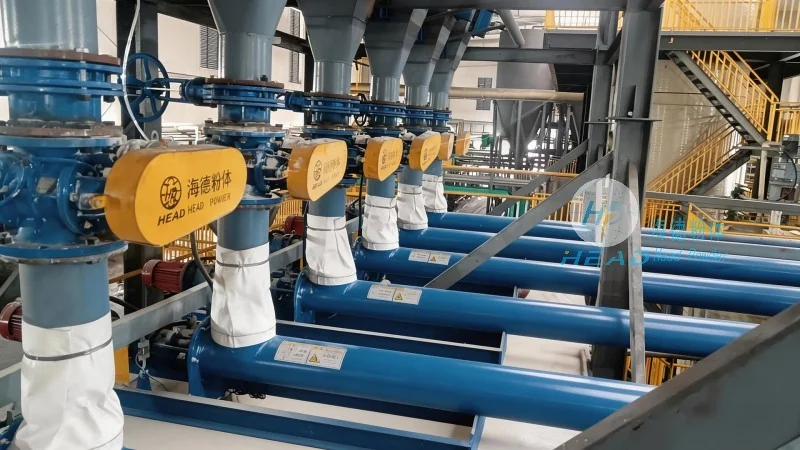
Operation Process of the Cement Raw Material Pneumatic Conveying Machine
The operation of the cement raw material pneumatic conveying machine follows a systematic sequence to ensure smooth and continuous material transfer. The process begins with the loading of raw materials into the hopper. Once the hopper is filled, the feeder starts to discharge the material at a controlled rate. Simultaneously, the air compressor activates and generates the required air pressure. The compressed air is then introduced into the conveying line, creating a flow that carries the raw material particles along the pipeline. As the material moves through the line, it is suspended and transported by the air stream. The receiver at the end of the line collects the material, which is then discharged into the next stage of the cement production process. The entire operation is monitored by the control system, which adjusts the air pressure and material feed rate to maintain optimal performance. HeadPowder's systems are equipped with advanced control panels that allow operators to monitor and adjust the process parameters in real-time, ensuring consistent and efficient operation.
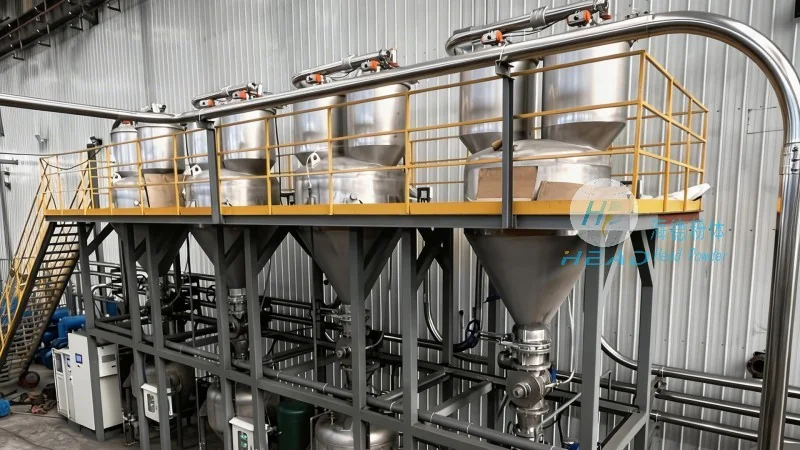
Working Principle of the Pneumatic Conveying Machine
The working principle of the cement raw material pneumatic conveying machine is based on the use of compressed air to transport bulk materials. The system operates on the principle of fluidization, where the raw material particles are suspended in the air stream and carried through the pipeline. The air compressor provides the necessary pressure to create a high-velocity air flow, which overcomes the gravitational force acting on the material particles. The material is then carried along the conveying line until it reaches the receiver, where the air is separated from the material and discharged through a filter system. The separated air is then recycled back to the air compressor, reducing energy consumption and operating costs. HeadPowder's pneumatic conveying systems utilize a combination of positive and negative pressure conveying methods, depending on the application requirements. Positive pressure systems use compressed air to push the material through the line, while negative pressure systems use suction to draw the material from the hopper. This flexibility allows the systems to be adapted to various production scenarios and material characteristics.
Technical Advantages and Applications
HeadPowder's cement raw material pneumatic conveying machines offer several technical advantages that make them ideal for the cement industry. These advantages include high conveying capacity, which allows for the efficient transfer of large quantities of raw materials. The systems are also designed for low maintenance, with easy access to components for inspection and replacement. Additionally, the use of corrosion-resistant materials ensures long-term durability and reliability. The systems are suitable for a wide range of applications, including the transportation of limestone, clay, and other raw materials used in cement production. They are also adaptable to different production scales, from small-scale plants to large industrial facilities. HeadPowder's expertise in customizing systems to meet specific customer requirements ensures that the machines are optimized for each application, maximizing efficiency and minimizing operational costs.




