HeadPowder, a leading manufacturer based in Shandong, China, specializes in the design and production of advanced pneumatic conveying systems tailored for the battery material industry. These systems are crucial for efficiently handling and transporting various battery raw materials, such as lithium compounds, graphite, and other powders, with precision and reliability. The following sections will delve into the operation process and working principles of such equipment, highlighting the key components and the step-by-step procedures involved.
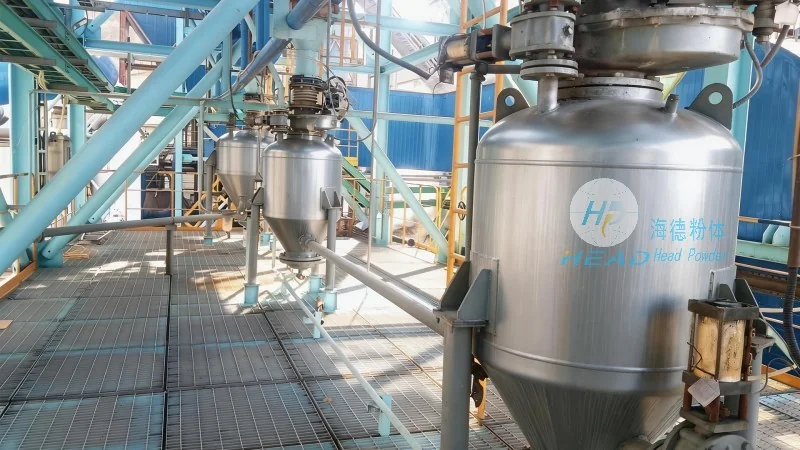
Key Components of Pneumatic Conveying Systems
The pneumatic conveying equipment for battery materials typically consists of several essential components that work in tandem to ensure smooth material handling. These include the hopper for material storage, a feeding mechanism to control the flow rate, a conveying pipeline where the material is transported, a separation unit to recover the material from the air stream, and a dust collection system to maintain environmental compliance. Each component plays a vital role in the overall efficiency and safety of the operation.
Operation Process of Pneumatic Conveying Equipment
The operation process of the pneumatic conveying system for battery materials begins with the loading of raw materials into the hopper. The material is then fed into the conveying pipeline through a controlled feeding device, such as a rotary valve or a screw feeder, which regulates the flow rate to prevent clogging and ensure consistent transport. As the material enters the pipeline, a high-pressure air stream is introduced, creating a gas-solid two-phase flow. This air stream propels the material particles through the pipeline, maintaining a stable velocity and preventing particle degradation. The conveying process continues until the material reaches the destination point, such as a storage silo or a processing unit.
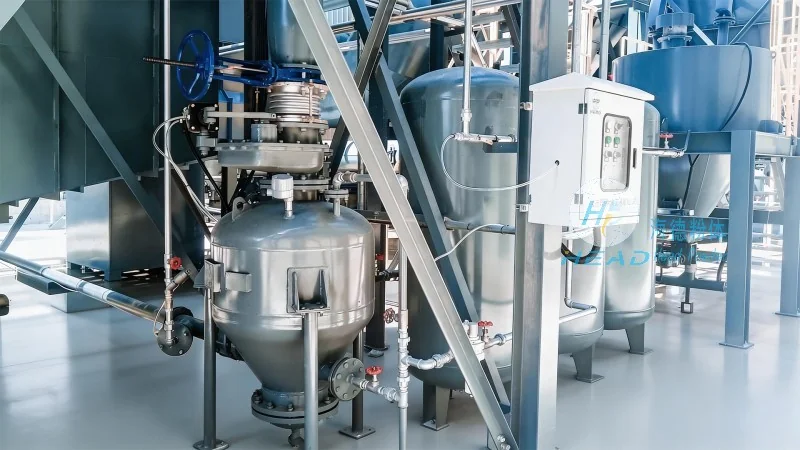
Working Principle of Pneumatic Conveying
The core working principle of pneumatic conveying equipment is based on the movement of material particles within a high-pressure air stream. The system operates by generating a pressure differential between the inlet and outlet of the pipeline. The high-pressure air, often supplied by a blower or a compressor, creates a flow that entrains the material particles, lifting them from the hopper and transporting them through the pipeline. The velocity of the air stream is critical; it must be sufficient to overcome the gravitational forces acting on the particles while maintaining a stable flow to avoid particle separation or degradation. The separation unit at the end of the pipeline uses a pressure drop or a cyclone separator to separate the material from the air, allowing the material to be collected in a designated container and the air to be filtered and discharged.
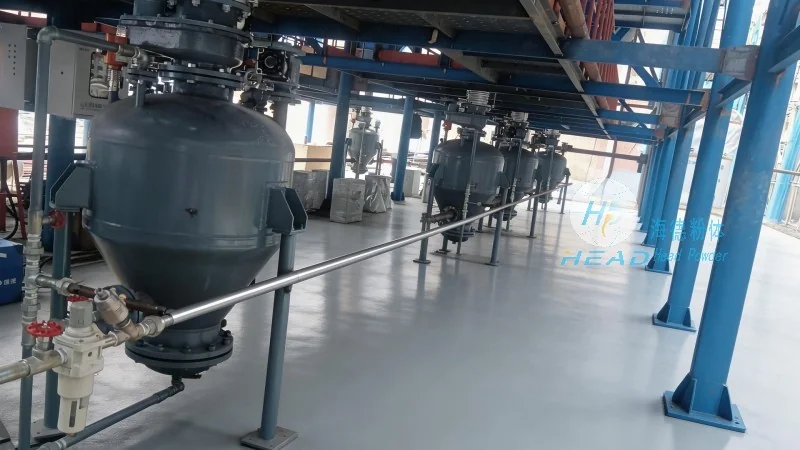
Advantages of Pneumatic Conveying for Battery Materials
Utilizing pneumatic conveying equipment for battery materials offers several advantages over traditional mechanical conveying methods. These include reduced risk of material contamination due to enclosed systems, improved safety by eliminating manual handling of powders, and enhanced efficiency through precise control of flow rates. Additionally, the systems are compact and can be integrated into existing production lines, minimizing space requirements. The technology also supports the handling of fine powders without causing agglomeration, which is crucial for maintaining the quality of battery materials.
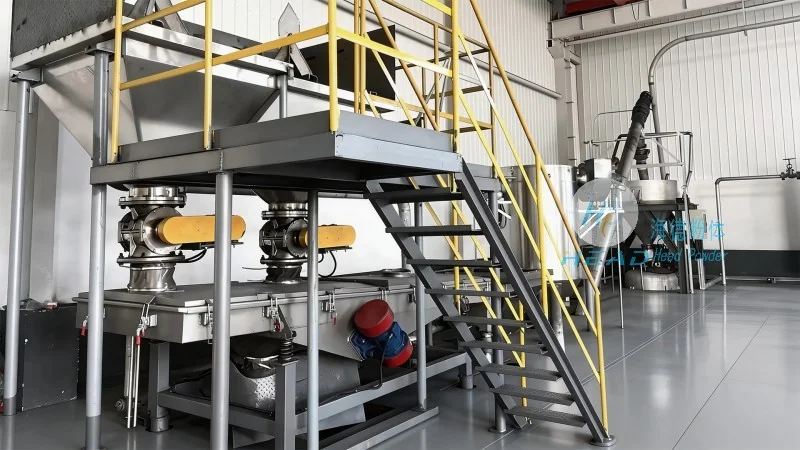
Application Examples in Battery Material Processing
Pneumatic conveying systems are widely used in various stages of battery material processing. For instance, in the production of lithium-ion batteries, the system can efficiently transport lithium carbonate or lithium hydroxide powders from storage to mixing and coating units. Similarly, graphite powders, which are essential for anode production, can be conveyed from grinding and classification equipment to the mixing stage. The equipment also facilitates the transport of other additives, such as conductive carbon or binders, ensuring a uniform mixture for battery electrode manufacturing.
Maintenance and Operational Considerations
To ensure the longevity and optimal performance of pneumatic conveying equipment for battery materials, regular maintenance is essential. This includes checking the condition of the hopper and feeding mechanisms, inspecting the pipeline for blockages or wear, and maintaining the air filtration system to prevent dust accumulation. Operational considerations also involve monitoring the pressure and flow rates to prevent overloading or underloading, which can affect the system's efficiency and material quality. Proper training of operators on the system's controls and safety protocols is also crucial to minimize downtime and ensure safe operation.




