Continuous quantitative powder pneumatic conveying machines are advanced industrial equipment designed for the efficient and precise transportation of bulk powders. These systems are widely used in various industries, including chemical, food, pharmaceutical, and mining, to ensure reliable material handling with minimal product loss and contamination. The technology behind these machines combines pneumatic principles with precise control mechanisms to achieve continuous, metered delivery of powders over long distances or within processing facilities.
Company Introduction
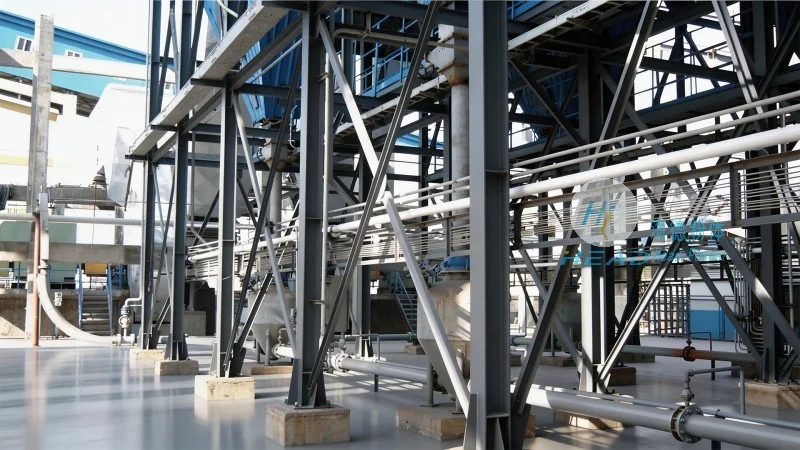
HeadPowder, or Shandong HeadPowder Engineering Co., Ltd., is a leading manufacturer specializing in the design, development, and production of high-quality pneumatic conveying systems. With a strong focus on innovation and customer satisfaction, the company has established itself as a trusted partner in the industry, providing tailored solutions that meet the specific needs of clients. HeadPowder's headquarters is located in Shandong, China, where the company leverages local manufacturing capabilities and technical expertise to deliver robust and reliable equipment. The company's commitment to quality and performance has earned it a reputation for excellence in the global market.
Overview of Continuous Quantitative Powder Pneumatic Conveying
Continuous quantitative powder pneumatic conveying machines operate by using compressed air or other gases to transport powders through a network of pipes. The system is designed to deliver powders at a consistent, controlled rate, ensuring that the material is moved efficiently and without interruption. This type of conveying is particularly advantageous for applications where precise dosing and uniform flow are critical, such as in pharmaceutical manufacturing, where product purity and consistency are paramount. The machine's design allows for the handling of a wide range of powder types, from fine powders to bulk materials, making it versatile for various industrial processes.
Key Components and Their Functions
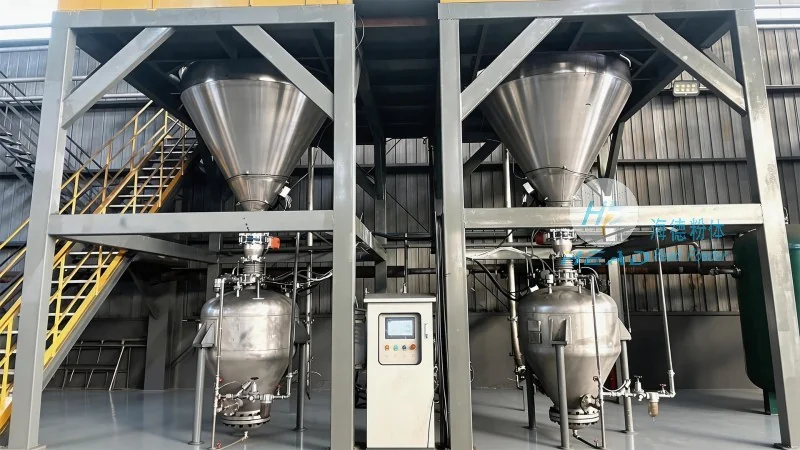
The continuous quantitative powder pneumatic conveying machine consists of several key components, each playing a crucial role in the overall operation. The primary components include the hopper, which serves as the storage and feeding unit for the powder; the air compressor, which generates the necessary pressure to move the material; the conveying line, which transports the powder through the system; and the control system, which regulates the flow rate and pressure. The hopper is typically equipped with a feeding mechanism, such as a rotary valve or a screw feeder, to ensure a steady supply of powder into the conveying line. The air compressor provides the motive force, creating a pressure differential that propels the powder particles forward. The conveying line is usually made of durable materials, such as stainless steel or plastic, to prevent corrosion and maintain product integrity. The control system uses sensors and valves to monitor and adjust the flow rate, ensuring that the delivery is accurate and consistent.
Operation Process of the Machine
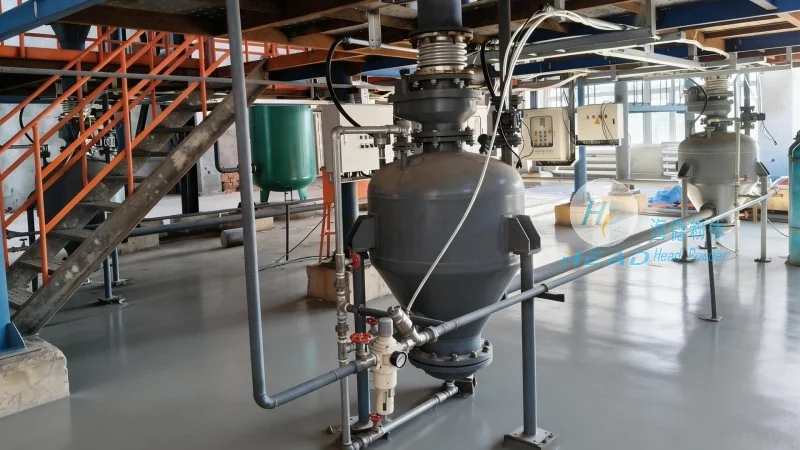
The operation of a continuous quantitative powder pneumatic conveying machine involves several steps that are coordinated to achieve efficient material transport. First, the powder is loaded into the hopper from a storage silo or a bulk container. The feeding mechanism then starts, delivering the powder into the conveying line at a controlled rate. Simultaneously, the air compressor begins to operate, generating compressed air that is introduced into the conveying line. The compressed air creates a pressure difference between the hopper and the discharge end of the line, which propels the powder particles forward. As the powder moves through the line, it is mixed with the air, forming a slurry-like flow. The control system continuously monitors the pressure and flow rate, adjusting the air supply as needed to maintain a consistent delivery rate. The powder is then discharged at the end of the line into a receiving vessel or a processing unit. Throughout the process, the machine ensures that the powder is transported without segregation or agglomeration, preserving the material's properties and quality.
Working Principle Explained
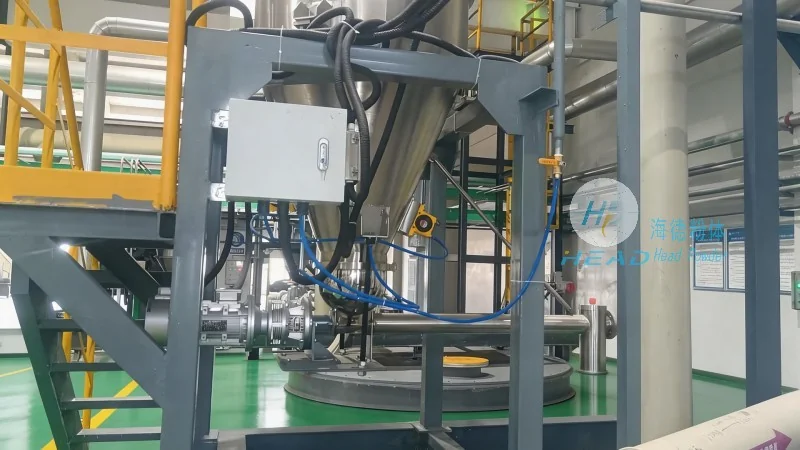
The working principle of the continuous quantitative powder pneumatic conveying machine is based on the principle of pneumatic transport, where the powder is suspended and carried by the air stream. The machine operates under positive pressure, meaning that the air pressure in the conveying line is higher than the ambient pressure. This pressure differential creates a force that pushes the powder particles forward. The key to the machine's effectiveness lies in the balance between the air velocity and the powder's particle size and density. If the air velocity is too low, the powder may settle and cause blockages; if it is too high, the powder may be carried too quickly, leading to uneven distribution. The control system in the machine adjusts the air flow rate to maintain an optimal velocity, ensuring that the powder is transported efficiently and without loss. Additionally, the machine may incorporate features such as pulse or dilute phase conveying to enhance performance and reduce energy consumption. Pulse conveying involves periodic bursts of high-pressure air to clear blockages and maintain flow, while dilute phase conveying uses a higher air-to-powder ratio to achieve faster and more uniform transport.
Advantages and Applications
Continuous quantitative powder pneumatic conveying machines offer several advantages over traditional conveying methods, such as mechanical screw conveyors or bucket elevators. One of the primary benefits is the ability to handle a wide range of powder types, including fine, cohesive, or abrasive materials, without causing product degradation or contamination. The system is also capable of transporting powders over long distances, making it suitable for large-scale industrial facilities. Another advantage is the minimal maintenance required, as the components are designed to withstand the abrasive nature of powders and the constant air flow. The machine's ability to deliver powders at a precise, controlled rate is particularly valuable in applications where dosing accuracy is critical, such as in pharmaceutical manufacturing, where the correct dosage of active ingredients is essential for product efficacy. In the chemical industry, these machines are used to transport raw materials to reactors, while in the food industry, they are employed to move ingredients to processing lines. The mining industry also benefits from these systems, as they can handle bulk ore and mineral powders efficiently and safely.




