HeadPowder, a leading engineering firm based in Shandong, China, specializes in the design, manufacturing, and installation of advanced pneumatic conveying systems for various industrial applications. This article provides a detailed overview of the operation process and working principle of heavy calcium powder pneumatic conveying lines, highlighting the technical aspects and operational efficiency of these systems.
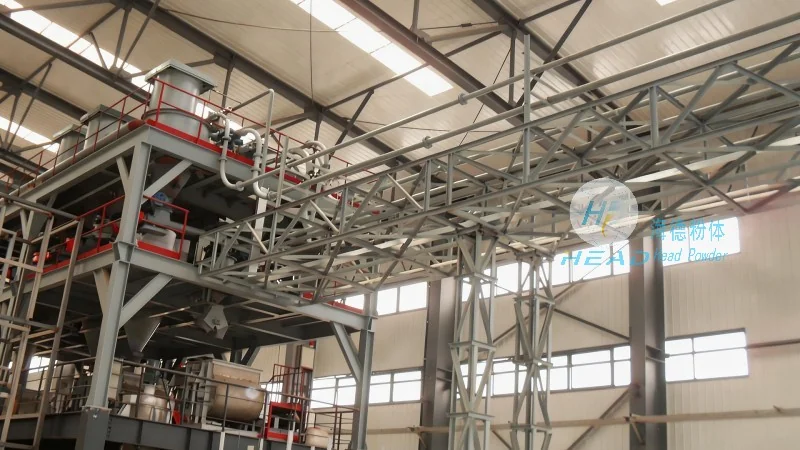
Introduction to Heavy Calcium Powder Pneumatic Conveying Lines
Heavy calcium powder, also known as calcium carbonate powder, is widely used in industries such as paper, plastics, coatings, and food processing. The efficient and reliable transport of this fine powder is crucial for maintaining production continuity and product quality. Pneumatic conveying lines offer a solution to this challenge by utilizing air as the conveying medium to transport bulk materials like heavy calcium powder over long distances or within complex industrial setups.
Company Profile: Shandong HeadPowder Engineering Co., Ltd.
HeadPowder, formally known as Shandong HeadPowder Engineering Co., Ltd., is headquartered in Shandong Province, China. With years of experience in the field of material handling and process engineering, the company has developed expertise in designing customized pneumatic conveying solutions tailored to the specific needs of clients. The company’s facilities and technical team are dedicated to delivering high-quality equipment and services that meet international standards and client expectations.
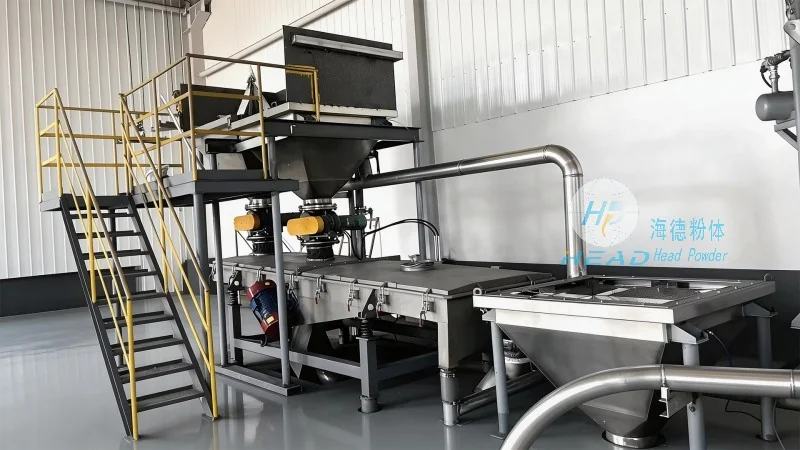
Key Components of a Heavy Calcium Powder Pneumatic Conveying System
A typical heavy calcium powder pneumatic conveying line consists of several key components that work in tandem to ensure efficient material transport. These components include the material hopper, feeder, air compressor, conveying line, dust collector, and control system. Each component plays a critical role in the overall operation of the system, and their proper integration is essential for optimal performance.
Operation Process of Heavy Calcium Powder Pneumatic Conveying Lines
The operation process of a heavy calcium powder pneumatic conveying line involves several sequential steps that ensure the smooth and continuous transport of the powder from the source to the destination. The process typically begins with the material being stored in a hopper, where it is fed into the system via a feeder. The feeder controls the flow rate of the powder, ensuring a consistent and controlled supply to the conveying line. Simultaneously, the air compressor generates high-pressure air that is introduced into the conveying line. The air, under pressure, creates a flow that pulls the powder particles along the line, transporting them to the desired location.
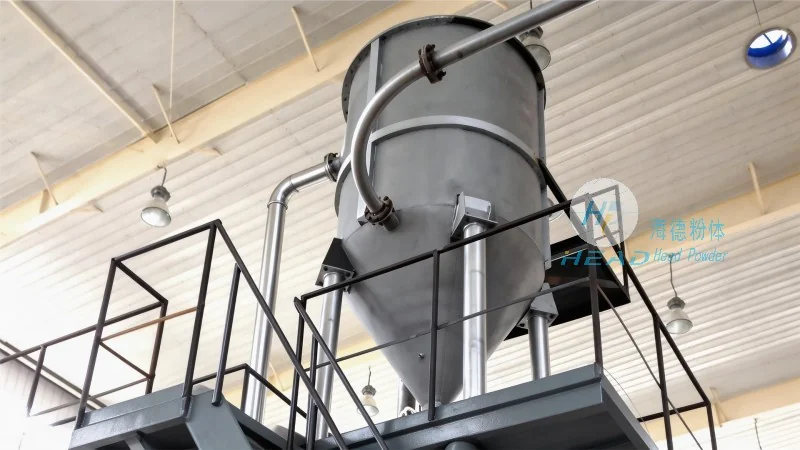
During the conveying process, the system may include intermediate storage or processing units, such as silos or mixers, where the powder can be temporarily stored or blended with other materials. The conveying line may also feature bends, elbows, or other components that direct the flow of the powder and air mixture. The dust collector is an essential component that captures any fine particles that may escape during the conveying process, ensuring environmental compliance and product purity.
Working Principle of Heavy Calcium Powder Pneumatic Conveying Lines
The working principle of a heavy calcium powder pneumatic conveying line is based on the principle of fluidization and pneumatic transport. When high-pressure air is introduced into the conveying line, it creates a flow that lifts and transports the powder particles. The air velocity is carefully controlled to ensure that the powder particles are suspended in the air stream without settling or clogging the line. The system operates under positive pressure, where the air pressure is maintained above atmospheric pressure throughout the conveying line, preventing the entry of external air or the loss of material.
The control system plays a crucial role in regulating the operation of the pneumatic conveying line. It monitors parameters such as air pressure, flow rate, and material level, and adjusts the system settings as needed to maintain optimal performance. The system may also include safety features, such as pressure relief valves and emergency shut-off mechanisms, to prevent accidents and ensure safe operation.
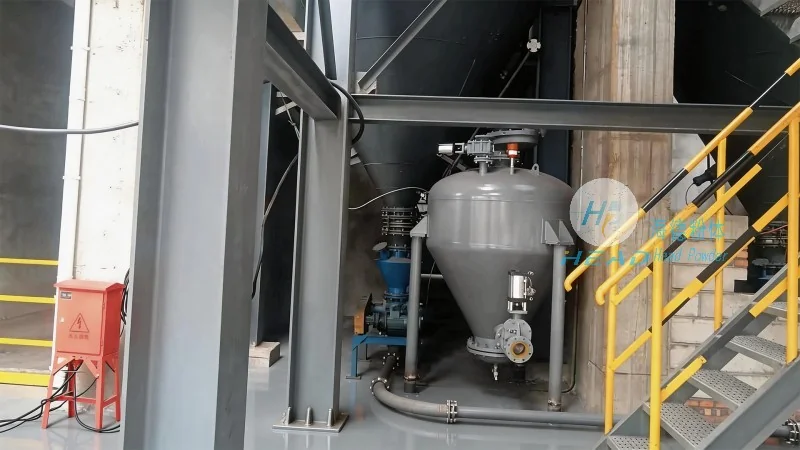
Advantages of Heavy Calcium Powder Pneumatic Conveying Lines
Heavy calcium powder pneumatic conveying lines offer several advantages over traditional material handling methods, such as belt conveyors or manual handling. These advantages include high efficiency in material transport, reduced labor costs, and improved product quality. The system is also flexible and can be easily integrated into existing industrial setups, allowing for seamless expansion or modification of production lines. Additionally, the use of air as the conveying medium reduces the risk of material contamination and damage, which is particularly important for fine powders like heavy calcium powder.
Conclusion
In conclusion, heavy calcium powder pneumatic conveying lines are an efficient and reliable solution for the transport of fine powders in various industrial applications. The operation process involves the coordinated action of several components, including the hopper, feeder, air compressor, and conveying line, while the working principle is based on pneumatic transport and fluidization. With proper design and maintenance, these systems can provide long-term operational efficiency and product quality, making them a preferred choice for many industries.




