HeadPowder, a leading provider in the field of material handling solutions, specializes in the design, manufacturing, and installation of advanced pneumatic conveying systems. Based in Shandong, China, the company has established itself as a trusted partner for industries requiring efficient and reliable transportation of powders and granules. This article delves into the operation process and working principle of additive pneumatic conveying systems, highlighting the key components, operational steps, and the technological advancements that enhance system performance.
Understanding Pneumatic Conveying Systems
Pneumatic conveying systems are mechanical systems used to transport bulk materials, such as powders, granules, and small particles, through a pipeline using air or other gases. These systems are widely adopted in various industries, including food, pharmaceuticals, chemicals, and manufacturing, due to their ability to handle delicate materials without degradation and to maintain a clean and controlled environment. The core of an additive pneumatic conveying system lies in its ability to blend or add other materials to the conveyed product during the transport process, which is crucial for processes like blending additives into bulk ingredients.
Key Components of an Additive Pneumatic Conveying System
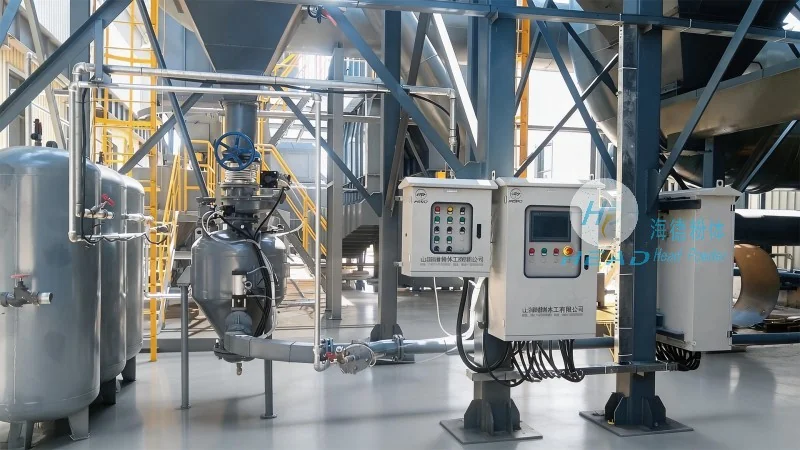
An effective additive pneumatic conveying system comprises several critical components that work in tandem to ensure smooth and efficient operation. The primary components include the material feed hopper, the air compressor or blower, the conveying pipeline, the additive injection unit, and the discharge hopper or silo. Each component plays a vital role in the overall functionality of the system.
The material feed hopper is responsible for storing the main bulk material, such as raw powder or granules, and feeding it into the system at a controlled rate. This hopper is typically equipped with a gate valve or a rotary valve to regulate the flow of material into the pipeline. The air compressor or blower generates the necessary air pressure to move the material through the pipeline. Depending on the system design, this can be either a positive displacement blower or a centrifugal fan, with the choice influenced by factors like the material characteristics and the required conveying distance.
The conveying pipeline is the central part of the system, where the material and air travel together. The pipeline is usually made of stainless steel or other corrosion-resistant materials to ensure durability and to prevent contamination of the conveyed product. The design of the pipeline, including the use of bends, elbows, and straight sections, is optimized to minimize pressure loss and to maintain the flow of material. The additive injection unit is a critical component in an additive system, as it allows for the precise introduction of other materials, such as additives or colorants, into the main stream during the conveying process. This unit can be integrated at various points along the pipeline, depending on the specific blending requirements.
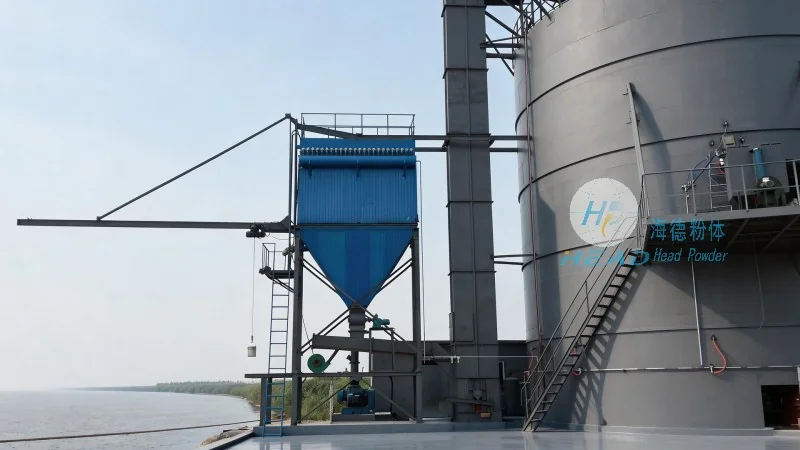
The discharge hopper or silo is where the conveyed material, now blended with the additive, is collected and stored for further processing or packaging. This component is designed to handle the material flow and to prevent spillage or blockage. Additionally, the system may include other auxiliary components, such as filters, cyclones, or dust collectors, to manage air quality and to separate any fine particles from the conveyed material.
The Operation Process of an Additive Pneumatic Conveying System
The operation of an additive pneumatic conveying system involves a series of steps that ensure the efficient and accurate blending of materials. The process typically begins with the loading of the main bulk material into the feed hopper. The material is then fed into the pipeline at a controlled rate, using the rotary valve or gate valve. Simultaneously, the air compressor starts and generates the required air pressure, which is introduced into the pipeline through the air inlet.
As the material enters the pipeline, it is entrained by the high-velocity air stream and carried along the pipeline. The additive injection unit is activated at this stage, introducing the additive material into the pipeline at a precise rate. The additive is then mixed with the main material as they travel together through the pipeline. The combination of the main material and the additive continues until the material reaches the discharge hopper.
Upon reaching the discharge hopper, the blended material is collected and stored. The system then continues to operate, with the feed hopper refilling and the air compressor maintaining the air pressure. The entire process is automated, with sensors and control systems monitoring the flow rates, pressure, and other parameters to ensure consistent performance and to prevent any operational issues.
Working Principle of Additive Pneumatic Conveying Systems
The working principle of an additive pneumatic conveying system is based on the principle of fluidization and the momentum transfer between the air and the material particles. When air is introduced into the pipeline at a high velocity, it creates a low-pressure zone that draws the material particles into the air stream. The material particles are then carried along the pipeline by the air, forming a suspension of material and air.
In an additive system, the additive is introduced into this suspension at a specific point in the pipeline. The additive particles are then mixed with the main material particles as they travel together. The mixing process is influenced by factors such as the air velocity, the particle size of the material and additive, and the length of the pipeline. The goal is to achieve a uniform blend of the additive with the main material, which is critical for processes where the additive concentration needs to be consistent.
The system's efficiency and performance are also influenced by the design of the components, particularly the additive injection unit. A well-designed injection unit ensures that the additive is introduced at the correct rate and position, minimizing any segregation or uneven mixing. The use of advanced control systems further enhances the precision of the blending process, allowing for real-time adjustments based on the system's operational parameters.
Advantages of Additive Pneumatic Conveying Systems
Additive pneumatic conveying systems offer several advantages over traditional material handling methods. One of the key benefits is the ability to blend materials in a controlled and uniform manner, which is essential for processes that require precise additive ratios. The system also provides a clean and hygienic environment, which is particularly important in industries like food and pharmaceuticals, where contamination must be minimized.
Another advantage is the flexibility of the system, which allows for the transportation of various materials with different characteristics. The system can be customized to handle different particle sizes, densities, and flow rates, making it suitable for a wide range of applications. Additionally, the system is relatively compact and can be installed in various locations, reducing the space requirements compared to other material handling methods.
The operational efficiency of the system is also a significant advantage. The use of pneumatic conveying reduces the need for manual handling and reduces the risk of material degradation or contamination. The system can operate continuously, with minimal downtime, and can be easily integrated into existing production lines. Furthermore, the system's energy efficiency is improved by optimizing the air pressure and flow rates, which reduces energy consumption and operating costs.
Conclusion
HeadPowder Engineering Co., Ltd., based in Shandong, China, specializes in the design and implementation of advanced additive pneumatic conveying systems. These systems offer efficient, reliable, and hygienic solutions for industries requiring the transportation and blending of bulk materials. By understanding the key components, operation process, and working principles of such systems, businesses can make informed decisions about implementing these technologies to enhance their production processes and improve overall efficiency.




