HeadPowder, a leading engineering company based in Shandong, China, specializes in the design and manufacturing of advanced pneumatic conveying systems tailored for the cement and fly ash industries. This article delves into the fundamental principles of cement and fly ash pneumatic conveying equipment, alongside an exploration of its typical operational environments and key characteristics.
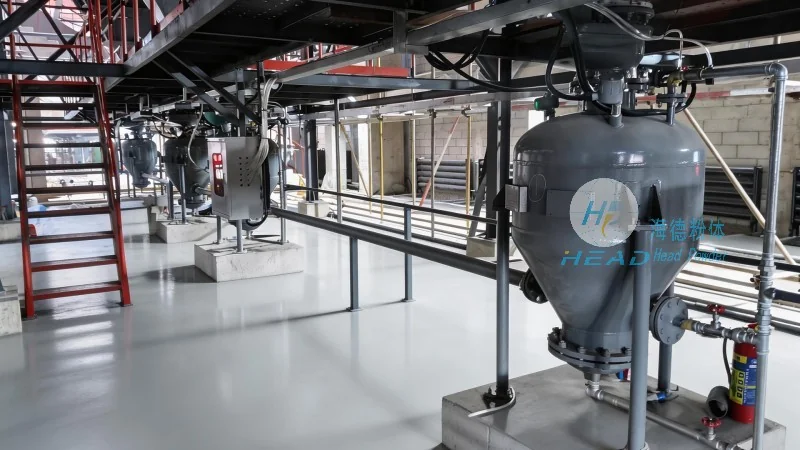
Overview of Pneumatic Conveying Systems for Cement and Fly Ash
Pneumatic conveying systems are essential for efficiently transporting bulk materials like cement and fly ash over short to medium distances within industrial facilities. These systems utilize compressed air or gas to move powders through a pipeline network, eliminating the need for mechanical components such as conveyor belts or buckets. The core components of a typical pneumatic conveying system include a material hopper, a rotary airlock valve, a conveying line, and a receiver or discharge point. The material is fed into the system via the hopper, then sealed and metered by the rotary airlock before being entrained by the air flow in the pipeline. This process ensures a continuous, dust-free transfer of the material, which is crucial for maintaining operational efficiency and environmental compliance in cement production and processing facilities.
Principle of Operation for Cement and Fly Ash Pneumatic Conveying Equipment
The operation of cement and fly ash pneumatic conveying equipment is based on the principle of fluidization and particle suspension. When compressed air is introduced into the conveying line at a sufficient velocity, it creates a low-pressure zone that draws the powder particles into the air stream. The air flow must be maintained at a velocity that is higher than the terminal velocity of the particles, ensuring that they remain suspended and transported through the pipeline without settling or clogging. The system typically operates in either positive or negative pressure modes. Positive pressure systems use compressed air to push the material through the line, while negative pressure systems use suction to draw the material from the source. The choice of pressure mode depends on factors such as the distance to be covered, the material characteristics, and the layout of the facility. For cement and fly ash, which are fine, abrasive powders, the system design must account for the high wear rates on components like the airlock valves and pipeline elbows. Advanced materials and coatings are often employed to mitigate wear and extend the service life of the equipment.
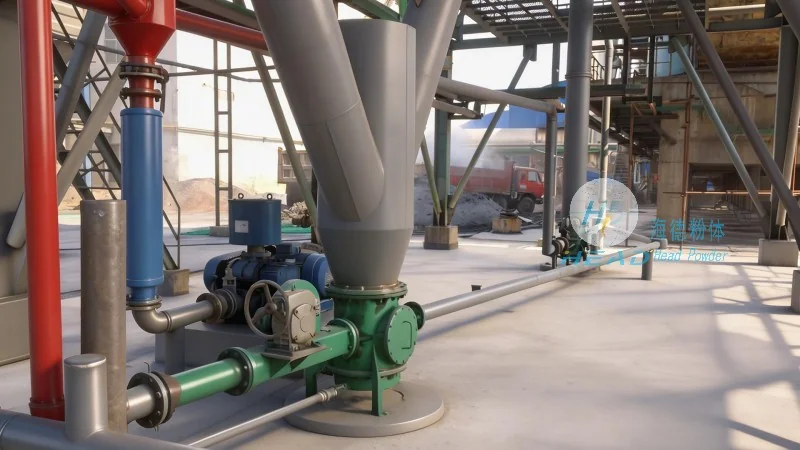
Working Scene Characteristics of Cement and Fly Ash Pneumatic Conveying Systems
The working scenes where cement and fly ash pneumatic conveying systems are deployed vary widely, reflecting the diverse needs of the cement industry. Common applications include the transfer of raw materials such as limestone and clay from storage silos to grinding mills, the movement of finished cement products from production lines to storage silos or shipping containers, and the handling of fly ash from power plants to cement production facilities for blending. In each of these scenarios, the system must operate under specific conditions that influence its performance. For instance, in the transfer of raw materials, the system may need to handle large volumes of material at high flow rates, requiring robust and high-capacity components. In contrast, the handling of fly ash, which is often more abrasive and finer in particle size, demands systems with enhanced filtration and wear-resistant materials to prevent particle degradation and equipment failure.
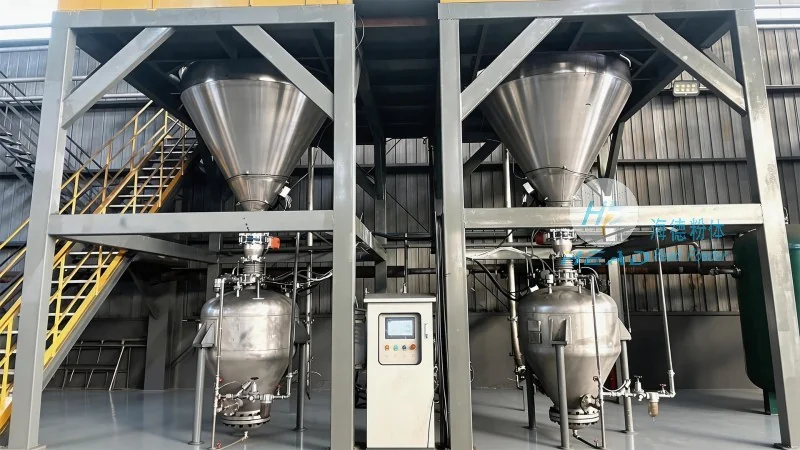
Key Features and Advantages in Operational Environments
HeadPowder's pneumatic conveying systems for cement and fly ash are engineered to excel in the demanding operational environments typical of cement plants. Key features include high efficiency in material transfer, minimal dust generation due to enclosed systems, and reduced labor costs associated with manual handling. The systems are also designed for easy integration into existing production lines, with modular components that allow for flexible configuration and expansion as production needs evolve. Another significant advantage is the ability to maintain consistent material quality during transport, as the enclosed system prevents contamination from external sources and minimizes the risk of material degradation due to exposure to air or moisture. Additionally, the systems contribute to improved safety in the workplace by eliminating the need for manual handling of bulk powders, reducing the risk of dust explosions and other hazards associated with loose material handling.
Conclusion and Application Scope
In summary, cement and fly ash pneumatic conveying systems represent a critical technology for the efficient and safe handling of bulk materials in the cement industry. The principles of operation, combined with the specific characteristics of the working environments, ensure that these systems can meet the rigorous demands of modern cement production. HeadPowder, with its expertise in engineering and manufacturing, provides tailored solutions that optimize material transfer while adhering to industry standards and environmental regulations. As the cement industry continues to evolve, the importance of reliable and efficient pneumatic conveying systems will only grow, making them an indispensable component of sustainable and productive cement manufacturing operations.




