Hydroxide aluminum, a key industrial material, often requires efficient and reliable transport methods for its application in various industries. Pneumatic conveying, a technology that uses air or gas to move bulk materials, offers a viable solution for handling hydroxide aluminum. This article explores the fundamental principles behind hydroxide aluminum pneumatic conveying and highlights the specific working scene characteristics that define its effective application, presented by Shandong HeadPowder Engineering Co., Ltd., a leading provider in material handling solutions.
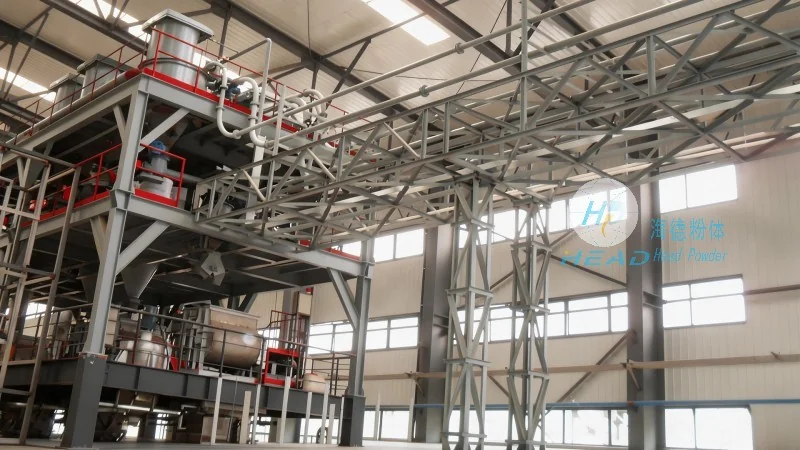
Core Principles of Hydroxide Aluminum Pneumatic Conveying
The process of hydroxide aluminum pneumatic conveying is built upon several core principles that ensure material transport efficiency and safety. The primary mechanism involves creating a pressure differential between the conveying line and the ambient environment. By generating a vacuum or pressure within the system, air is drawn or pushed through the pipeline, carrying the hydroxide aluminum particles along. This method eliminates the need for mechanical components like belts or buckets, reducing maintenance and operational costs. The velocity of the air stream is critical; it must be sufficient to overcome the gravitational forces acting on the particles while maintaining a stable flow to prevent particle degradation or blockages.
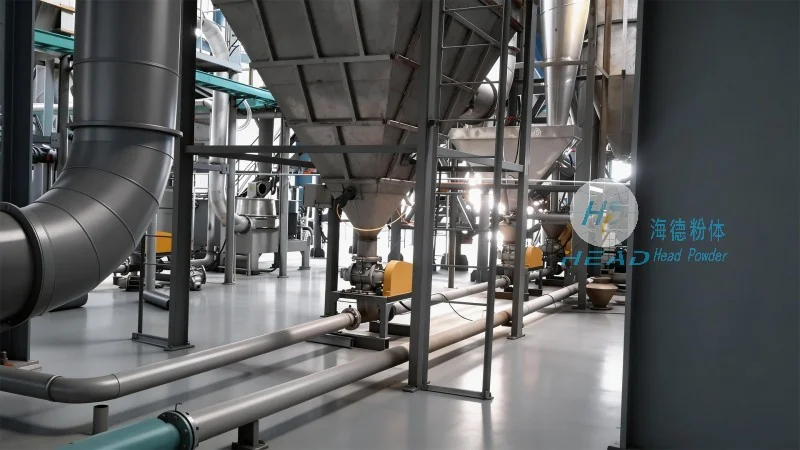
Working Scene Characteristics of Hydroxide Aluminum Pneumatic Conveying
The effectiveness of hydroxide aluminum pneumatic conveying is heavily influenced by the working scene characteristics, which include the material's physical properties, the system's design, and the operational environment. The particle size and density of hydroxide aluminum are crucial factors. Finer particles may require higher air velocities to ensure proper suspension, while larger particles might need adjustments to the conveying line's diameter and pressure. The moisture content of the material also plays a role, as excessive moisture can lead to caking or blockages, necessitating drying or conditioning steps before transport. Additionally, the system's layout, such as the length and elevation changes of the conveying line, impacts the required air pressure and power consumption. For instance, vertical conveying segments demand higher pressure to counteract gravity, while horizontal sections rely on consistent air flow to maintain particle suspension.
Applications and Industry Relevance
Hydroxide aluminum pneumatic conveying is widely used in industries where precise material handling is essential. In the chemical industry, it facilitates the transport of hydroxide aluminum from storage silos to processing units, ensuring a continuous supply for manufacturing applications. The pharmaceutical sector also benefits from this technology, as it allows for the safe and hygienic transport of hydroxide aluminum used in drug formulations, minimizing contamination risks. Furthermore, in the construction materials industry, pneumatic conveying is employed to move hydroxide aluminum for use in cement and concrete production, where uniform mixing is critical. The adaptability of the system to different operational scales, from small-scale laboratory applications to large industrial plants, underscores its versatility and importance in modern material handling.
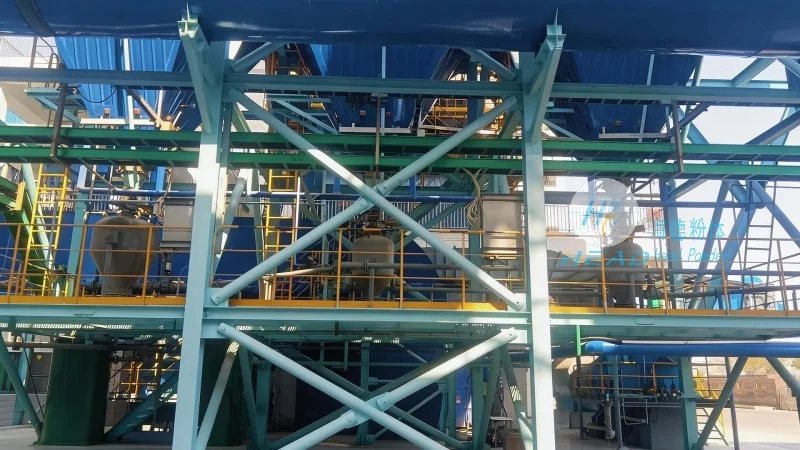
Advantages and Considerations
Implementing hydroxide aluminum pneumatic conveying offers several advantages, including reduced labor costs due to automated material transport, minimized material loss compared to traditional methods, and enhanced safety by eliminating manual handling of bulk materials. However, there are considerations to address, such as the need for regular system maintenance to prevent air leaks or component wear, which can affect performance. The energy consumption of the system is another factor, as high-pressure air systems require significant power, though advancements in energy-efficient designs have mitigated this concern. Additionally, the initial investment for pneumatic conveying systems can be higher than traditional methods, but the long-term operational savings often justify the upfront cost. Environmental factors, such as dust control, are also important, as proper filtration systems must be in place to comply with regulations and protect the environment.




