HeadPowder, a leading enterprise in the field of pneumatic conveying technology, specializes in providing efficient and reliable solutions for the transportation of battery materials. With a strong focus on innovation and precision engineering, the company has established itself as a trusted partner for businesses in the battery manufacturing industry. This article delves into the operation process and working principles of pneumatic conveying systems specifically designed for handling battery materials, highlighting the key components, operational steps, and the advantages of such systems in enhancing production efficiency and material handling capabilities.
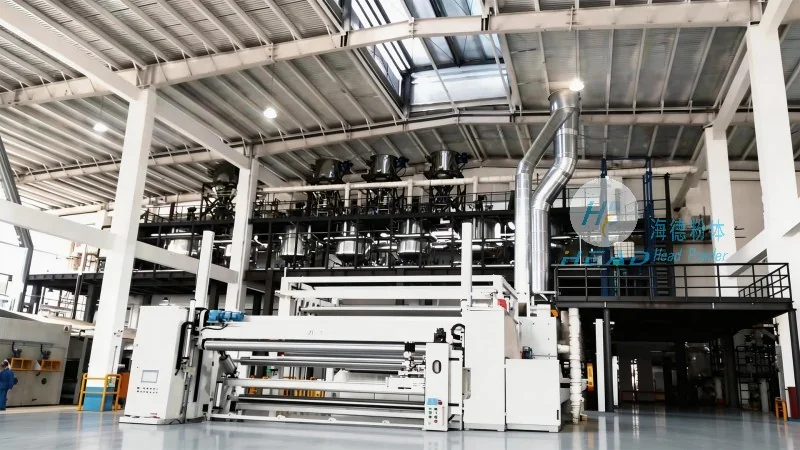
Company Overview: Shandong HeadPowder Engineering Co., Ltd.
HeadPowder, operating under the full name Shandong HeadPowder Engineering Co., Ltd., is headquartered in Shandong, China. The company has built a solid reputation by delivering high-quality pneumatic conveying equipment and services tailored to the unique needs of the battery material processing sector. With years of experience and a dedicated team of engineers, HeadPowder ensures that its solutions meet the stringent requirements of modern battery production lines, emphasizing safety, durability, and optimal performance.
Pneumatic Conveying Systems for Battery Materials: Core Components
The pneumatic conveying system for battery materials typically consists of several critical components that work in tandem to facilitate the efficient movement of materials. These components include the material feed hopper, which holds the raw battery materials such as lithium compounds, graphite, or other powders; the air compressor or blower, which generates the necessary air pressure to transport the material; the conveying line, which can be either a rigid pipe or a flexible hose, depending on the system design; and the discharge hopper or collection unit, where the material is deposited at the destination. Each component plays a vital role in ensuring smooth and continuous operation, and their proper integration is crucial for the overall effectiveness of the system.
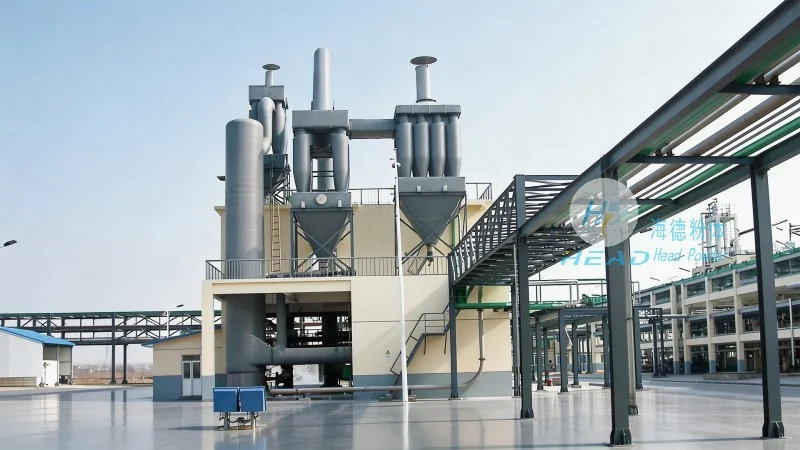
Operation Process of Pneumatic Conveying for Battery Materials
The operation process of a pneumatic conveying system for battery materials involves a series of well-defined steps that ensure the material is transported from the source to the destination without loss or degradation. The process begins with the material being fed into the hopper from a storage silo or bulk container. The air compressor then starts, generating a flow of air that creates a negative pressure or positive pressure within the conveying line, depending on the system type (e.g., dilute phase or dense phase). As the air flows through the line, it entrains the battery material particles, forming a mixture known as a slurry or a stream of material-air mixture. The mixture travels through the conveying line to the discharge hopper, where the air is separated from the material, and the material is collected for further processing. The air, now clean, is either recirculated back to the compressor or released to the atmosphere, depending on the system design. This continuous cycle allows for the seamless and automated handling of battery materials, reducing manual labor and minimizing the risk of material contamination.
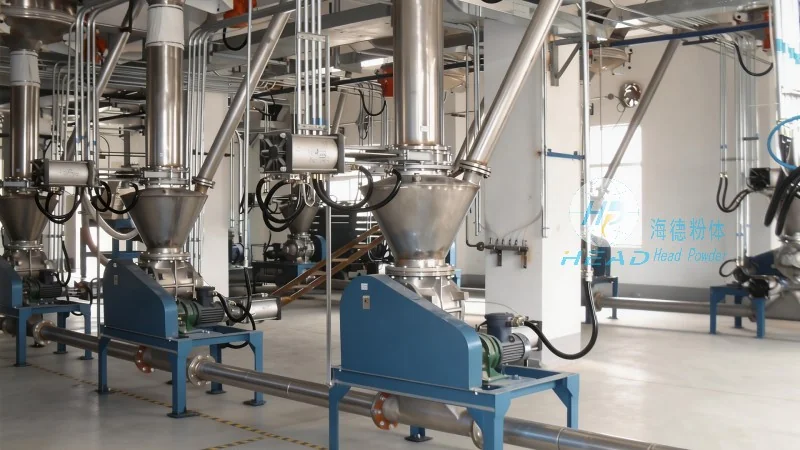
Working Principles: How Pneumatic Conveying Transports Battery Materials
The working principle of pneumatic conveying for battery materials is based on the fundamental concept of using air as a medium to transport solid particles. There are two primary types of pneumatic conveying systems used in the battery industry: dilute phase and dense phase. Dilute phase systems operate at higher air velocities, typically ranging from 20 to 100 meters per second, and are suitable for transporting fine powders over short to medium distances. In this system, the material is carried in a dispersed state, with the air and material particles moving together in a turbulent flow. Dense phase systems, on the other hand, operate at lower air velocities, typically around 5 to 20 meters per second, and are used for transporting bulk materials or materials that are more prone to caking or agglomeration. In dense phase systems, the material is carried in a more concentrated state, with the air and material particles moving in a more laminar flow. The choice between dilute and dense phase systems depends on the specific characteristics of the battery material, such as particle size, density, and moisture content, as well as the distance and layout of the conveying line.
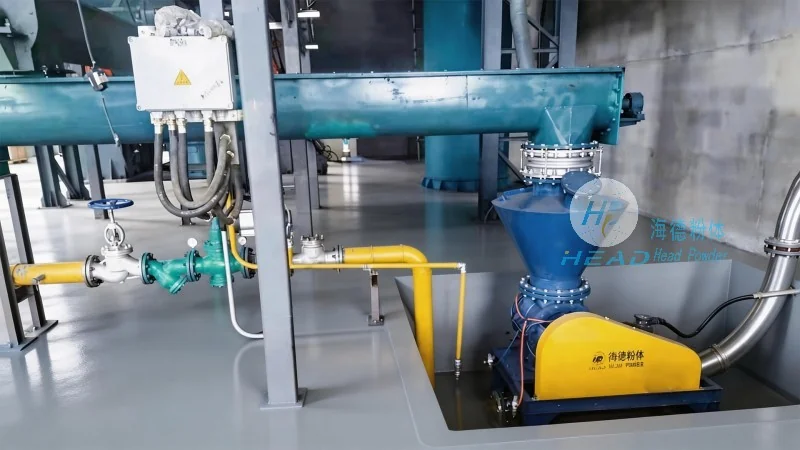
Advantages of Pneumatic Conveying for Battery Material Handling
Pneumatic conveying systems offer several significant advantages over traditional material handling methods, such as belt conveyors or bucket elevators, when applied to battery material processing. One of the key benefits is the ability to handle fine and abrasive materials without causing wear and tear on the equipment. The enclosed system also prevents dust contamination, which is critical in battery manufacturing where even small amounts of impurities can affect the quality of the final product. Additionally, pneumatic conveying systems are highly flexible, allowing for easy reconfiguration of the conveying line to accommodate changes in production processes or facility layouts. The automated nature of these systems reduces labor costs and minimizes the risk of human error, leading to improved production consistency and reliability. Furthermore, the compact design of pneumatic conveying equipment saves valuable floor space in battery manufacturing plants, making it an ideal solution for facilities with limited space.
Application Scenarios in Battery Manufacturing
Pneumatic conveying systems are widely used in various stages of battery manufacturing, from raw material handling to finished product packaging. In the raw material stage, these systems are used to transport lithium compounds, graphite, and other powders from storage silos to the mixing and blending equipment. The fine and sensitive nature of these materials makes pneumatic conveying an ideal choice, as it prevents material degradation and ensures a consistent feed rate to the production line. During the cell formation and assembly stages, pneumatic conveying is used to transport electrode materials and other components to the assembly lines, where they are used to manufacture the battery cells. In the final stages of production, pneumatic conveying systems are employed to transport finished battery packs or modules from the assembly lines to the packaging and shipping areas. The efficiency and reliability of these systems contribute to the overall productivity of the battery manufacturing process, enabling manufacturers to meet increasing demand for battery-powered devices.




