HeadPowder, a leading engineering company based in Shandong, China, specializes in the design, manufacturing, and installation of advanced material handling systems. This article provides a detailed overview of the operation process and working principle of the nickel sulfate crystalline powder conveying line, highlighting the key components, operational steps, and technical aspects that ensure efficient and reliable material transport.
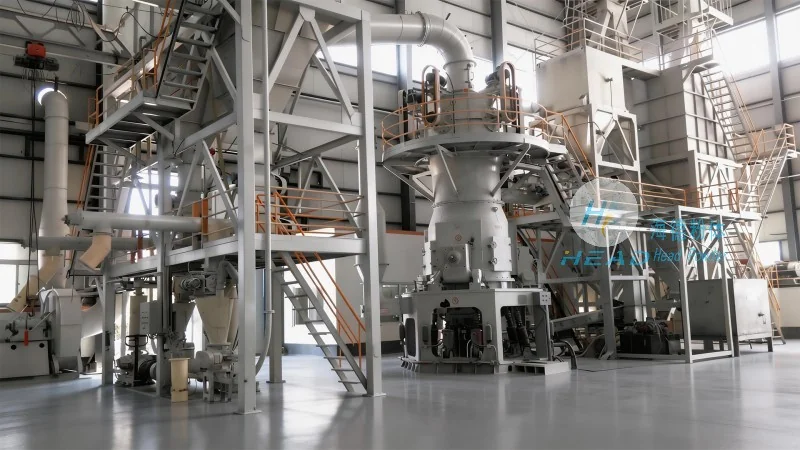
Key Components of the Conveying Line
The nickel sulfate crystalline powder conveying line is a sophisticated system engineered to handle the unique properties of crystalline powders. The system typically comprises several critical components, each playing a vital role in the overall operation. These components include the hopper for material storage, the conveyor belt or screw conveyor for horizontal transport, the vertical lift mechanism for vertical movement, and the dust collection system to maintain air quality and prevent material loss. Additionally, the line may incorporate a feeding system to control the flow rate of the powder, a control panel for monitoring and adjusting operational parameters, and a discharge mechanism for delivering the material to the next processing stage.
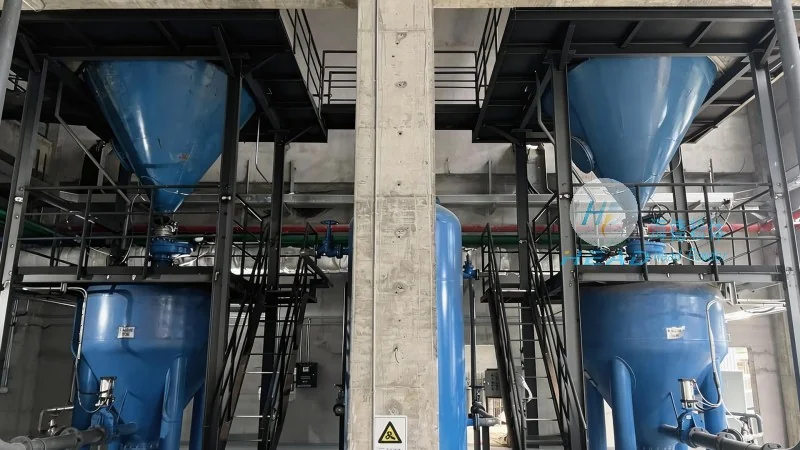
Operation Process of the Conveying Line
The operation of the nickel sulfate crystalline powder conveying line follows a systematic sequence of steps to ensure smooth and continuous material transport. The process begins with the loading of the crystalline powder into the hopper. The powder is then released from the hopper into the conveyor system, where it is transported horizontally to the vertical lift section. The vertical lift mechanism, often a bucket elevator or a vertical screw conveyor, elevates the powder to the desired height. Once at the top, the powder is discharged into a storage or processing vessel. Throughout the process, the control panel continuously monitors parameters such as flow rate, pressure, and temperature to maintain optimal performance. The dust collection system is activated to capture any airborne particles, ensuring compliance with environmental regulations and maintaining a clean working environment.
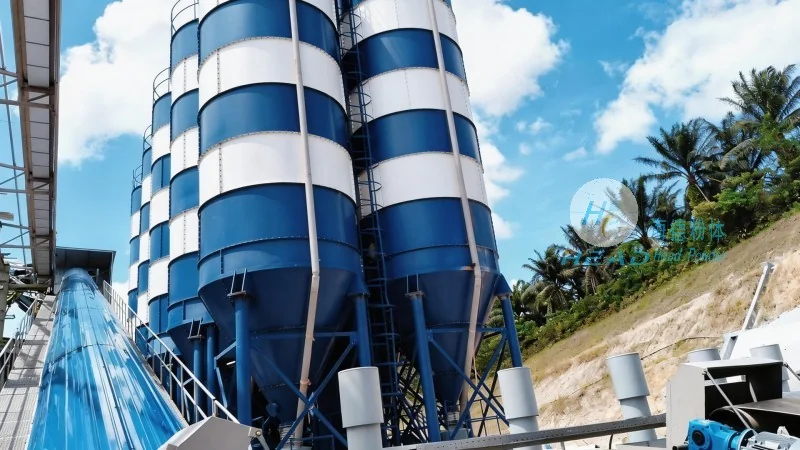
Working Principle of the Conveying Line
The working principle of the nickel sulfate crystalline powder conveying line is based on mechanical energy transfer and material handling technology. The system utilizes gravity and mechanical force to move the powder from the hopper to the discharge point. The horizontal conveyor, such as a belt conveyor, moves the powder through friction between the belt and the material, while the vertical lift mechanism employs buckets or screws to lift the powder against gravity. The feeding system controls the rate of material input, preventing overloading and ensuring consistent flow. The control panel integrates sensors and actuators to adjust the speed of the conveyor and lift mechanisms, adapting to changes in material characteristics or system load. The dust collection system uses filters and fans to capture and remove airborne particles, maintaining air quality and preventing material loss due to dust dispersion.
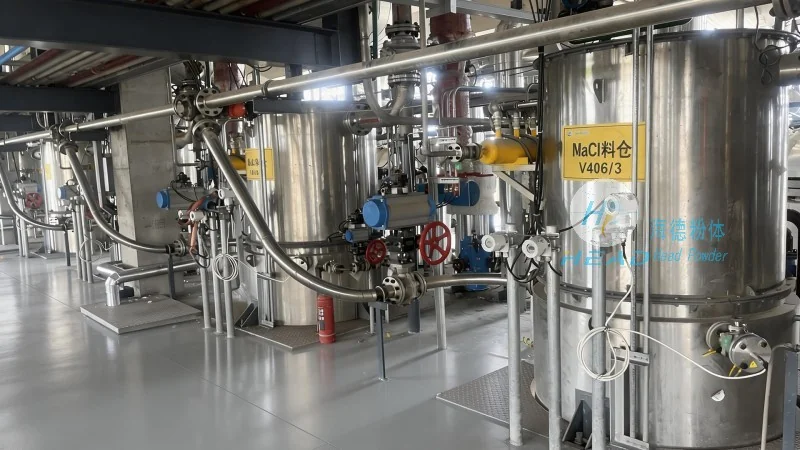
Benefits and Applications
The nickel sulfate crystalline powder conveying line offers several benefits, including high efficiency, low maintenance, and reliable operation. The system is designed to handle the abrasive and hygroscopic nature of nickel sulfate crystals, ensuring minimal material degradation during transport. It is widely used in the chemical industry for the production of nickel sulfate, a key raw material in battery manufacturing, electroplating, and other applications. The line's modular design allows for easy integration into existing production lines and can be customized to meet specific process requirements, such as varying flow rates or material handling capacities.




