The calcium carbonate material handling system is a critical piece of equipment in industrial processing, particularly in the production of calcium carbonate-based products. As a key component for material transport, it ensures efficient and reliable movement of raw materials, thereby enhancing overall production efficiency. This system is designed to handle various forms of calcium carbonate, including powder, granules, and slurry, and is widely used in industries such as paper, plastics, and construction. The system's design and operation are optimized to meet the specific requirements of different production processes, ensuring consistent performance and minimal downtime. Shandong HeadPowder Engineering Co., Ltd., a leading manufacturer in this field, specializes in providing high-quality material handling systems tailored to the needs of various industries.
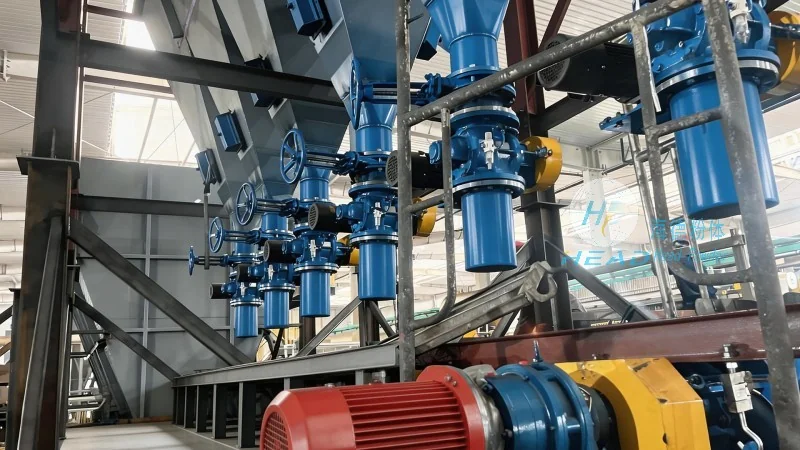
Key Components of the Material Handling System
The calcium carbonate material handling system typically consists of several core components that work in tandem to achieve efficient material transport. These components include feeders, conveyors, storage silos, and control systems. Each component plays a vital role in the overall operation. For instance, feeders are responsible for uniformly feeding the calcium carbonate material into the system, while conveyors transport the material from one stage to another. Storage silos are used to store raw materials or intermediate products, providing a buffer to maintain a steady supply. The control system, often integrated with sensors and automation technology, monitors and regulates the operation of all components, ensuring safety and optimal performance. The design of these components is tailored to handle the specific characteristics of calcium carbonate, such as its particle size, density, and flowability.
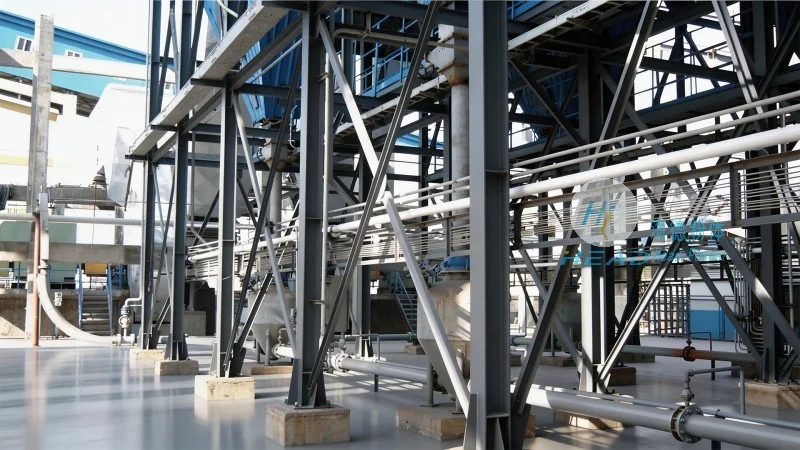
Operation Process of the System
The operation process of the calcium carbonate material handling system involves several sequential steps. The process begins with the raw material being fed into the system through a hopper or feeder. The feeder ensures a consistent flow rate, preventing overloading or underfeeding. The material is then transported to the storage silo or directly to the processing unit via conveyor belts or pneumatic systems. In some systems, the material may undergo pre-processing steps, such as drying or grinding, before being transported. The control system continuously monitors the flow rate, pressure, and other parameters, adjusting the operation as needed to maintain stability. The system operates in a continuous or batch mode, depending on the production requirements. In continuous operation, the material is transported continuously, while in batch operation, the system processes material in defined batches. The end of the process involves the material being discharged into the next stage of production or into a storage container. The entire process is designed to minimize material loss and ensure that the material reaches the next stage in optimal condition.
Working Principle of the System
The working principle of the calcium carbonate material handling system is based on mechanical and pneumatic principles, depending on the specific design. Mechanical systems use gravity and mechanical force to move the material, while pneumatic systems use compressed air to transport the material through pipes. In mechanical systems, the feeder uses a rotating screw or belt to move the material, and the conveyor uses rollers or belts to transport it. The storage silo uses a hopper at the bottom to discharge the material when needed. In pneumatic systems, the material is suspended in a carrier gas and transported through pipes. The system's control system uses sensors to detect the material level in the silos and the flow rate in the conveyors, sending signals to adjust the feeder speed or air pressure as required. This closed-loop control ensures that the system operates efficiently and safely, minimizing material loss and preventing blockages. The working principle is optimized to handle the unique properties of calcium carbonate, such as its tendency to agglomerate or clog in certain conditions.
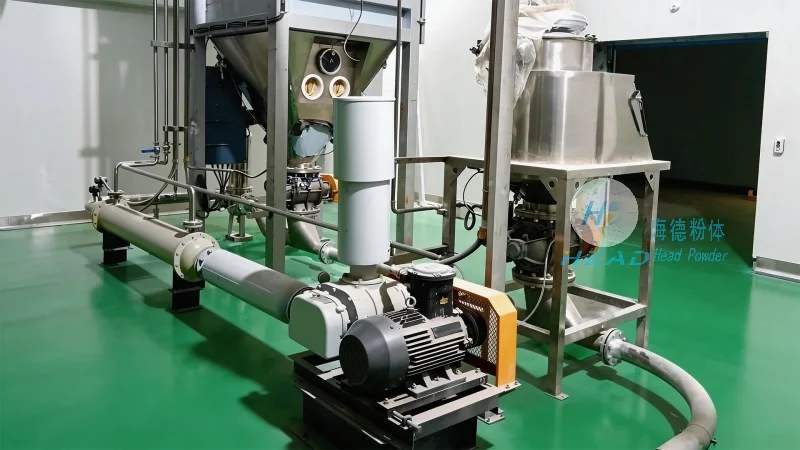
Advantages and Applications
The calcium carbonate material handling system offers several advantages, including high efficiency, low maintenance, and flexibility. The system can handle a wide range of material types and sizes, making it suitable for various industrial applications. In the paper industry, it is used to transport calcium carbonate for coating and filler applications, improving the paper's quality and strength. In the plastics industry, it is used to add calcium carbonate as a filler to improve the mechanical properties of the plastic, such as tensile strength and impact resistance. In the construction industry, it is used to transport calcium carbonate for cement and concrete production, enhancing the durability and performance of the final product. The system's ability to handle large volumes of material at a consistent rate makes it essential for high-volume production lines. Additionally, the system's design allows for easy integration with other production equipment, enhancing overall production efficiency. Shandong HeadPowder Engineering Co., Ltd. provides customized solutions to meet the specific needs of each client, ensuring that the material handling system is optimized for their production processes.




