Working Principle and Characteristics of Fluorosilicate Sodium Powder Pneumatic Conveying
Release time:2026-09-18 01:01:27
name of the company:Shandong Headpowder Engineering Co., Ltd.
telephone:156-6277-7102
contacts:Zhang manager
Fluorosilicate sodium powder pneumatic conveying is a critical technology in powder handling, enabling the efficient transport of fluorosilicate sodium powder through a pneumatic system. This method utilizes compressed air to move the powder particles through a pipeline, combining the powder with air to form a slurry-like mixture that can be transported over long distances with minimal equipment.
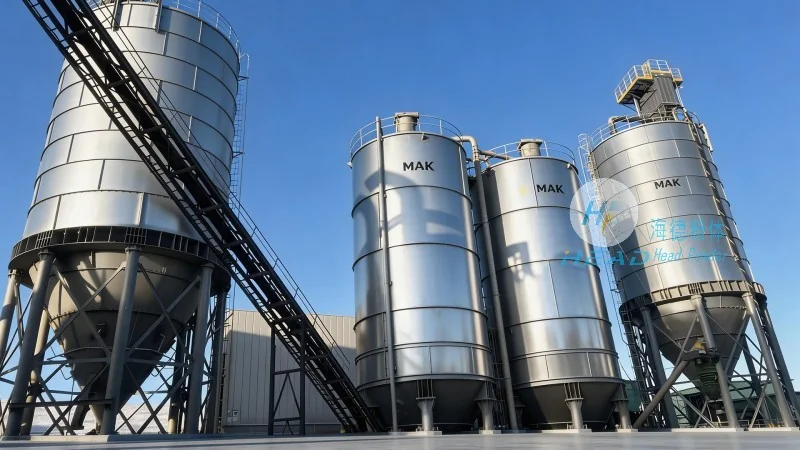
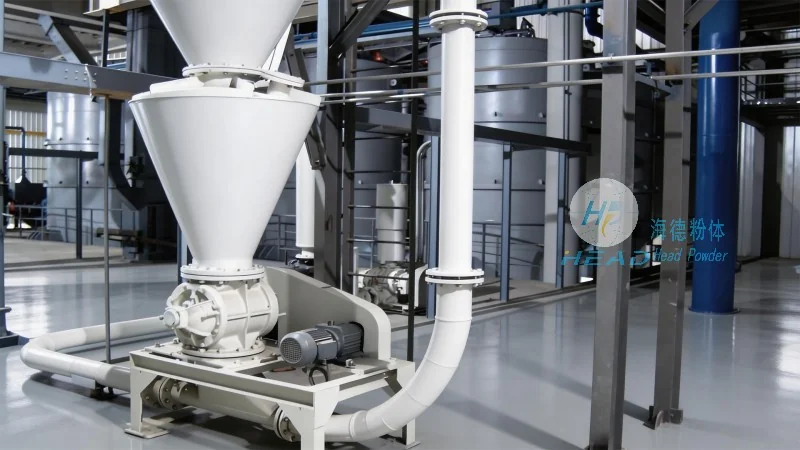
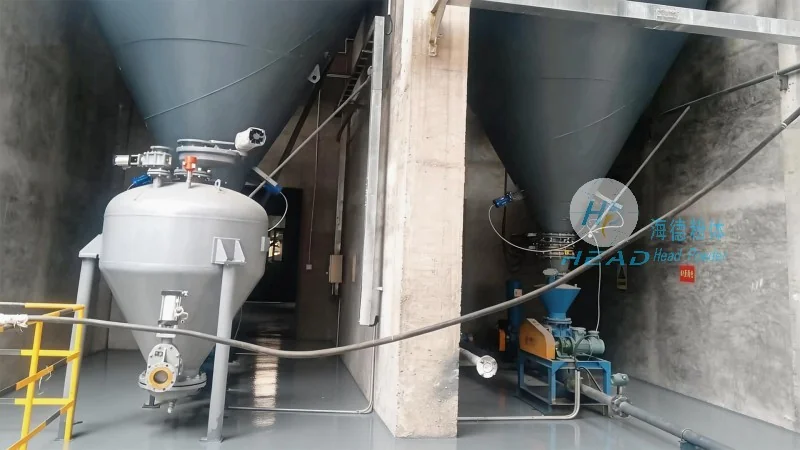
Working Principle of Fluorosilicate Sodium Powder Pneumatic Conveying
The working principle of fluorosilicate sodium powder pneumatic conveying relies on the interaction between powder particles and the air stream. In this process, compressed air is introduced into a hopper or storage container where the fluorosilicate sodium powder is stored. The air creates a low-pressure zone, causing the powder to be drawn into the air stream and carried through the conveying pipeline. The powder particles are suspended in the air, forming a dense phase or dilute phase flow, depending on air velocity and powder characteristics. The system typically includes a blower or compressor to generate necessary air pressure, a hopper for powder storage, a conveying line, and a receiver or discharge point at the destination. The entire process ensures safe and efficient fluorosilicate sodium powder transport, minimizing dust generation and material loss.
Characteristics of Fluorosilicate Sodium Powder Pneumatic Conveying
Fluorosilicate sodium powder pneumatic conveying exhibits distinct characteristics suitable for industrial applications. A primary advantage is high efficiency in transporting bulk powder over long distances, reducing manual handling and labor costs. The system handles diverse powder properties, including varying particle sizes, moisture contents, and flowabilities, making it versatile for different fluorosilicate sodium products. Another key characteristic is minimizing dust exposure and environmental contamination, as the powder is contained within the air stream and conveying line, enhancing workplace safety and regulatory compliance. Additionally, the system can operate in dense phase or dilute phase modes, offering flexibility for different powder loads and distances. Compact design and ease of integration into existing production lines also contribute to its popularity in industrial settings.




