HeadPowder, a leading engineering company based in Shandong, China, specializes in the design and implementation of advanced pneumatic conveying systems tailored for the battery industry. In the production of lithium-ion batteries, the efficient and reliable transport of positive and negative electrode materials is critical to maintaining production efficiency and product quality. However, the high abrasiveness and varying particle sizes of these materials can lead to common issues such as pipeline blockages, which can significantly disrupt the manufacturing process. This article explores the strategies employed by pneumatic conveying systems to prevent blockages and highlights the key design parameters that ensure optimal performance in the transport of positive and negative electrode materials.
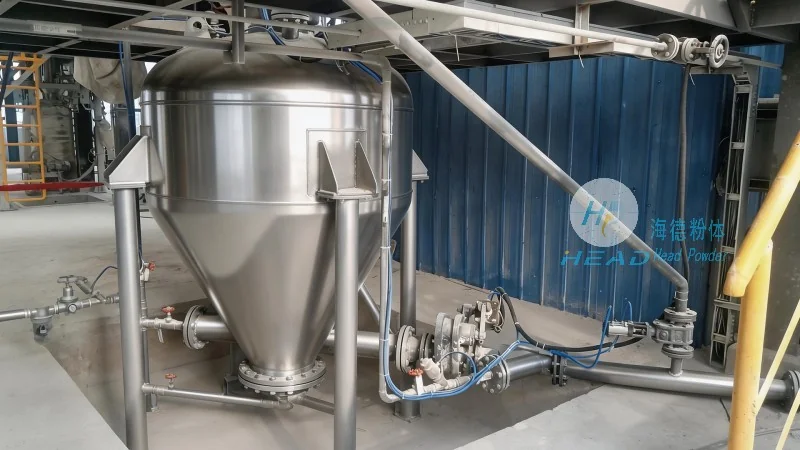
Understanding Pipeline Blockages in Pneumatic Conveying Systems
Pipeline blockages in pneumatic conveying systems are often caused by several factors, including the accumulation of fine particles, the formation of agglomerates, and the impact of high-pressure air on the material. For positive and negative electrode materials, which typically consist of active substances like lithium cobalt oxide (LiCoO₂) or nickel manganese cobalt oxide (NMC) for cathodes, and graphite or lithium iron phosphate (LFP) for anodes, the risk of blockage is particularly high due to their fine particle size and tendency to adhere to surfaces. These materials can also create friction and wear on the conveying pipes, leading to material buildup over time. Preventing blockages is therefore essential to ensure continuous operation and minimize downtime in battery production facilities.
Key Design Parameters for Preventing Blockages in Pneumatic Conveying
Several critical design parameters must be considered when designing a pneumatic conveying system to prevent blockages in the transport of positive and negative electrode materials. The first parameter is the air velocity, which must be maintained at an appropriate level to ensure that the material is fully entrained by the air stream. Insufficient air velocity can lead to material settling and blockage, while excessive velocity may cause excessive wear on the system components. For most positive and negative electrode materials, an air velocity of 20-30 meters per second is commonly recommended to achieve optimal conveying performance without causing excessive wear.
The second key parameter is the pipe diameter. The diameter of the conveying pipe must be selected based on the particle size distribution of the material. Larger pipe diameters are generally preferred for materials with larger particle sizes to reduce friction and prevent blockage, while smaller diameters may be used for finer materials with lower air velocity requirements. For example, in the transport of NMC cathode powders, which have a particle size range of 1-10 microns, a pipe diameter of 50-100 mm is often used to maintain a stable flow and prevent agglomeration.
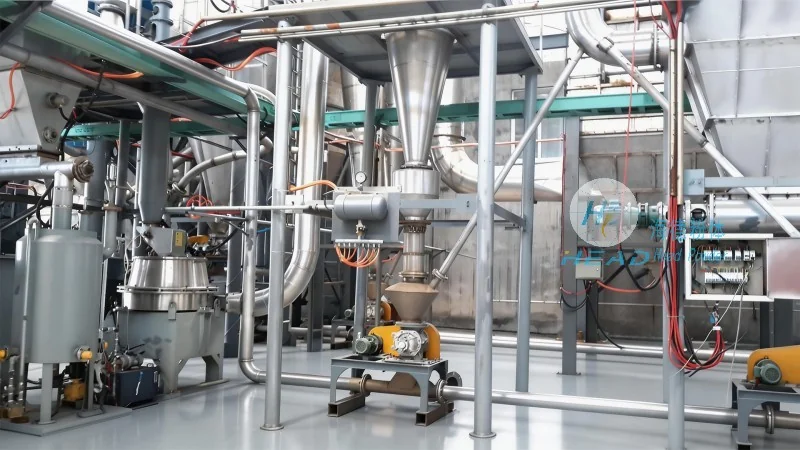
The third important parameter is the system pressure. The pressure of the air used in the conveying system affects the velocity and the ability of the air to carry the material. Higher pressure can increase the air velocity and reduce the risk of blockage, but it also increases the energy consumption and the risk of wear on the system components. The optimal pressure is typically determined based on the material's properties and the required conveying distance. For long-distance conveying of electrode materials, higher pressures may be necessary to maintain the material's suspension in the air stream.
Another critical design parameter is the use of appropriate materials for the conveying pipes and components. The materials used must be resistant to abrasion and corrosion from the electrode powders. Stainless steel or high-grade plastic pipes are commonly used to withstand the abrasive nature of the materials and prevent wear-induced blockages. Additionally, the use of smooth pipe surfaces and rounded bends can help reduce friction and prevent material buildup at critical points in the system.
Advanced Solutions for Enhanced Conveying Performance
HeadPowder employs advanced technologies and customized solutions to address the challenges of pipeline blockages in the transport of positive and negative electrode materials. One such solution is the use of pulse-jet systems, which use periodic bursts of high-pressure air to clear any material buildup in the pipes and maintain a consistent flow. This technology is particularly effective for materials that tend to agglomerate, as the pulses help break up the agglomerates and keep the material suspended in the air stream.
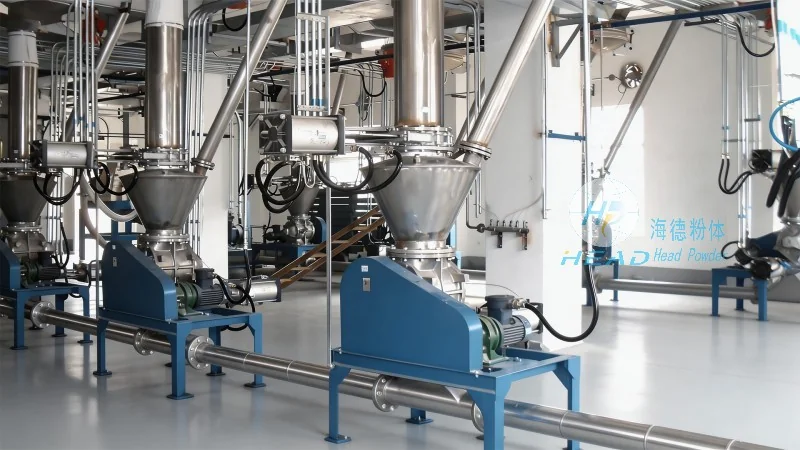
Another advanced solution is the integration of in-line mixers and agitators, which help to prevent material settling and maintain a uniform particle distribution throughout the conveying process. These devices are especially useful for materials with wide particle size distributions, as they ensure that all particles are entrained by the air and prevent the larger particles from settling and causing blockages.
Furthermore, HeadPowder utilizes sophisticated control systems that monitor the system's performance in real-time and adjust the air velocity and pressure as needed to prevent blockages. These systems use sensors to detect changes in pressure, flow rate, and material level, and can automatically adjust the conveying parameters to maintain optimal performance. This level of automation helps to minimize the risk of human error and ensures consistent operation of the pneumatic conveying system.
Conclusion
Preventing pipeline blockages in the pneumatic conveying of positive and negative electrode materials is a critical aspect of battery production, and it requires careful consideration of key design parameters. By optimizing air velocity, pipe diameter, system pressure, and material selection, along with advanced technologies such as pulse-jet systems and in-line mixers, companies like HeadPowder can ensure efficient and reliable transport of electrode materials. The expertise and customized solutions provided by HeadPowder, based in Shandong, China, help battery manufacturers maintain high production efficiency and product quality, ultimately contributing to the success of the battery industry.




