Understanding the working principles and classification applications of nickel powder pneumatic conveying is crucial for optimizing material handling processes in various industrial settings. This article provides a detailed overview of the fundamental mechanisms, different conveying systems, and practical applications of nickel powder pneumatic conveying, with a focus on the technical aspects and operational considerations. The information is provided by Shandong HeadPowder Engineering Co., Ltd. (headpowder), a leading manufacturer specializing in powder handling solutions.
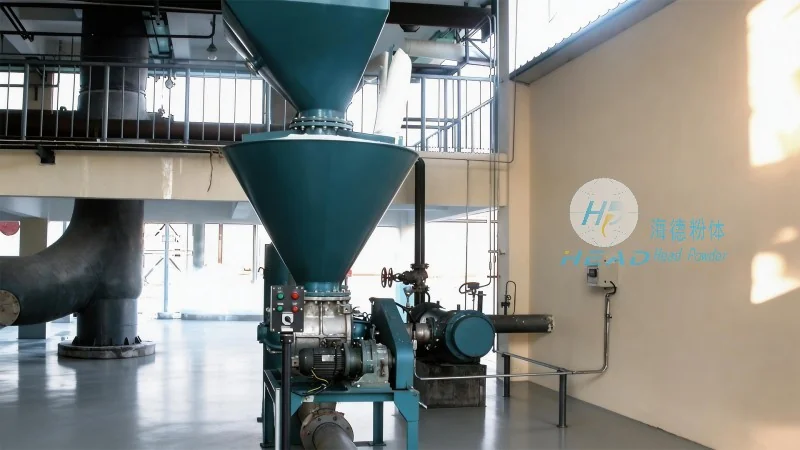
Introduction to Nickel Powder Pneumatic Conveying
Nickel powder, a critical material in the manufacturing of batteries, alloys, and other high-value products, requires efficient and reliable transportation methods to maintain product quality and process efficiency. Pneumatic conveying offers a solution by using air or gas to transport dry powders like nickel powder through a pipeline system. This method eliminates the need for mechanical components such as belts or buckets, reducing maintenance and improving safety. The core principle involves creating a pressure differential that propels the powder particles through the conveying line, making it an ideal choice for handling sensitive materials like nickel powder, which can be prone to agglomeration or degradation under mechanical stress.
Working Principle of Pneumatic Conveying Systems
The fundamental working principle of nickel powder pneumatic conveying systems revolves around the use of air flow to transport particles. There are two primary types of pneumatic conveying systems: dilute-phase and dense-phase. In dilute-phase systems, the powder is suspended in the air stream as individual particles, moving at high velocities. This method is suitable for short to medium conveying distances, typically up to several hundred meters. In contrast, dense-phase systems transport the powder in a more concentrated form, often with lower air velocities, which reduces particle impact and wear on the system components. The choice between these systems depends on factors such as the distance to be covered, the particle size and density of the nickel powder, and the required flow rate.
Classification of Pneumatic Conveying Systems for Nickel Powder
Pneumatic conveying systems for nickel powder can be classified based on their operational mode and design. The most common classifications include:
1. Dilute-Phase Pneumatic Conveying
Dilute-phase systems operate by creating a high-velocity air stream that suspends the nickel powder particles. The air velocity is typically above the terminal velocity of the particles, ensuring they remain airborne. These systems are often used for short to medium conveying distances, typically up to several hundred meters. The key advantage of dilute-phase systems is their ability to handle high flow rates with relatively low pressure drops. However, they may require larger air volumes and are more susceptible to particle segregation or degradation if the powder is not well-dispersed.
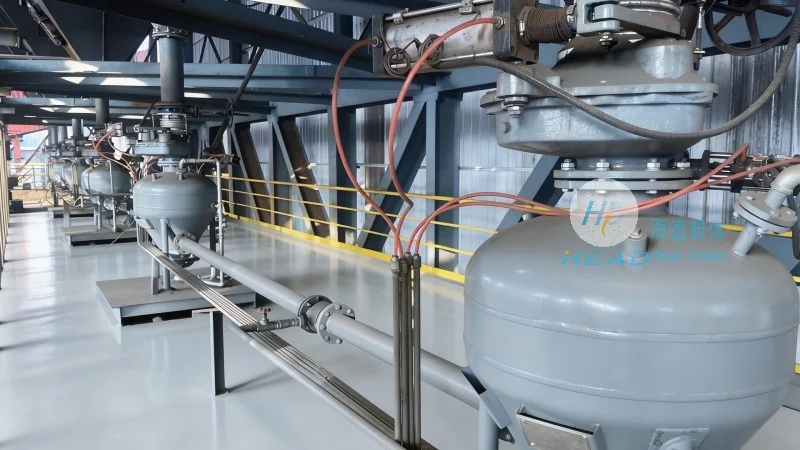
2. Dense-Phase Pneumatic Conveying
Dense-phase systems, also known as low-pressure or low-velocity systems, transport the nickel powder in a more compact form. The air velocity is kept low, and the powder is often mixed with a small amount of air or gas to form a slurry-like flow. This method is particularly suitable for long-distance conveying (up to several kilometers) and for handling sensitive or abrasive powders like nickel powder. The low velocity reduces particle impact, minimizing wear on the pipeline and equipment, and helps maintain the integrity of the powder particles. Dense-phase systems are also effective in preventing particle segregation and ensuring a consistent flow rate.
3. Pressure and Vacuum Conveying Systems
Conveying systems can be further classified based on the pressure applied to the system. Pressure systems use compressed air to push the nickel powder through the pipeline, while vacuum systems use a vacuum to pull the powder. Pressure systems are generally more efficient for short to medium distances and high flow rates, as they can maintain higher air pressures and velocities. Vacuum systems are often used for long-distance or low-flow applications, as they can handle longer pipelines without significant pressure loss. For nickel powder, pressure systems are commonly preferred due to their ability to handle higher particle loads and maintain consistent flow rates.
Application of Nickel Powder Pneumatic Conveying in Industrial Processes
Nickel powder is widely used in various industrial applications, and pneumatic conveying plays a vital role in transporting it efficiently from storage to processing units. The following are key applications where nickel powder pneumatic conveying is employed:
1. Battery Manufacturing
In the production of lithium-ion batteries, nickel powder is a critical component in the cathode material. Pneumatic conveying is used to transport nickel powder from raw material storage to mixing and coating lines. The ability to handle fine powders without agglomeration is essential for maintaining the quality of the cathode material. Dense-phase systems are often preferred in this application to ensure the powder remains well-dispersed and free-flowing, which is crucial for achieving uniform coating on the battery electrodes.
2. Alloy Production
Nickel powder is used in the production of various nickel-based alloys, such as Inconel and Monel. Pneumatic conveying is used to transport the nickel powder to melting furnaces or powder metallurgy equipment. The high-temperature and high-pressure conditions in these processes require reliable and efficient material handling to ensure consistent alloy composition. Dilute-phase systems may be used for short-distance conveying from storage to the furnace, while dense-phase systems are used for longer distances or when handling larger quantities of powder.
3. Coating and Plating Industries
Nickel powder is used in electroplating and thermal spraying applications to coat surfaces with a protective or decorative layer. Pneumatic conveying is used to transport the nickel powder to the plating or spraying equipment. The fine particle size of the nickel powder requires a system that can handle low particle loads and maintain particle integrity. Vacuum systems are often used in this application to ensure the powder is evenly distributed and free from agglomeration, which is essential for achieving a uniform coating.
4. Chemical Processing
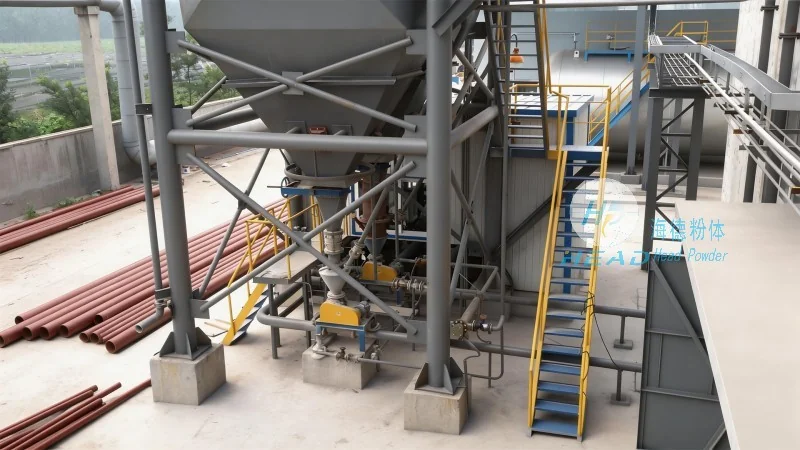
In chemical processing plants, nickel powder is used as a catalyst or reactant in various chemical reactions. Pneumatic conveying is used to transport the nickel powder to reactors or mixing tanks. The ability to handle abrasive and corrosive powders is important in these applications. Dense-phase systems are commonly used to minimize wear on the system components and ensure the powder remains in a stable state during transport.
Operational Considerations and Best Practices
When implementing nickel powder pneumatic conveying systems, several operational considerations must be taken into account to ensure optimal performance and longevity of the equipment. These include:
1. Particle Size and Density
The size and density of the nickel powder particles significantly affect the conveying system's performance. Fine particles (less than 10 microns) may require more air volume and lower air velocities to prevent clogging or degradation. Coarser particles (greater than 100 microns) can be handled with higher air velocities and lower pressure drops. Understanding the particle characteristics is essential for selecting the appropriate conveying system and operating parameters.
2. System Sizing and Design
The design of the pneumatic conveying system must be tailored to the specific application requirements. This includes determining the appropriate pipeline diameter, length, and layout, as well as the type and capacity of the air compressor or vacuum pump. Proper system sizing ensures that the pressure and velocity requirements are met without excessive energy consumption or pressure loss.
3. Material Handling and Maintenance
Regular maintenance of the pneumatic conveying system is crucial to prevent clogging, wear, and degradation of the nickel powder. This includes cleaning the pipeline, checking for leaks, and replacing worn components such as filters and valves. Proper material handling, such as avoiding overloading the system or allowing excessive air leakage, helps maintain the system's efficiency and extend its operational life.




