HeadPowder, a leading enterprise in the field of powder handling technology, specializes in the design, manufacturing, and application of pneumatic conveying systems for ceramic powders. This article provides an in-depth exploration of the fundamental principles behind ceramic powder pneumatic conveying, the various classification methods used in industry, and practical applications across different sectors.
Ceramic Powder Pneumatic Conveying: Core Principles
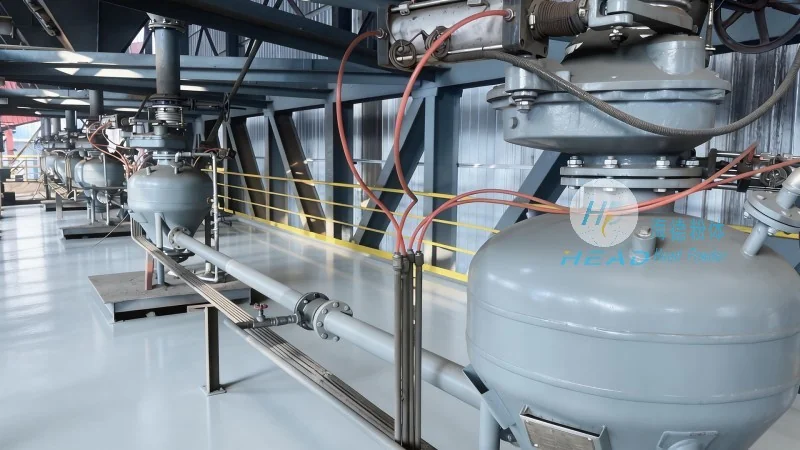
Ceramic powder pneumatic conveying is a method of transporting fine ceramic powders through a pipeline using compressed air or other gas as the conveying medium. The process relies on the principles of fluid dynamics and particle behavior to ensure efficient and reliable material transport. The core mechanisms include particle suspension, air-particle interaction, and pressure drop management. When compressed air is introduced into the conveying line, it creates a low-pressure zone that draws the ceramic powder particles into suspension. The air flow must be sufficient to overcome the gravitational forces acting on the particles and maintain them in a fluidized state. This suspension allows the powder to be transported through the pipeline without the need for mechanical components like screws or belts, which can be prone to wear and contamination in high-purity ceramic applications.
Classification of Ceramic Powder Pneumatic Conveying Systems
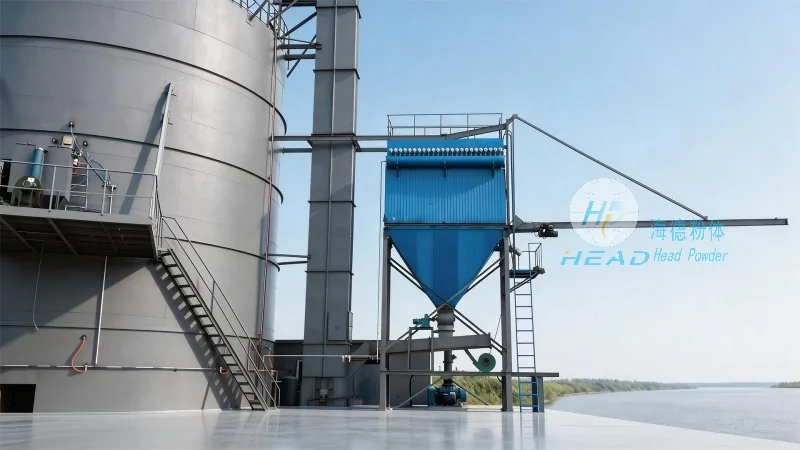
The classification of ceramic powder pneumatic conveying systems is typically based on the pressure and flow characteristics of the conveying medium. Two primary categories are widely recognized: dilute-phase and dense-phase systems. Dilute-phase systems operate at relatively low pressure and high air-to-powder ratios, where particles are suspended in the air stream as individual droplets. This method is suitable for long-distance transport and is commonly used in applications requiring minimal pressure drop and high throughput. Dense-phase systems, on the other hand, operate at higher pressures and lower air-to-powder ratios, where particles are carried in a more compact, plug-like flow. This approach is ideal for handling abrasive or sensitive ceramic powders, as it reduces particle impact and friction, minimizing wear on equipment and preserving product quality. Additionally, classification can be based on the type of air supply, such as positive pressure (where air is forced into the system) or negative pressure (where air is drawn out), each with its own advantages in terms of system design and operational flexibility.
Applications of Ceramic Powder Pneumatic Conveying
The versatility of ceramic powder pneumatic conveying makes it applicable across a wide range of industries. In the ceramics manufacturing sector, it is used for transporting raw materials like clay, feldspar, and silica to production lines, ensuring a consistent and dust-free supply. The process is critical in applications such as tile production, where precise control over powder flow is essential to maintain uniform product quality. In the pharmaceutical industry, pneumatic conveying is employed to handle ceramic-based excipients or active pharmaceutical ingredients (APIs), where contamination control and product purity are paramount. The system's ability to maintain a closed environment prevents cross-contamination and ensures compliance with regulatory standards. Furthermore, in the chemical and materials processing industries, ceramic powders are used as catalysts or fillers, and pneumatic conveying facilitates their transport between reactors and storage tanks. The technology is also utilized in the electronics industry for handling ceramic substrates or powders used in semiconductor manufacturing, where high purity and low particle contamination are critical to device performance.
HeadPowder: Your Trusted Partner in Ceramic Powder Handling
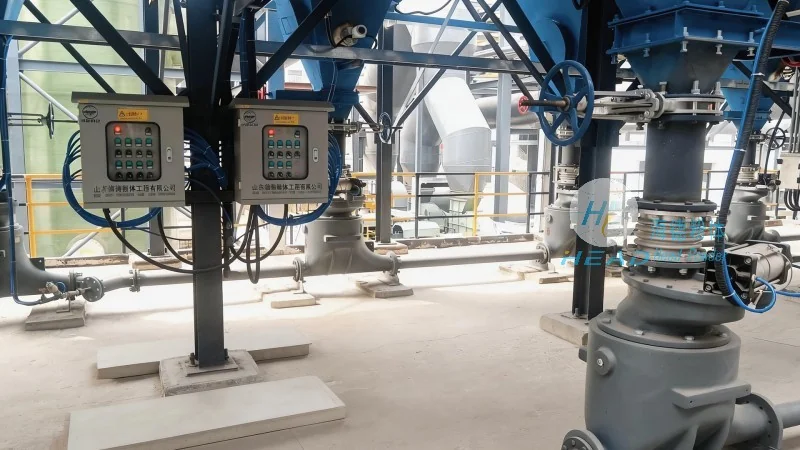
Shandong HeadPowder Engineering Co., Ltd., based in Shandong, China, is a leading provider of customized pneumatic conveying solutions tailored to the unique needs of ceramic powder applications. With years of experience in the industry, HeadPowder combines advanced engineering expertise with a customer-centric approach to deliver efficient, reliable, and cost-effective systems. The company's team of experts works closely with clients to understand their specific requirements, from material properties and processing conditions to operational constraints and quality standards. By leveraging cutting-edge technology and rigorous testing protocols, HeadPowder ensures that each system is optimized for maximum performance and minimal downtime. Whether it's a dilute-phase or dense-phase system, the company's solutions are designed to meet the highest industry standards, providing long-term value and peace of mind to its clients. HeadPowder's commitment to innovation and quality has made it a trusted name in the global market for ceramic powder handling, serving a diverse clientele across various sectors and helping them achieve their operational goals with precision and efficiency.




