For industrial applications requiring the efficient and reliable transport of PVC powders, understanding the mechanics and design principles of a PVC powder pneumatic conveying system is crucial. This article delves into the fundamental aspects of such systems, explaining how they operate and the key design considerations that ensure optimal performance.
PVC Powder Pneumatic Conveying System: An Overview
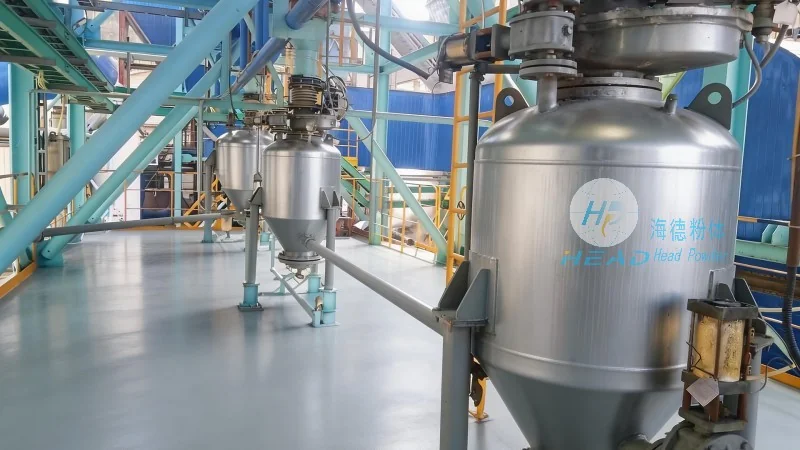
A PVC powder pneumatic conveying system is a specialized piece of equipment designed to transport dry PVC powders through a pipeline using compressed air or other gas as the motive force. Unlike traditional mechanical conveyors, which rely on physical components like belts or screws, pneumatic systems use air pressure to move material, making them ideal for handling fine powders that are prone to caking or segregation. The system typically consists of several key components, including a hopper for material storage, a feeder to control the flow rate, a pipeline network, and a receiver to collect the delivered material. The entire setup is engineered to maintain consistent air flow and pressure, ensuring that the PVC powder is conveyed smoothly and without degradation.
Design Principles of a PVC Powder Pneumatic Conveying System
The design of a PVC powder pneumatic conveying system is governed by several critical principles that ensure efficiency, safety, and longevity. The first principle is the selection of appropriate air velocity. The air velocity must be high enough to overcome the gravitational forces acting on the powder particles and to prevent particle deposition on the pipeline walls. However, excessive air velocity can lead to excessive pressure drop and energy consumption, as well as particle attrition. Engineers typically use the "minimum conveying velocity" and "maximum conveying velocity" to determine the optimal air speed for a given PVC powder. The minimum velocity is the lowest air speed at which the powder will remain suspended and be transported, while the maximum velocity is the highest speed before particle separation occurs. For PVC powders, the optimal velocity often falls within a narrow range, typically between 20 and 30 meters per second, depending on the particle size and density.
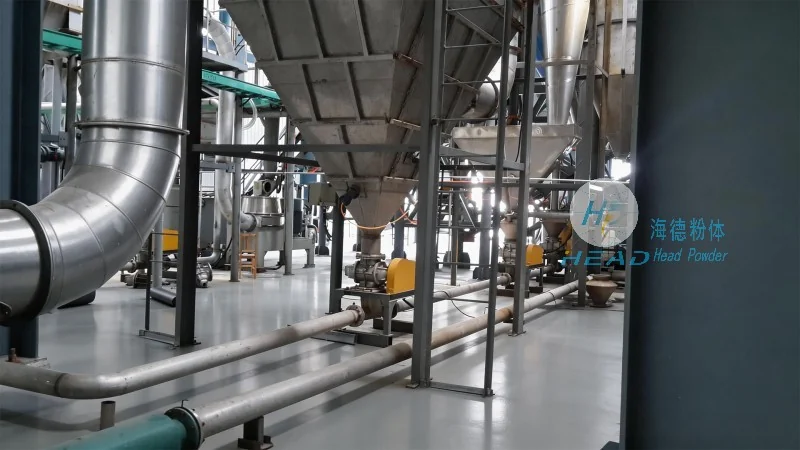
Another key design principle is the consideration of pressure drop. The pressure drop in the pipeline is a measure of the energy required to move the powder and air through the system. It is influenced by factors such as the pipeline diameter, length, and the number of bends or fittings. High pressure drop can lead to increased energy costs and may require a more powerful compressor. To minimize pressure drop, engineers use larger diameter pipelines, smooth internal surfaces, and minimal bends. For PVC powder systems, the pressure drop is often calculated using empirical formulas based on the Reynolds number and the powder's physical properties. The goal is to keep the pressure drop within an acceptable range, typically 0.5 to 1.5 bar per 100 meters of pipeline, to ensure efficient operation.
Components and Their Functions in a PVC Powder Pneumatic Conveying System
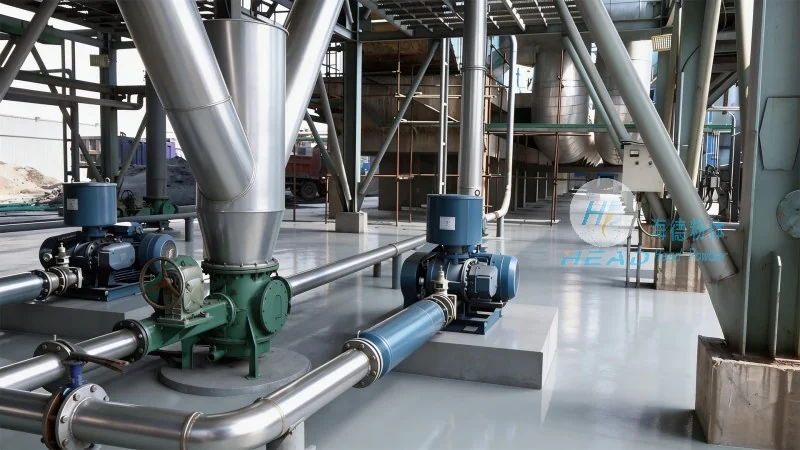
Each component of a PVC powder pneumatic conveying system plays a vital role in the overall operation. The hopper, usually made of stainless steel or other corrosion-resistant materials, serves as the storage container for the PVC powder. It is designed with a conical bottom to facilitate material flow and is equipped with a level indicator to monitor the powder inventory. The feeder, often a rotary valve or a screw feeder, controls the flow rate of the powder into the pipeline. It is critical to maintain a consistent flow rate to avoid surges or fluctuations in the air flow, which can cause particle separation or pipeline blockages. The pipeline network connects the hopper, feeder, and receiver, and is typically made of materials such as PVC, stainless steel, or carbon steel, depending on the application. The receiver, where the delivered PVC powder is collected, is usually a large tank or a hopper with a discharge valve. It is designed to handle the incoming flow and prevent material spillage or contamination.
Advantages of Using a PVC Powder Pneumatic Conveying System
Compared to traditional mechanical conveyors, PVC powder pneumatic conveying systems offer several advantages. First, they are highly flexible, as the pipeline can be easily reconfigured or extended to accommodate changes in the production process. Second, they are suitable for transporting powders over long distances, as the air pressure can be maintained throughout the pipeline. Third, they can handle a wide range of PVC powder types, including fine powders, coarse powders, and mixtures of different particle sizes. Fourth, they are relatively low maintenance, as there are fewer moving parts compared to mechanical conveyors. Finally, they can be integrated with other process equipment, such as mixers or dryers, to form a complete production line.
Applications of PVC Powder Pneumatic Conveying Systems
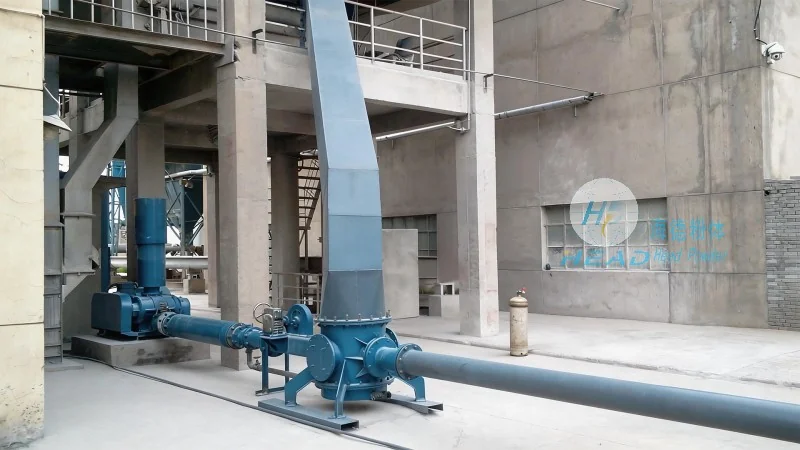
PVC powder pneumatic conveying systems are widely used in various industries, including the plastics industry, where PVC powders are used to manufacture pipes, sheets, and other products. They are also used in the chemical industry for transporting PVC powders used in the production of coatings and adhesives. Additionally, they are employed in the food industry for handling PVC powders used as additives in food products. The versatility of these systems makes them suitable for a wide range of applications, from small-scale laboratory operations to large-scale industrial production.
Conclusion
In conclusion, a PVC powder pneumatic conveying system is a sophisticated piece of equipment that combines engineering principles with practical design to efficiently transport PVC powders. The key to its success lies in the proper selection of air velocity, pressure drop management, and the use of appropriate components. By adhering to these design principles, manufacturers can ensure that their PVC powder pneumatic conveying system operates reliably and efficiently, meeting the demands of modern industrial production. As a leading provider of such systems, Shandong HeadPowder Engineering Co., Ltd. specializes in designing and manufacturing high-quality PVC powder pneumatic conveying systems tailored to the specific needs of their clients. With their expertise and commitment to quality, they help industries achieve optimal performance and productivity in their PVC powder handling operations.




