PTA (Polyethylene Terephthalate Acid) serves as a crucial raw material in the production of fibers, plastics, and other industrial products. To handle PTA materials efficiently and safely, pneumatic conveying equipment has become a core component in modern industrial production. This article provides an overview of PTA pneumatic conveying equipment, detailing its basic structure, working principles, and practical application advantages, helping readers gain a comprehensive understanding of this technology.
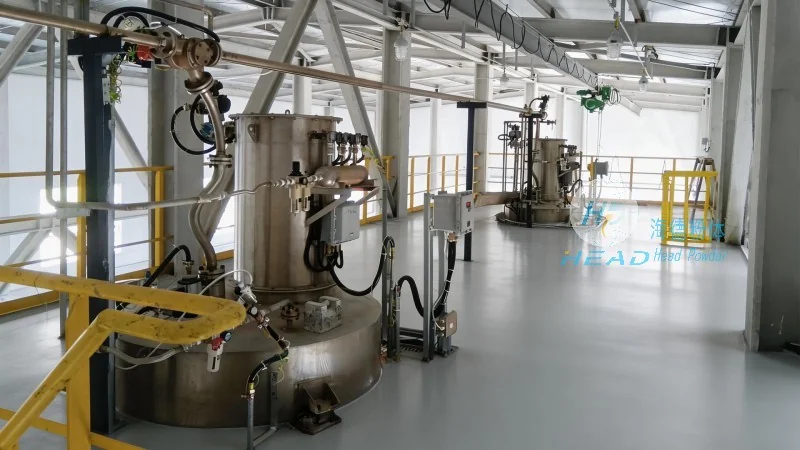
Overview of PTA Pneumatic Conveying Equipment
Pneumatic conveying equipment for PTA is designed to transport solid PTA particles from one location to another through pneumatic technology. Compared with traditional mechanical conveying methods, it offers benefits such as long-distance transport capability, high efficiency, simple equipment structure, and easy operation and maintenance. For PTA, which is prone to static electricity, caking, or has strict environmental requirements, pneumatic conveying equipment provides a stable and safe solution for material handling.
Core Structure of PTA Pneumatic Conveying Equipment
PTA pneumatic conveying equipment typically consists of a feeding system, conveying pipelines, a gas source system, a separation system, and a control system. These components work together to ensure the continuous and stable transport of materials. Specifically, the feeding system extracts PTA from hoppers or storage tanks and delivers it to the conveying pipelines. The gas source system supplies compressed air or inert gas to drive the material movement within the pipelines. The conveying pipelines are selected based on the transport distance and material characteristics, usually made of stainless steel or plastic to accommodate the chemical properties of PTA. The separation system separates the transported material from the air and collects it into the designated receiving equipment. The control system monitors and regulates the entire transport process through sensors and controllers, ensuring the equipment operates at optimal conditions.
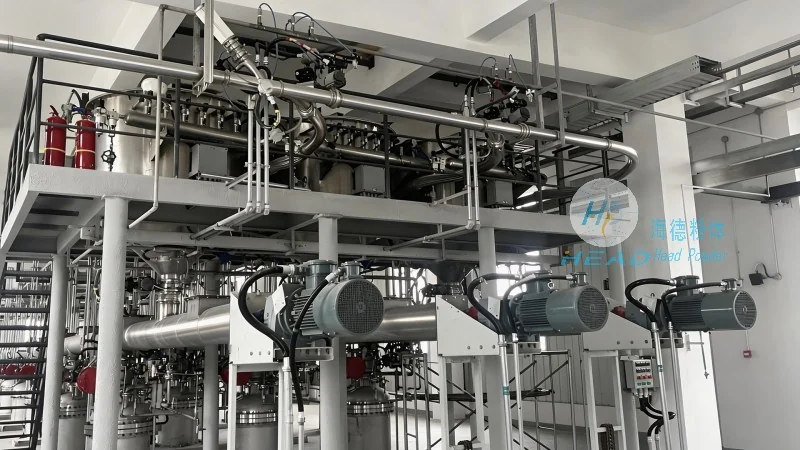
Working Principles of PTA Pneumatic Conveying Equipment
The working principle of PTA pneumatic conveying equipment is based on the theory of gas-solid two-phase flow in fluid mechanics. When compressed air or inert gas flows through the conveying pipelines, it forms a high-speed airflow that lifts and transports the PTA particles. Under the action of the airflow, the material particles are suspended and move along with the airflow, achieving material transport. Based on the relative motion direction between the airflow and the material, pneumatic conveying is classified into suction and pressure types. Suction-type equipment typically extracts material from hoppers or storage tanks through negative pressure, while pressure-type equipment pressurizes material from hoppers or storage tanks through positive pressure for delivery to receiving equipment. For PTA, which is prone to static electricity, inert gas (such as nitrogen) is often used as the conveying medium to avoid static accumulation and related safety hazards.
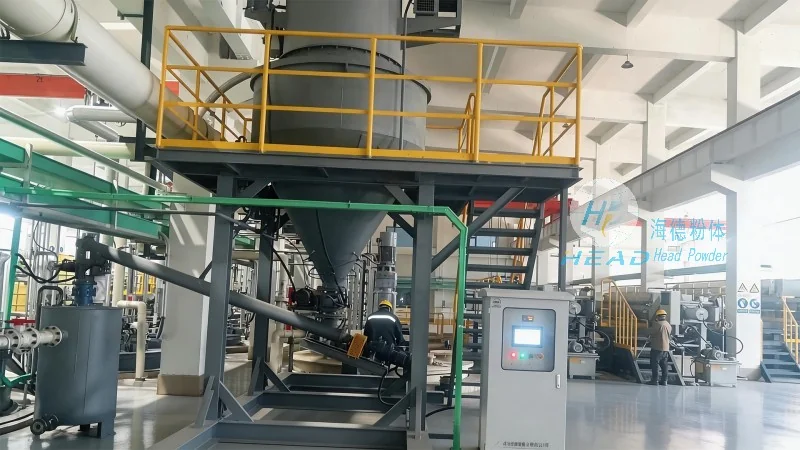
Application Advantages of PTA Pneumatic Conveying Equipment
In the PTA production process, pneumatic conveying equipment offers several advantages. First, it enables continuous and automated material transport, reducing manual intervention and improving production efficiency. Second, the small contact area between the material and equipment reduces friction and wear, extending equipment service life. Additionally, pneumatic conveying is non-contact and non-polluting, maintaining material purity to meet high-quality requirements in PTA production. For long-distance transport or scenarios requiring obstacle crossing, pneumatic conveying equipment provides flexible solutions to adapt to various production environments.
Safety and Maintenance of PTA Pneumatic Conveying Equipment
During operation, PTA pneumatic conveying equipment requires special attention to safety and maintenance. Since PTA is prone to static electricity, equipment should implement effective anti-static measures, such as grounding and using anti-static materials, to prevent fire or explosion risks from static accumulation. Simultaneously, pipelines and equipment should be regularly inspected to ensure no leaks or blockages, avoiding material leakage or transport interruptions. The gas source system must maintain stable pressure and flow, meeting design requirements to avoid efficiency drops or equipment damage due to pressure fluctuations. Furthermore, the control system should be calibrated periodically to ensure sensors and controllers function correctly, enabling timely monitoring and regulation of the transport process for equipment safety.




