Carbon fiber materials, known for their exceptional strength-to-weight ratio and high stiffness, are widely used in aerospace, automotive, and sports equipment industries. However, the handling and transportation of these materials present unique challenges due to their fine particle size, high abrasiveness, and potential for static charge accumulation. Pneumatic conveying offers an efficient and reliable solution for transporting carbon fiber powders and fibers, ensuring minimal material degradation and maintaining product quality throughout the process. This article explores the working principle and key characteristics of pneumatic conveying systems specifically designed for carbon fiber materials, highlighting the technological advancements and operational advantages that make them suitable for industrial applications.
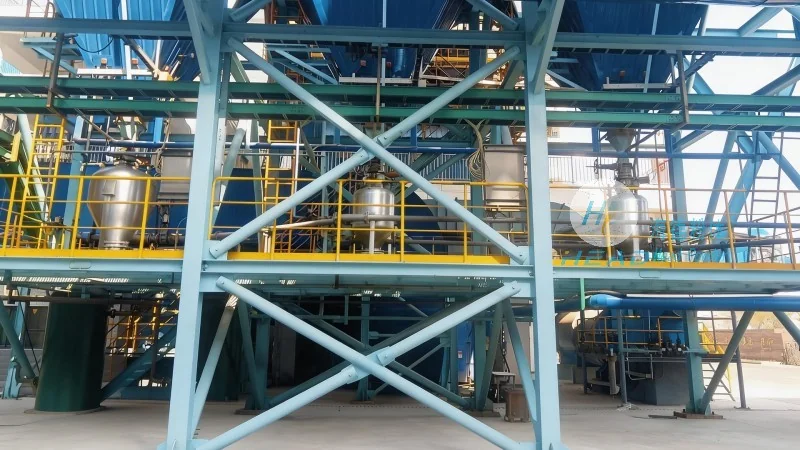
Shandong HeadPowder Engineering Co., Ltd., a leading provider of powder handling solutions, specializes in designing and manufacturing advanced pneumatic conveying systems tailored to the demands of carbon fiber processing. With a focus on precision engineering and material compatibility, the company’s solutions are engineered to address the specific challenges associated with carbon fiber materials, such as their tendency to agglomerate and the need for gentle handling to prevent damage. The company’s expertise in fluidization, pressure control, and material separation ensures that carbon fiber powders are conveyed efficiently while maintaining their integrity and performance characteristics.
The working principle of pneumatic conveying for carbon fiber materials involves the use of a gas stream (typically air or a mixture of air and inert gases) to transport the material through a pipeline system. There are two primary modes of pneumatic conveying: dilute phase and dense phase. Dilute phase conveying operates at higher velocities, typically 20-30 meters per second, and is suitable for transporting fine powders over short to medium distances. In this mode, the carbon fiber particles are suspended in the gas stream, moving through the pipeline with minimal interaction between particles. Dense phase conveying, on the other hand, operates at lower velocities (5-15 meters per second) and higher pressure, where the material is conveyed in a slurry-like state, reducing particle-to-particle contact and minimizing abrasion. This mode is particularly effective for transporting larger carbon fiber particles or for applications requiring gentle handling, such as in the production of composite materials.
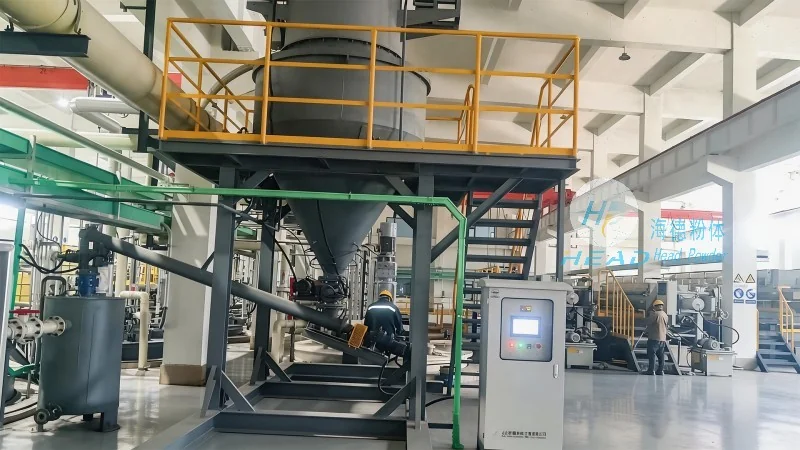
Key characteristics of pneumatic conveying systems for carbon fiber materials include high efficiency in material transport, minimal product degradation, and the ability to handle materials with high abrasiveness. The systems are designed to prevent particle agglomeration, which can lead to blockages and reduced conveying efficiency. Advanced control systems, including pressure sensors and flow meters, ensure consistent material flow and prevent overloading of the system. Additionally, the use of specialized materials for pipeline construction, such as stainless steel or PTFE-coated components, protects against corrosion and abrasion caused by the carbon fiber particles. The systems also incorporate static charge control measures, such as grounding and ionizers, to prevent static buildup that could lead to material explosion or equipment damage.
Another important characteristic is the flexibility of pneumatic conveying systems to accommodate varying material properties and processing requirements. Carbon fiber materials can vary in particle size, density, and moisture content, and the conveying system must be adaptable to these variations. Shandong HeadPowder Engineering Co., Ltd. offers customized solutions that can be adjusted to handle different carbon fiber grades, from fine powders to short fibers, ensuring optimal performance and material integrity. The company’s engineers work closely with clients to understand their specific processing needs and design systems that meet their operational requirements, including throughput capacity, distance of transport, and environmental considerations.
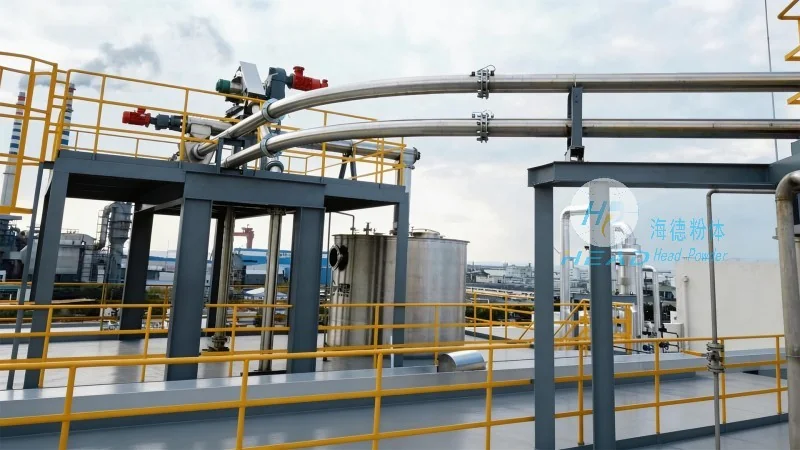
The operational advantages of pneumatic conveying for carbon fiber materials extend beyond material handling efficiency. These systems offer a closed-loop operation, which helps maintain a clean and controlled environment, reducing contamination risks and improving product quality. The absence of mechanical components like belts or screws minimizes the risk of material contamination and wear, extending the lifespan of the equipment. Furthermore, pneumatic conveying systems are energy-efficient compared to traditional methods like bucket elevators or conveyor belts, as they use compressed air as the primary energy source, which can be optimized for lower energy consumption. This makes them a cost-effective solution for large-scale carbon fiber processing operations.
In conclusion, pneumatic conveying is a critical technology for the efficient and safe handling of carbon fiber materials. The working principle, which involves the use of gas streams to transport particles, combined with advanced system designs, ensures that carbon fiber powders and fibers are conveyed with minimal degradation and maximum efficiency. Shandong HeadPowder Engineering Co., Ltd. plays a key role in providing these advanced solutions, leveraging their expertise in powder handling to meet the unique demands of carbon fiber processing. By understanding the working principle and characteristics of pneumatic conveying, manufacturers can optimize their production processes, improve product quality, and enhance operational efficiency in the carbon fiber industry.




