Shandong HeadPowder Engineering Co., Ltd., a leading enterprise based in Shandong, China, specializes in the design, manufacturing, and installation of advanced pneumatic conveying systems for various industrial applications. The company's expertise lies in providing efficient and reliable solutions for transporting bulk materials, with a particular focus on gypsum powder handling. This article delves into the operation process and working principle of gypsum powder pneumatic conveying lines, highlighting the technical aspects and operational efficiency of these systems.
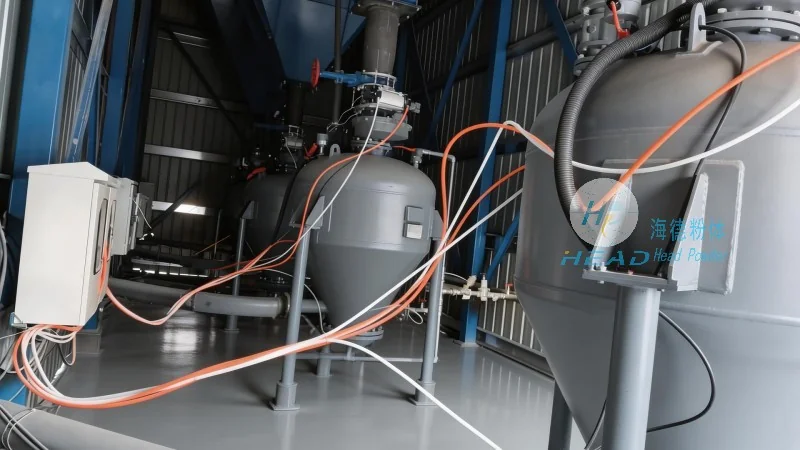
Understanding Gypsum Powder Pneumatic Conveying Lines
Gypsum powder, a widely used building material, requires specialized handling equipment to ensure safe and efficient transportation from storage to processing or packaging units. Pneumatic conveying lines offer a solution that eliminates the need for mechanical components like belts or buckets, reducing maintenance costs and enhancing operational safety. The system operates by using compressed air to move the material through a pipeline network, making it an ideal choice for industries such as construction, cement production, and pharmaceuticals where material purity and minimal contamination are critical.
The Core Components of a Gypsum Powder Pneumatic Conveying System
A typical gypsum powder pneumatic conveying line consists of several key components that work in tandem to achieve seamless material transport. These components include a material hopper or silo for storage, a feeder to control the flow rate, a compressor or air supply unit to generate the necessary air pressure, a pipeline network for material transport, and a receiver or discharge unit for the material's final destination. Each component plays a crucial role in maintaining the system's efficiency and ensuring the consistent movement of gypsum powder.
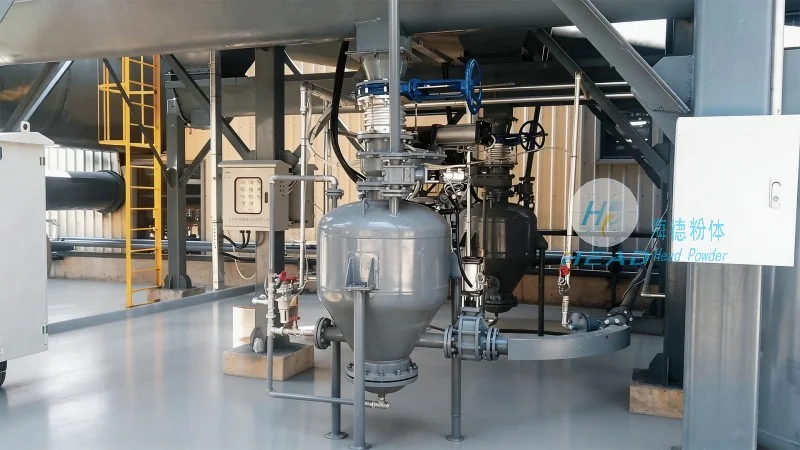
Operation Process of Gypsum Powder Pneumatic Conveying Lines
The operation of a gypsum powder pneumatic conveying line begins with the material being fed from the storage hopper into the feeder. The feeder, often a rotary valve or a screw feeder, regulates the flow rate of the gypsum powder, preventing overloading and ensuring a steady supply to the system. Simultaneously, the compressor starts to generate compressed air, which is then directed into the pipeline. The compressed air creates a pressure differential that propels the gypsum powder particles through the pipeline. As the material travels through the pipeline, it is mixed with the air, forming a slurry-like mixture that moves at high velocity. The pipeline network may include bends, elbows, and vertical sections, all designed to accommodate the material's movement while minimizing pressure loss and ensuring smooth flow.
Working Principle of Pneumatic Conveying for Gypsum Powder
The working principle of a gypsum powder pneumatic conveying system is based on the principles of fluid dynamics and particle motion. When compressed air is introduced into the pipeline, it creates a low-pressure zone that draws the gypsum powder particles into the air stream. The air flow velocity is typically maintained above the material's terminal velocity to ensure that the particles remain suspended and transported efficiently. The system can operate in either positive or negative pressure modes. In positive pressure systems, the pipeline is pressurized above atmospheric pressure, pushing the material forward. In negative pressure systems, the pipeline is maintained at a lower pressure than the surrounding environment, pulling the material into the system. For gypsum powder, positive pressure systems are commonly used due to their ability to handle higher material loads and reduce the risk of dust leakage.
Key Advantages of Gypsum Powder Pneumatic Conveying Lines
Implementing a gypsum powder pneumatic conveying line offers several advantages over traditional mechanical conveying methods. Firstly, it eliminates the need for moving parts like conveyor belts or buckets, reducing maintenance requirements and extending the system's lifespan. Secondly, the system provides a dust-free environment, as the material is enclosed within the pipeline, preventing contamination and improving workplace safety. Thirdly, pneumatic conveying allows for precise control over the material flow rate, ensuring consistent delivery to downstream processes. Additionally, the system can handle a wide range of material characteristics, including varying particle sizes and moisture content, making it versatile for different industrial applications.
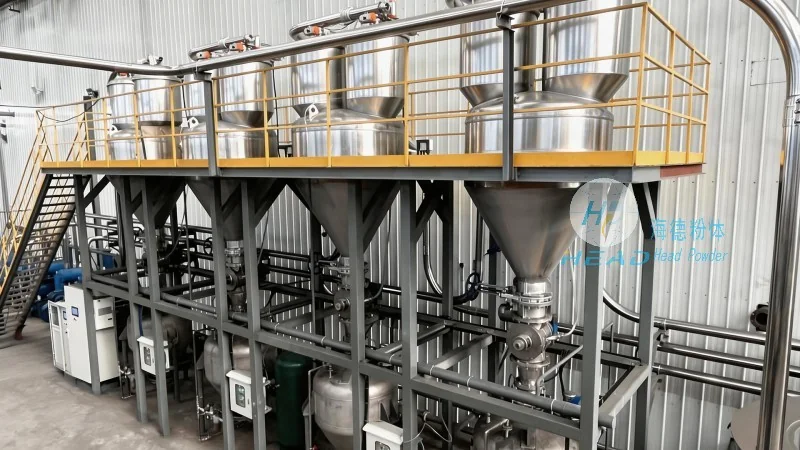
Application Scenarios and Customization Options
Gypsum powder pneumatic conveying lines are widely used in various industrial settings where bulk material transport is required. In the construction industry, these systems are used to transport gypsum powder from storage silos to mixing plants or packaging facilities. In cement production, they help move raw gypsum to the grinding mills, ensuring a consistent supply of raw material. The system can also be customized to meet specific operational requirements, such as varying pipeline lengths, different material flow rates, or integration with existing production lines. Shandong HeadPowder Engineering Co., Ltd. offers tailored solutions that are designed to optimize the performance of the conveying system while minimizing operational costs.
Conclusion
Gypsum powder pneumatic conveying lines represent a sophisticated and efficient solution for the transportation of bulk materials. By leveraging the principles of pneumatic conveying, these systems offer significant advantages in terms of operational efficiency, safety, and cost-effectiveness. With its expertise in the field, Shandong HeadPowder Engineering Co., Ltd. continues to provide high-quality pneumatic conveying solutions that meet the evolving needs of industries worldwide. The understanding of the operation process and working principle of such systems is crucial for optimizing performance and ensuring reliable material transport in various industrial applications.




