High-calcium powder, commonly utilized in industries such as cement manufacturing, construction materials, and chemical processing, necessitates efficient and reliable transportation methods to maintain consistent quality and minimize product degradation. Pneumatic conveying systems have become a preferred solution for handling such powders due to their ability to transport materials within a closed system, reducing dust emissions and enhancing process safety. This article delves into the operation process and working principle of a high-calcium powder pneumatic conveying system, highlighting key components, operational steps, and the technical advantages of this technology.
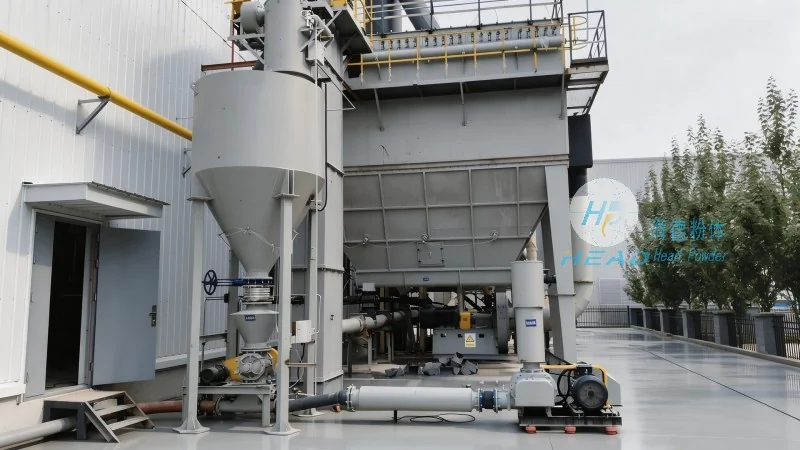
Key Components of the Pneumatic Conveying System
The high-calcium powder pneumatic conveying system typically comprises several critical components that function in unison to achieve efficient material transport. These components include a hopper for material storage, a feeder to regulate the flow rate of the powder, a conveying line (usually constructed from stainless steel or other corrosion-resistant materials to accommodate the abrasive nature of high-calcium powder), a blower or air compressor to generate the required air pressure, and a receiver or discharge hopper where the material is deposited. Additionally, the system may incorporate filters and cyclones to separate the conveyed powder from the air stream, ensuring clean air discharge and preventing dust accumulation within the system.
Working Principle of the Pneumatic Conveying Process
The operation of the high-calcium powder pneumatic conveying system follows a systematic sequence of steps. Initially, the high-calcium powder is stored in the hopper, from which it is fed into the conveying line by the feeder. The feeder regulates the flow rate to maintain a consistent material supply, preventing overloading or underfeeding that could compromise system performance or equipment integrity. Concurrently, the blower generates a high-pressure air stream that is introduced into the conveying line. As the air flows through the line, it entrains the powder particles, creating a slurry-like mixture known as a "pneumatic stream." This stream travels through the conveying line to the receiver, where the air and powder are separated. The air passes through filters and cyclones, and the powder is collected in the receiver. The separated air is then discharged to the atmosphere or recirculated, depending on the system design.
Operation Process: Step-by-Step Overview
The operation process of the high-calcium powder pneumatic conveying system can be broken down into the following key stages:
1. Material Loading and Storage: High-calcium powder is loaded into the hopper from bulk storage or production lines. The hopper is designed with a sloped bottom to facilitate material flow and prevent caking or bridging, which can impede the feeding process.
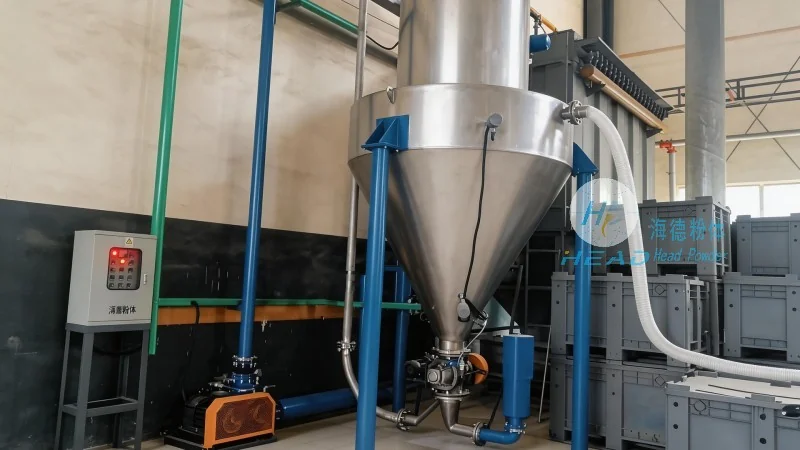
2. Feeding and Flow Control: The feeder, often a rotary valve or a screw feeder, regulates the flow rate of the powder from the hopper into the conveying line. This step is crucial as it ensures a steady and controlled supply of material to the system, preventing surges or interruptions that could lead to system inefficiencies or equipment damage.
3. Air Compression and Introduction: The blower or air compressor produces a high-pressure air stream with sufficient velocity to entrain the powder particles. The air pressure and flow rate are adjusted based on the material characteristics (e.g., particle size, density, and moisture content) and the distance to be conveyed. Proper air management is essential to achieve optimal conveying efficiency and minimize energy consumption.
4. Powder Entrainment and Conveying: As the high-pressure air enters the conveying line, it creates a low-pressure zone that draws the powder particles into the air stream. The air velocity must be sufficient to overcome the gravitational forces and frictional resistance of the powder particles, ensuring stable and continuous transport. The conveying line is typically designed with a slight upward slope to assist in the movement of the powder-air mixture, reducing the risk of blockages.
5. Air-Powder Separation and Material Discharge: Upon reaching the receiver, the powder-air mixture is subjected to a separation process. Cyclones or filters are used to separate the powder from the air. The separated powder is collected in the receiver and can be further processed or stored. The air, now relatively clean, is either discharged to the atmosphere or recirculated back to the blower, depending on the system's design and environmental requirements.
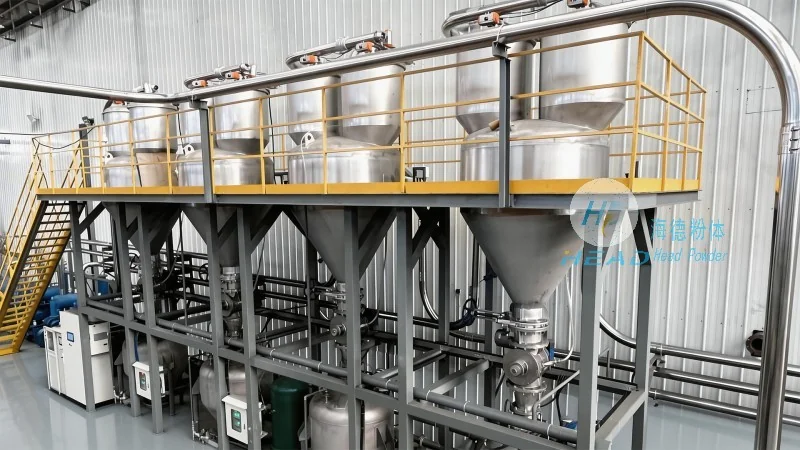
6. System Monitoring and Control: Modern high-calcium powder pneumatic conveying systems are equipped with advanced monitoring and control systems. These systems track parameters such as air pressure, flow rate, material feed rate, and temperature to ensure optimal operation. Sensors and control valves adjust the system in real-time, preventing overloading, underfeeding, or other issues that could compromise system performance or product quality.
Technical Advantages and Considerations
High-calcium powder pneumatic conveying systems offer several technical advantages over traditional mechanical conveying methods. These include:
1. Reduced Dust Emissions: The closed system design minimizes dust exposure, improving workplace safety and compliance with environmental regulations. This is particularly important for high-calcium powders, which can be hazardous if inhaled.
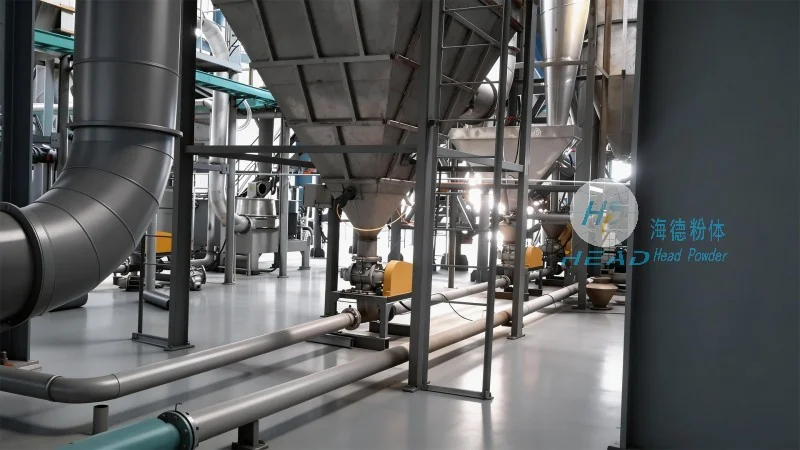
2. Improved Product Quality: By transporting the powder in a closed environment, the system prevents contamination from external sources and reduces the risk of moisture absorption or degradation, maintaining the powder's quality and consistency.
3. Energy Efficiency: Properly designed pneumatic conveying systems can be energy-efficient, especially when using high-efficiency blowers and optimizing air flow rates. The system's performance can be tailored to the specific material and conveying distance, minimizing energy waste.
4. Flexibility and Scalability: Pneumatic conveying systems can be easily adapted to different material types and conveying distances. They can be scaled up or down to accommodate varying production volumes, making them suitable for both small-scale and large-scale industrial applications.
However, there are also considerations to keep in mind when implementing such systems. The abrasive nature of high-calcium powder can lead to wear and tear on system components, requiring regular maintenance and replacement of parts like liners and seals. Additionally, the system's design must account for the material's particle size distribution and moisture content to ensure efficient conveying and prevent blockages. Proper system sizing and component selection are critical to achieving optimal performance and longevity.




