HeadPowder, a leading provider of advanced material handling solutions, specializes in the design and implementation of pneumatic conveying systems tailored for lithium-ion battery nanomaterials. This article delves into the operational workflow and underlying principles of such systems, highlighting the technical aspects that ensure efficient and reliable material transport.
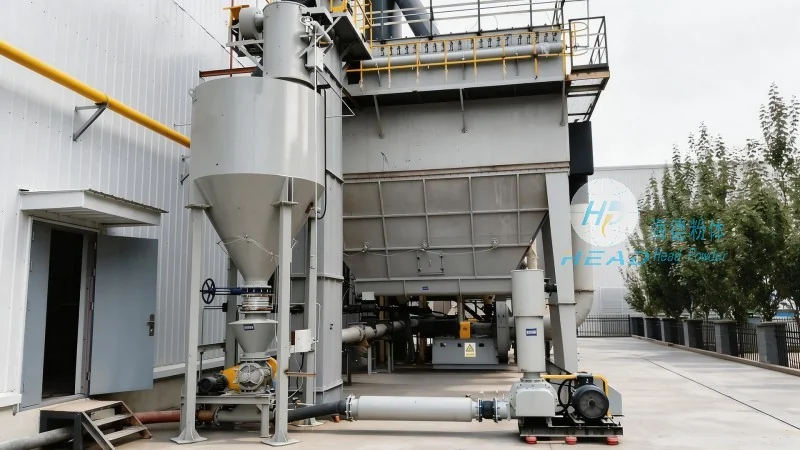
System Overview and Core Components
The pneumatic conveying system for lithium-ion battery nanomaterials is engineered to handle fine powders with high precision, ensuring minimal loss and contamination. Key components include a material hopper, a rotary feeder, a conveying pipeline, a pressure vessel or receiver, and a control unit. The system operates under controlled air pressure, utilizing either positive or negative pressure (or a combination) to move the nanomaterials from the source to the destination.
Working Principle: The Conveying Process
The operation begins with the nanomaterials being fed from the hopper into the rotary feeder. This component regulates the flow rate, ensuring a consistent supply of material. Simultaneously, the conveying pipeline is pressurized by an air compressor, which generates the necessary airflow to transport the material. The nanomaterials are suspended in the air stream and carried through the pipeline to the receiver or processing unit. The system’s design minimizes particle degradation and agglomeration, critical for maintaining the quality of lithium-ion battery materials.
Key Operational Steps and Process Flow
1. Material Loading: Nanomaterials are stored in the hopper, which is equipped with a sealing mechanism to prevent dust and moisture ingress. The hopper’s design ensures uniform material distribution for consistent feeding.
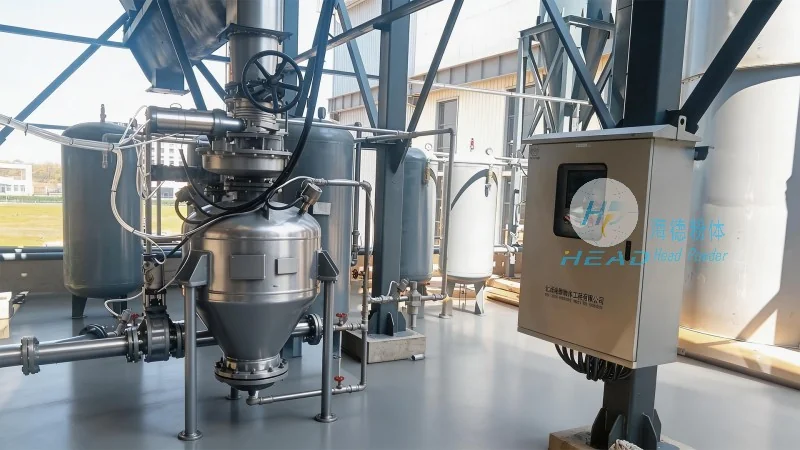
2. Feeding and Air Supply: The rotary feeder controls the material discharge rate, while the air compressor maintains the required pressure in the pipeline. The air flow rate is adjusted to match the material’s density and particle size, optimizing the conveying efficiency.
3. Conveying and Transport: The pressurized air stream propels the nanomaterials through the pipeline. The system’s pipeline layout is designed to minimize pressure drop and ensure smooth material flow, with bends and fittings carefully engineered to avoid blockages or material loss.
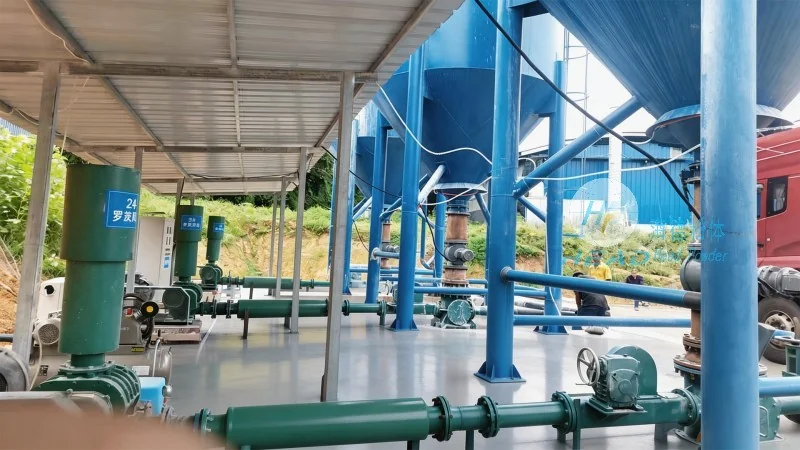
4. Receiving and Discharge: The material is deposited into the receiver or processing equipment. The receiver is equipped with a discharge valve or outlet, allowing the material to be transferred to the next stage of production. The system’s control unit monitors pressure, flow rate, and material level, providing real-time feedback to maintain optimal operation.
Advantages and Technical Benefits
HeadPowder’s pneumatic conveying systems for lithium-ion battery nanomaterials offer several advantages over traditional methods. These include: high efficiency in material transport, minimal contamination due to enclosed systems, flexibility in pipeline layout, and low maintenance requirements. The systems are also designed for scalability, allowing them to accommodate varying production volumes and material types. By leveraging advanced engineering and material science, HeadPowder ensures that the nanomaterials retain their properties throughout the conveying process, which is crucial for the performance of lithium-ion batteries.
Application in Lithium-Ion Battery Manufacturing
The pneumatic conveying system is integral to the production of lithium-ion batteries, where nanomaterials such as lithium cobalt oxide (LCO), lithium iron phosphate (LFP), and graphite are commonly used. These materials are sensitive to moisture and oxygen, making the enclosed, controlled environment of the pneumatic system essential. The system’s ability to handle fine powders with precision ensures that the battery components are manufactured with consistent quality, leading to improved battery performance and reliability. HeadPowder’s expertise in material handling has enabled the integration of these systems into various battery manufacturing processes, supporting the growth of the lithium-ion battery industry.




