Glass slag, as a common industrial waste product, presents significant challenges in terms of efficient and safe transportation. The glass slag pneumatic conveying system equipment, as an advanced material handling technology, offers an effective solution to this problem. This article delves into the core components of such systems and their unique design principles, helping readers gain a comprehensive understanding of their operational mechanisms and application values.
Company Introduction: Shandong HeadPowder Engineering Co., Ltd.
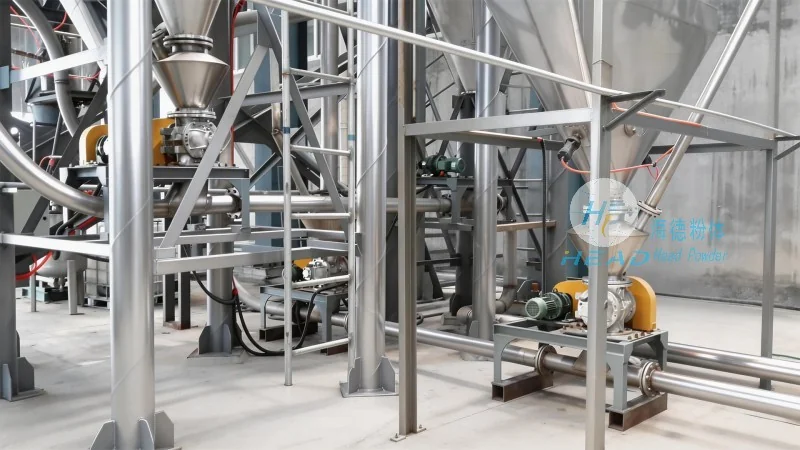
Shandong HeadPowder Engineering Co., Ltd., a professional company specializing in powder engineering and conveying technology, is dedicated to providing efficient and reliable solutions for glass slag pneumatic conveying. Headquartered in Shandong Province, China, the company leverages its rich industry experience and technological innovation to serve clients in the glass manufacturing, construction materials, and other sectors. By integrating advanced engineering design and manufacturing processes, HeadPowder ensures its products achieve stable and low-loss transportation when handling glass slag and other high-viscosity, wear-resistant materials.
What is a Glass Slag Pneumatic Conveying System?
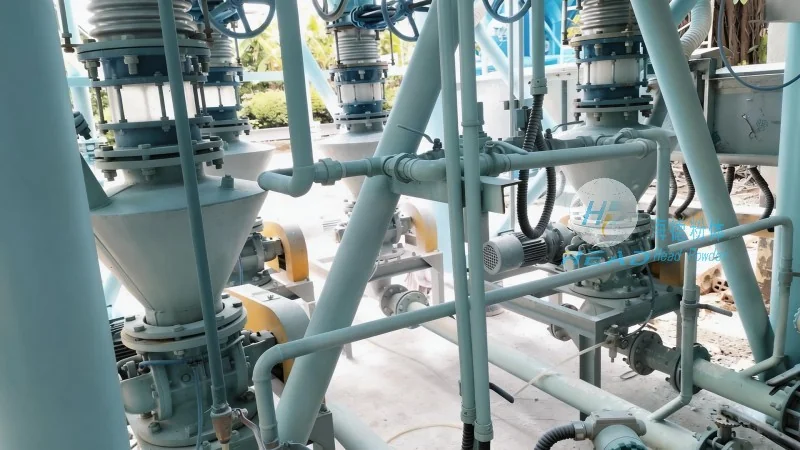
A glass slag pneumatic conveying system equipment is fundamentally a device that utilizes compressed air or gas as a driving force to transport glass slag particles from the source to the destination. Compared to traditional mechanical conveying methods like belt conveyors or bucket elevators, pneumatic conveying systems offer notable advantages when handling glass slag. For instance, they prevent secondary contamination of materials, reduce equipment wear, and adapt to complex spatial layouts. The system typically consists of several components, including a feed device, conveying pipelines, a gas source, a separation device, and a control system. Each component is meticulously designed to work in synergy, ensuring the entire conveying process is safe and efficient.
Design Principles of Glass Slag Pneumatic Conveying Systems
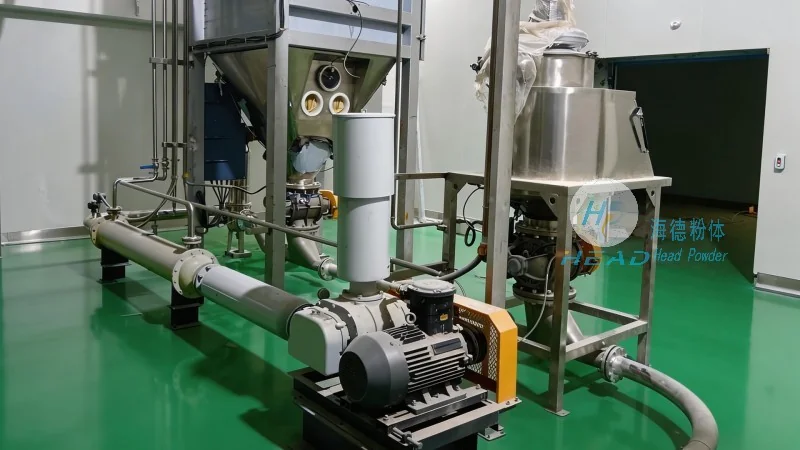
In terms of design principles, glass slag pneumatic conveying systems primarily rely on fluid dynamics and pressure control technology. The system generates high-pressure air or gas through a gas source (such as a roots blower or centrifugal fan) to mix glass slag particles with air, forming a gas-solid two-phase flow and propelling it along the pipelines. Key design parameters include airflow velocity, pipeline diameter, bend angle, and the gas-solid ratio (the mass ratio of material to air). A reasonable airflow velocity ensures effective material transport without causing pipeline blockage or energy waste. For example, for glass slag with relatively high density and coarse particles, a higher airflow velocity (typically above 20-30 m/s) is required to maintain the stability of the gas-solid two-phase flow. Additionally, the design of pipelines and bends significantly impacts system pressure loss and conveying efficiency. An overly small pipeline diameter leads to high pressure and increased energy consumption, while too many bends or improper angles can cause material deposition or wear. Furthermore, the design of the separation device is critical, as it must effectively separate the conveyed glass slag from air and recycle untransported material for cycle utilization and system energy saving. For instance, cyclone separators or bag filters are commonly used to separate glass slag particles, ensuring the final collected material meets purity requirements.
Applications and Benefits
In practical applications, glass slag pneumatic conveying system equipment is widely used in fields such as glass manufacturing plant raw material transport, construction waste treatment facilities, and industrial waste recycling. For example, in glass factories, the system can transport glass slag from the melting furnace area to storage or processing facilities, enabling continuous material transport. In construction waste treatment, the system is used to convey glass fragments from crushing equipment to sorting equipment, supporting resource recycling. These applications demonstrate the flexibility and efficiency of pneumatic conveying systems in handling glass slag. By optimizing design parameters and system configurations, HeadPowder's glass slag pneumatic conveying equipment can meet the specific needs of different clients, whether it's the conveying volume, distance, or material characteristics, providing customized solutions.
Conclusion
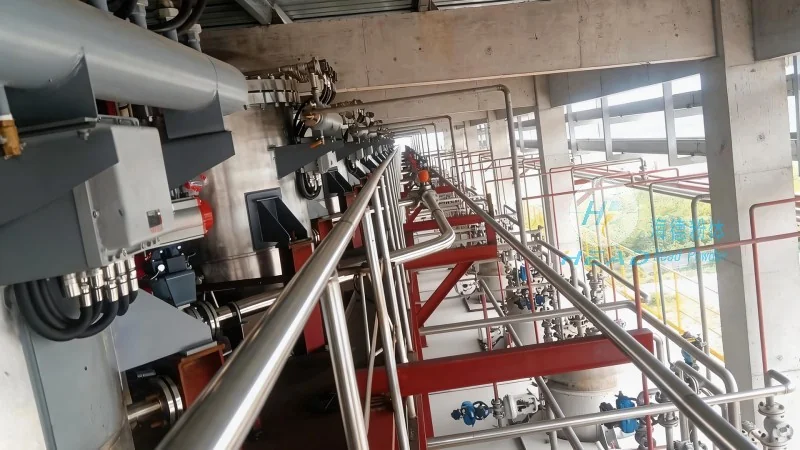
In summary, the glass slag pneumatic conveying system equipment is not only an advanced material handling technology but also an important tool for handling glass slag and other industrial wastes in industrial production. Its core lies in reasonable airflow control and pressure management to achieve stable material transport. As a professional manufacturer in the industry, Shandong HeadPowder Engineering Co., Ltd. provides a series of efficient and reliable glass slag pneumatic conveying systems through its rich experience and technological innovation. These systems not only improve the efficiency of glass slag transport but also reduce processing costs, making positive contributions to industrial waste resource utilization. With continuous technological advancement, glass slag pneumatic conveying systems will find applications in more fields, providing support for sustainable development.




