HeadPowder, a leading engineering firm based in Shandong, China, specializes in the design, calculation, and selection of equipment for cement powder pneumatic conveying systems. This article provides a comprehensive overview of the key aspects involved in optimizing such systems for industrial applications.
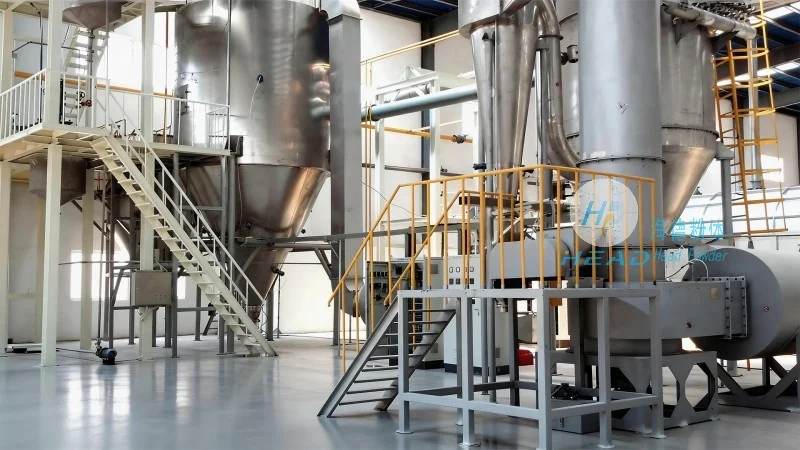
Understanding Pneumatic Conveying Fundamentals
Pneumatic conveying is a method of transporting bulk materials like cement powder through a pipeline using air or other gases. The process involves creating a pressure differential to move the material from the source to the destination. There are two primary types: pressure and vacuum systems. Pressure systems use positive pressure to push the material, while vacuum systems use negative pressure to pull it. The choice between these depends on factors such as material properties, distance, and system complexity. For example, pressure systems are often preferred for long-distance conveying due to their ability to maintain consistent flow, whereas vacuum systems are suitable for short distances or when the material needs to be collected from multiple sources. The design of the system also considers the material's particle size and density, as these affect the air velocity required for effective transport. Larger particles may require higher air velocities to prevent settling, while smaller particles can be conveyed at lower velocities.
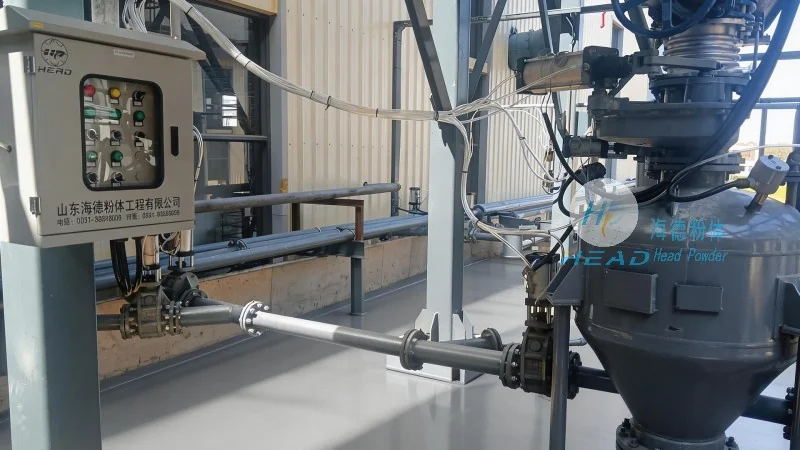
Design Calculation Process for Cement Powder Conveying
The design of a cement powder pneumatic conveying system requires meticulous calculation to ensure efficiency and reliability. Key parameters include the material's bulk density, particle size distribution, and flow rate. Engineers at HeadPowder use advanced algorithms and empirical formulas to determine the required air velocity, pressure drop, and equipment specifications. For instance, the air velocity must be high enough to prevent material settling but low enough to avoid excessive wear on the pipeline. The pressure drop across the system is calculated using the Darcy-Weisbach equation, which accounts for the friction loss in the pipeline and the additional loss due to bends and fittings. The calculation also considers the system's layout, including the number of bends, vertical lifts, and branch lines, as these affect the overall pressure loss. The required air flow rate is determined based on the material's flow rate and the air velocity. The compressor's capacity is then selected to meet this flow rate and pressure requirements. HeadPowder's engineers also consider the system's operating conditions, such as ambient temperature and humidity, as these can affect the air density and thus the conveying performance.
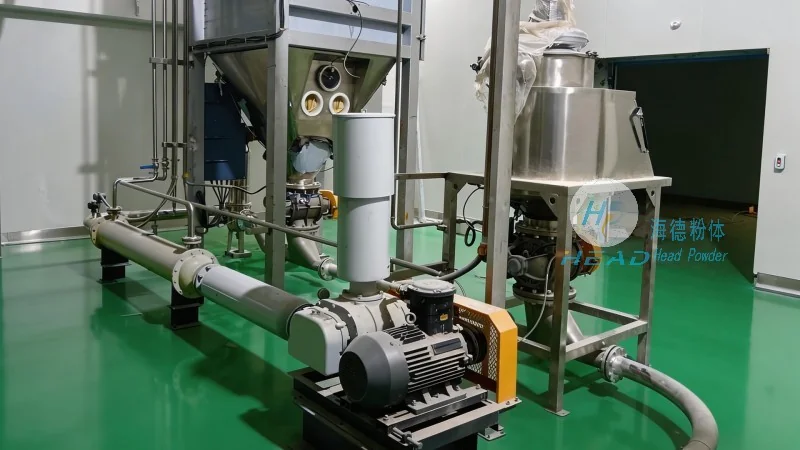
Equipment Selection for Cement Powder Pneumatic Conveying
Choosing the right equipment is crucial for the successful operation of a cement powder pneumatic conveying system. HeadPowder offers a range of components tailored to different applications. The primary equipment includes the conveying pipeline, which can be made of stainless steel or plastic, depending on the material's corrosiveness. Stainless steel is preferred for its resistance to corrosion and wear, especially when conveying cement powder with high abrasiveness. The pipeline diameter is determined based on the material's flow rate and the required air velocity. A larger diameter reduces the pressure drop but increases the cost. The pipeline design also considers the material's particle size, as smaller particles may require a larger diameter to prevent clogging. The air compressor is a critical component, with options including rotary lobe and screw compressors. Rotary lobe compressors are suitable for high-pressure applications, while screw compressors are more efficient for medium-pressure systems. The selection depends on the required pressure and flow rate. Additionally, the system may include feeders, such as rotary valves or star feeders, to control the material flow rate. Rotary valves are commonly used for their ability to handle large volumes and maintain a consistent flow rate. Star feeders are used for smaller applications or when precise control is needed. The receiver or silo is another essential component, designed to store the conveyed cement powder and maintain consistent pressure. The silo is typically made of stainless steel or carbon steel, with a conical bottom to facilitate material discharge. HeadPowder's engineers evaluate the material's characteristics and the system's requirements to recommend the most suitable equipment, ensuring optimal performance and longevity.
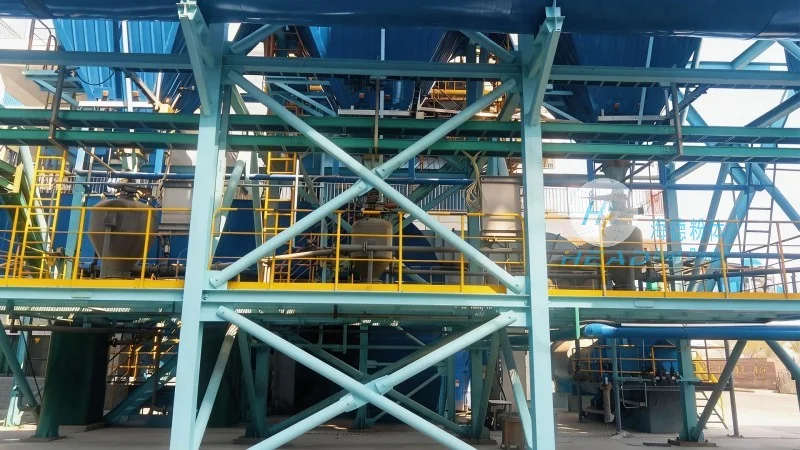
Key Considerations for System Optimization
Optimizing a cement powder pneumatic conveying system involves balancing several factors to achieve the best results. One of the main considerations is the material's flowability, as poor flowability can lead to blockages. HeadPowder's engineers may recommend adding additives or modifying the material's moisture content to improve flow. For example, adding a small amount of lubricant can reduce the material's friction and improve its flow. Another factor is the system's energy efficiency, as high energy consumption can increase operational costs. The use of efficient compressors and optimized pipeline design helps reduce energy usage. HeadPowder's systems are designed with energy efficiency in mind, using advanced compressor technology and minimizing pressure losses. Maintenance is also a critical aspect, as regular inspection and cleaning of the pipeline and equipment prevent clogs and extend the system's lifespan. HeadPowder provides comprehensive maintenance services, including routine checks, cleaning, and repairs, to ensure the system operates at peak performance. Additionally, the system's scalability is considered, allowing for future expansion as the client's needs grow. This ensures that the initial investment in the system is a long-term solution that can adapt to changing production requirements.




