

What is the Slaked Lime Pneumatic Conveying Equipment? Exploring Its Design Principles
Slaked lime, also known as calcium hydroxide, is a widely used industrial material in sectors like construction, agriculture, and environmental treatment. Efficient and safe transportation of this fine powder from storage to processing units is vital for production efficiency and operational safety. Pneumatic conveying equipment offers a reliable solution with advantages such as dust-free operation, reduced labor costs, and enhanced process control. This article explores slaked lime pneumatic conveying equipment, focusing on its design principles and practical applications.
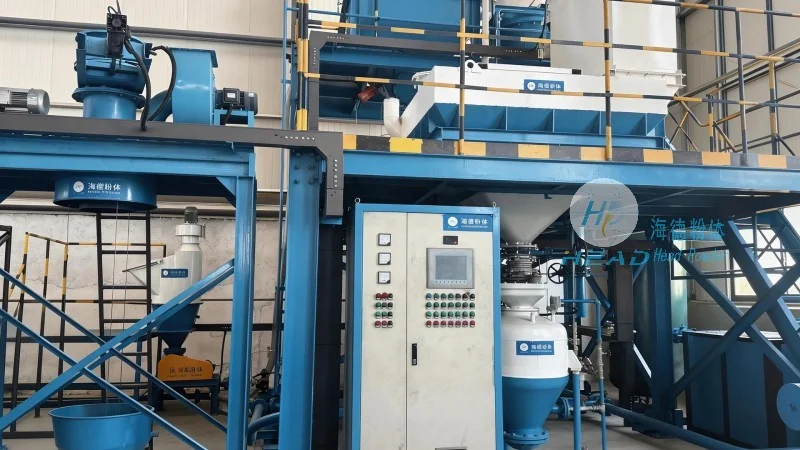
Understanding Slaked Lime and Its Handling Requirements
Slaked lime is a soft, powdery substance with a Mohs hardness of 1 to 2, prone to agglomeration under certain conditions. Its high pH and reactivity with moisture require specialized handling to prevent caking, blockages, or degradation. Traditional methods like belt conveyors or bucket elevators struggle with fine powders, leading to increased maintenance and operational challenges. Pneumatic conveying systems address these issues by using air to transport material in a sealed environment, minimizing external exposure and ensuring consistent flow rates.
Core Components of Slaked Lime Pneumatic Conveying Systems
A typical system includes a material feeder, conveying line (with bends and straight sections), dust collector/filter, and discharge device. The feeder controls material input at a steady rate. The conveying line, often stainless steel or corrosion-resistant, withstands slaked lime's chemical properties and maintains airtight integrity. Bends and straight sections guide material with smooth transitions to minimize pressure losses and prevent buildup. The dust collector captures airborne particles for compliance and a clean environment. The discharge device (e.g., rotary valve) regulates material release into the next stage, preventing spills and ensuring consistency.
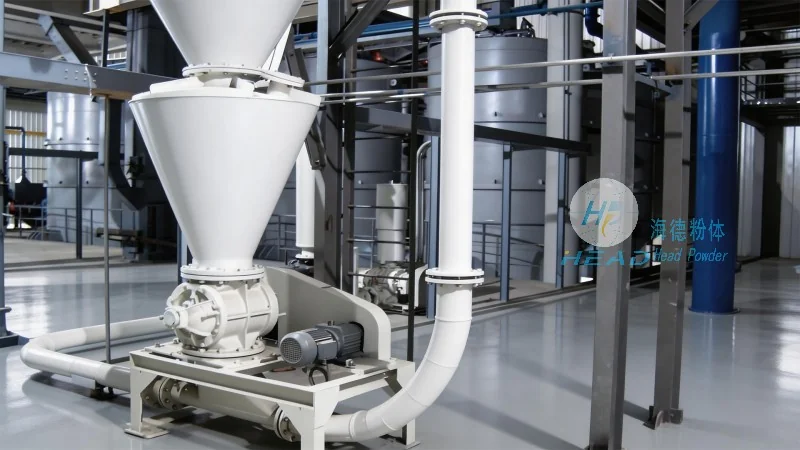
Design Principles for Optimal Performance
Design is guided by principles like air velocity/pressure selection, material property consideration, and safety integration. Air velocity must overcome gravitational forces without causing excessive wear or dust. Pressure adjusts based on distance/elevation. Material properties (particle size, density, moisture) influence air velocity and component choices—for finer particles, higher velocities prevent clogging; higher moisture may need drying or specialized line materials. Safety features (pressure relief valves, emergency shut-offs) protect against hazards. Layout minimizes pressure losses with straight sections and minimal bends. These principles ensure efficient, reliable, and safe operation.
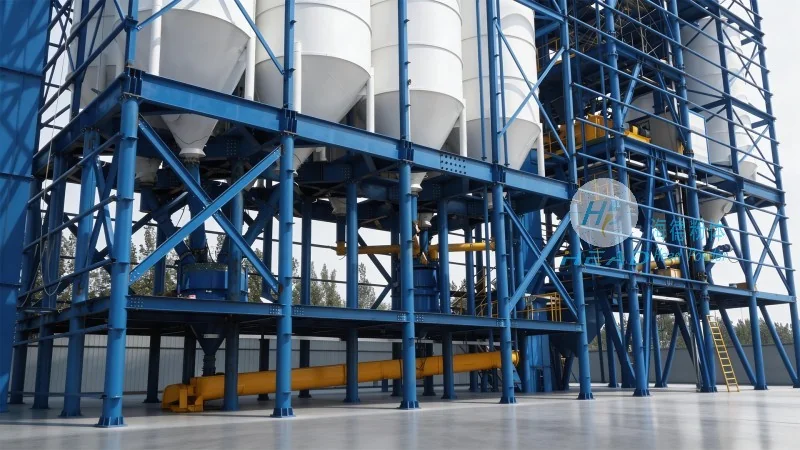
Applications and Benefits in Industrial Settings
Used in construction (concrete mixing plants for lime-based mortars/plasters), agriculture (soil conditioning and pH adjustment), and environmental treatment (wastewater neutralization). Benefits include reduced labor costs from automation, minimized material loss/contamination, and improved process control. Sealed operation prevents dust emissions, enhancing safety and compliance. For industries relying on slaked lime, well-designed pneumatic conveying systems boost operational efficiency and sustainability.
Conclusion and Future Developments
Slaked lime pneumatic conveying equipment is a critical component for handling this essential material. Design principles address unique challenges like fine particle size and reactivity. Key components and safety features ensure efficient, safe transport. As industrial processes evolve, advancements in filter systems and materials will further improve performance and sustainability. Investing in optimized systems supports operational excellence and environmental responsibility for industries using slaked lime.