For industrial applications involving magnesite powder, efficient and reliable material handling is crucial. Pneumatic conveying systems have emerged as a preferred solution, offering advantages such as low maintenance, minimal product contamination, and the ability to transport materials over long distances without the need for complex infrastructure. This article explores the critical role of pneumatic conveying in the handling of magnesite powder, highlighting its benefits and practical applications.
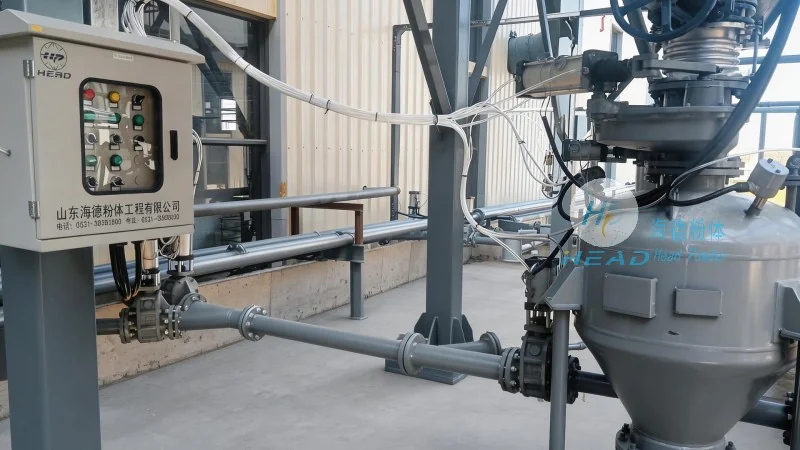
Understanding Pneumatic Conveying Systems
Pneumatic conveying uses compressed air or gas to transport bulk materials like magnesite powder through a pipeline system. There are two main types: dilute-phase and dense-phase systems. Dilute-phase systems are suitable for short to medium distances and low to medium material loads, while dense-phase systems are ideal for longer distances and higher material concentrations. The choice of system depends on factors including the material's properties, required transport distance, and operational efficiency.
The Advantages of Pneumatic Conveying for Magnesite Powder
When it comes to magnesite powder, pneumatic conveying offers several key benefits. First, it minimizes product degradation and contamination, which is vital for maintaining the quality of magnesite powder used in various industrial processes. Unlike mechanical conveying methods, pneumatic systems do not involve direct contact with metal parts, reducing the risk of metal particles mixing with the powder. Second, pneumatic conveying allows for flexible and scalable operations. The system can be easily expanded or reconfigured to accommodate changes in production volume or process requirements. Third, it provides a clean and hygienic environment, which is essential for industries where product purity is a priority. Additionally, pneumatic conveying can handle materials with varying particle sizes and moisture content, making it versatile for different magnesite powder applications.
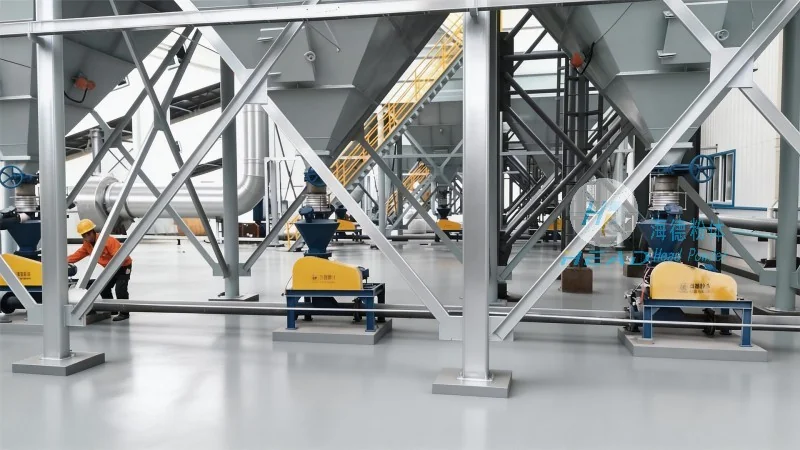
Key Components of a Pneumatic Conveying System
A typical pneumatic conveying system for magnesite powder includes several essential components. The primary components are the material feed hopper, which holds the magnesite powder, and the air compressor or blower that generates the necessary airflow. The pipeline network connects the feed hopper to the discharge point, ensuring the powder is transported efficiently. A filter system is also crucial to capture any fine particles and prevent them from being released into the environment. Additionally, a control system manages the airflow and pressure, ensuring optimal operation of the conveying process. Each component plays a vital role in maintaining the efficiency and reliability of the system.
Applications in Magnesite Powder Processing
Pneumatic conveying is widely used in various stages of magnesite powder processing. In mining operations, it is used to transport raw magnesite ore from storage facilities to processing plants. During the processing stage, pneumatic systems are employed to move the ground magnesite powder between different processing units, such as grinding mills and classifiers. In the final production stage, the conveying system delivers the finished magnesite powder to storage silos or packaging areas. The flexibility of pneumatic conveying allows it to integrate seamlessly with existing processing lines, enhancing overall operational efficiency.
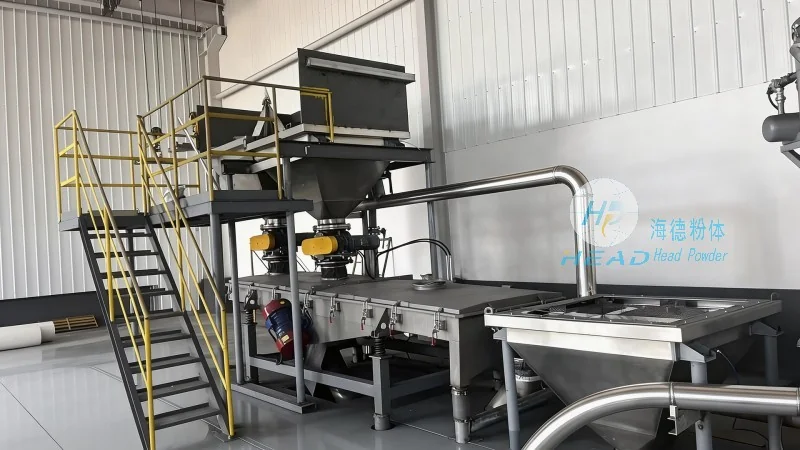
Case Study: HeadPowder's Pneumatic Conveying Solutions
Shandong HeadPowder Engineering Co., Ltd., a leading provider of material handling solutions, specializes in designing and manufacturing pneumatic conveying systems tailored to the needs of magnesite powder industries. With years of experience in the field, HeadPowder has developed advanced systems that address the unique challenges of magnesite powder handling. Their solutions are designed to ensure high efficiency, low maintenance, and consistent product quality. For example, one of their projects involved supplying a pneumatic conveying system to a magnesite processing plant in Shandong, China. The system successfully transported magnesite powder over a distance of 500 meters, with minimal loss and high material throughput. This case study demonstrates the effectiveness of HeadPowder's systems in real-world applications.
Conclusion and Future Outlook
Pneumatic conveying has become an indispensable technology in the handling of magnesite powder, offering significant advantages over traditional mechanical conveying methods. As industries continue to demand higher efficiency and product quality, the importance of advanced pneumatic conveying systems will only grow. Companies like Shandong HeadPowder Engineering Co., Ltd. are at the forefront of developing innovative solutions that meet the evolving needs of the magnesite powder industry. By investing in reliable pneumatic conveying systems, magnesite powder producers can enhance their operational efficiency, reduce costs, and maintain the high quality of their products.




