Working Principle and Features of the Rice Husk Ash Material Pneumatic Conveying Line
Release time:2026-09-18 11:01:28
name of the company:Shandong Headpowder Engineering Co., Ltd.
telephone:156-6277-7102
contacts:Zhang manager
When it comes to efficiently handling and transporting rice husk ash—a byproduct of rice processing—industrial facilities often turn to pneumatic conveying systems. These systems offer a reliable and effective method for moving bulk materials like rice husk ash from one location to another, ensuring minimal dust generation and operational efficiency. This article explores the working principle and key features of a rice husk ash material pneumatic conveying line, developed by Shandong HeadPowder Engineering Co., Ltd. (headpowder), highlighting how such systems enhance material handling processes in industrial settings.
Understanding the Working Principle of the Pneumatic Conveying Line
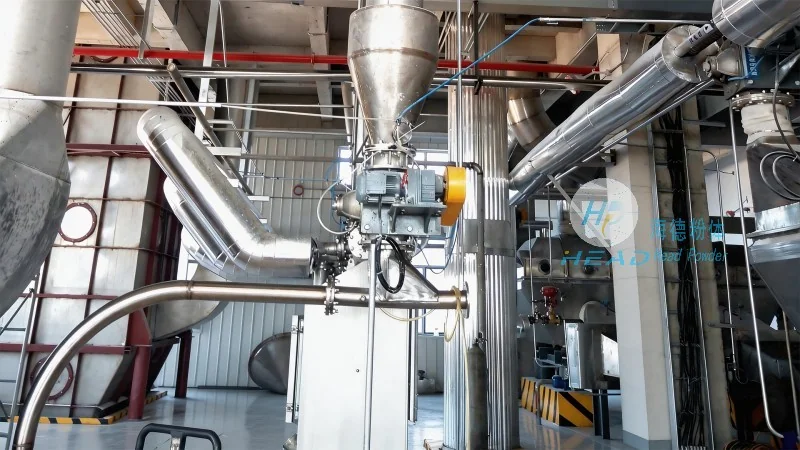
The core of a rice husk ash pneumatic conveying system lies in its ability to transport dry bulk materials using air pressure. The process typically involves several key components: a material hopper, a rotary valve or feeder, a conveying pipe, a dust collector, and a discharge outlet. Here’s a step-by-step breakdown of how the system operates:
- Material Loading: Rice husk ash is fed into the material hopper from a storage silo or container. The hopper ensures a consistent supply of material to the system.
- Feeding and Acceleration: A rotary valve or feeder at the bottom of the hopper controls the flow of material into the conveying pipe. Simultaneously, a high-pressure air blower or compressor generates airflow within the pipe. As the material enters the pipe, it is accelerated by the air stream, forming a dense, air-solid mixture known as a "slurry" or "pneumatic stream."
- Conveying: The air-solid mixture travels through the conveying pipe under pressure. The velocity of the air is maintained at a level sufficient to keep the material suspended and prevent settling or blockages. The pipe may include bends, vertical sections, or horizontal runs, depending on the layout of the facility.
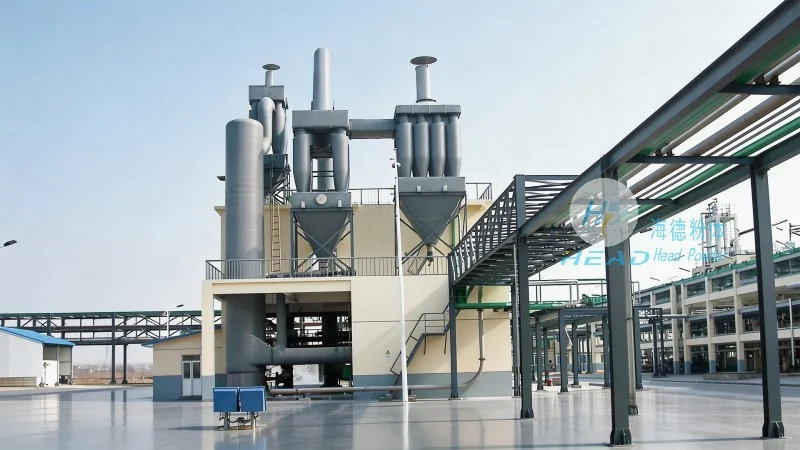
- Dust Separation: At the discharge end of the conveying line, a dust collector or cyclone separator is used to separate the rice husk ash from the air. The ash is collected in a hopper or silo, while the cleaned air is either released to the atmosphere or recirculated back into the system to improve efficiency.
- Discharge: The separated rice husk ash is discharged into its final destination, such as a storage silo, processing unit, or packaging area.
One of the critical aspects of the working principle is the balance between air pressure and material flow. Properly calibrated air pressure ensures that the material is conveyed without excessive wear on the system components and without causing blockages or pressure drops that could lead to system failure. The system’s design, including pipe diameter, air velocity, and the number of bends, is tailored to the specific characteristics of rice husk ash—such as its density, moisture content, and particle size—to optimize performance.
Key Features of the Rice Husk Ash Pneumatic Conveying Line
Several key features make pneumatic conveying systems ideal for handling rice husk ash and other similar bulk materials. These features contribute to the system’s efficiency, reliability, and adaptability in industrial applications:
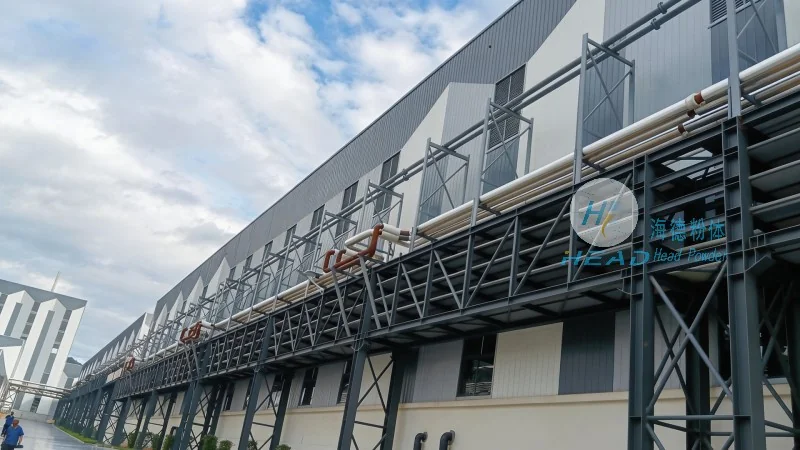
- Low Dust Generation: Unlike traditional belt or bucket elevators, pneumatic conveying systems minimize dust exposure by containing the material within a sealed pipe. This reduces the risk of dust-related health hazards and environmental contamination, making it a safer option for both workers and the surrounding environment.
- Compact Design: Pneumatic conveying lines can be designed to fit into tight spaces, as the conveying pipe can be routed vertically or horizontally with minimal footprint. This is particularly advantageous in facilities with limited floor space or where existing infrastructure needs to be integrated.
- Continuous Operation: The system operates continuously, allowing for a steady flow of rice husk ash from the source to the destination. This ensures consistent production rates and reduces downtime associated with manual handling or intermittent transport methods.
- Reduced Maintenance: With fewer moving parts compared to mechanical conveyors, pneumatic systems require less maintenance. The primary components—hoppers, valves, and air blowers—have a longer service life, reducing operational costs over time.
- Flexibility in Layout: The conveying line can be easily reconfigured or expanded to accommodate changes in production volume or facility layout. This adaptability makes it suitable for both new installations and retrofitting existing systems.
- Energy Efficiency: Modern pneumatic conveying systems are designed to optimize energy use. By maintaining the right air pressure and velocity, the system minimizes energy consumption while ensuring efficient material transport. This contributes to lower operational costs and a smaller environmental footprint.
Applications and Benefits in Industrial Settings
Rice husk ash, also known as rice husk char or rice husk ash, is a valuable byproduct used in various industries, including construction, agriculture, and energy production. The pneumatic conveying line is particularly beneficial in these applications as it ensures the efficient and safe transport of this material:




