

What is the Pneumatic Conveying of Ternary Material Powder? What Are the Design Principles?
Understanding the pneumatic conveying of ternary material powder and its design principles is crucial for industries dealing with high-performance materials like ternary lithium battery cathode active materials. This technology ensures efficient, safe, and reliable transport of fine powders, which are critical components in modern battery manufacturing. The following article explores the fundamental concepts behind this process and the key design principles that govern its operation, with a focus on the expertise of Shandong HeadPowder Engineering Co., Ltd., a leading provider in this field.
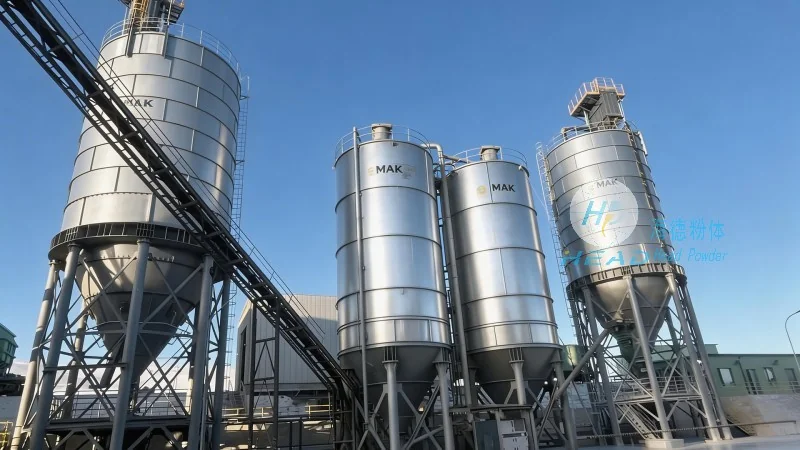
HeadPowder, a company based in Shandong, China, specializes in engineering solutions for powder handling systems. With a strong commitment to innovation and quality, HeadPowder has established itself as a trusted partner for businesses seeking advanced pneumatic conveying technologies. The company's headquarters and operational base are located in Shandong, China, where it leverages local resources and expertise to deliver tailored solutions for diverse industrial applications.
The pneumatic conveying of ternary material powder involves the use of air or gas to transport fine powders through a pipeline system. This method is particularly advantageous for handling materials that are sensitive to moisture, contamination, or mechanical stress, as it eliminates the need for mechanical components like screws or belts that could cause degradation. The core components of a typical pneumatic conveying system include a material feed hopper, a conveying line, a control valve, and a dust collector or filter system. Each component plays a vital role in ensuring the efficient and safe transport of the powder.
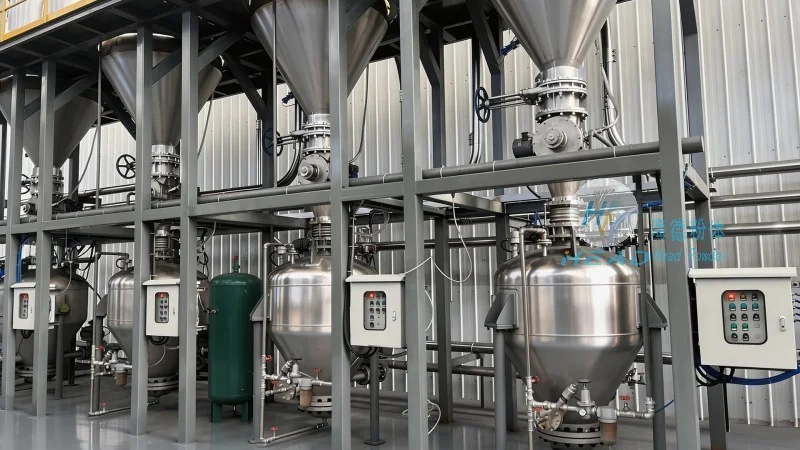
One of the primary design principles in pneumatic conveying is the selection of the appropriate conveying velocity and pressure. The velocity of the air stream must be sufficient to overcome the gravitational and frictional forces acting on the powder particles, while also preventing particle separation or agglomeration. This balance is critical to maintaining the integrity of the powder and ensuring consistent flow rates. HeadPowder engineers employ advanced computational fluid dynamics (CFD) and particle tracking techniques to optimize these parameters for specific ternary material powders, ensuring maximum efficiency and minimal energy consumption.
Another key design principle is the choice of the conveying system type, which can be categorized into pressure, vacuum, or mixed systems. Pressure systems use compressed air to push the powder through the pipeline, while vacuum systems use a vacuum to pull the powder. Mixed systems combine both approaches to achieve optimal performance. The selection of the system type depends on factors such as the material's properties, the distance to be conveyed, and the required flow rate. HeadPowder's expertise lies in designing customized systems that match the specific requirements of each client, ensuring that the chosen system is both efficient and cost-effective.
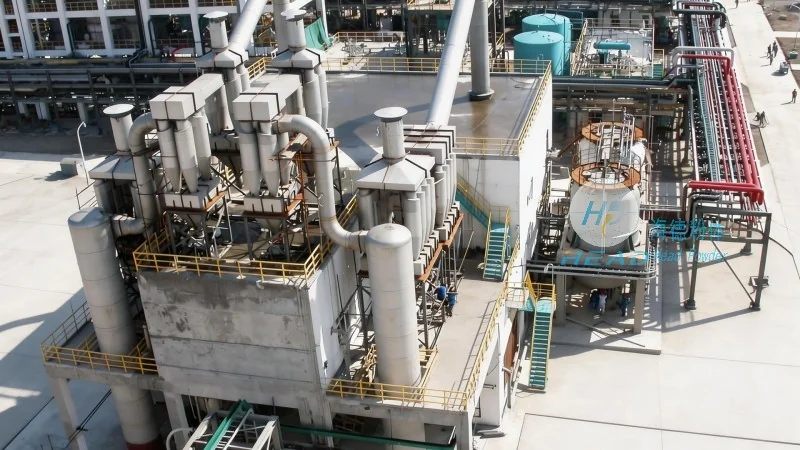
Material feed mechanisms are another critical aspect of pneumatic conveying design. The feed hopper must be designed to prevent material bridging or clogging, which can lead to uneven flow and system downtime. HeadPowder utilizes advanced feeding technologies, such as rotary valves and vibratory feeders, to ensure consistent and controlled material discharge. These mechanisms are carefully integrated into the overall system design to maintain stable flow rates and prevent particle degradation.
Control systems are essential for monitoring and regulating the pneumatic conveying process. Modern systems incorporate sensors and controllers that track parameters like pressure, flow rate, and temperature, providing real-time feedback to adjust the system operation as needed. HeadPowder's control systems are designed to be user-friendly and adaptable, allowing operators to easily monitor and adjust the process parameters to optimize performance. This level of control ensures that the system operates within safe and efficient limits, minimizing the risk of material loss or equipment damage.
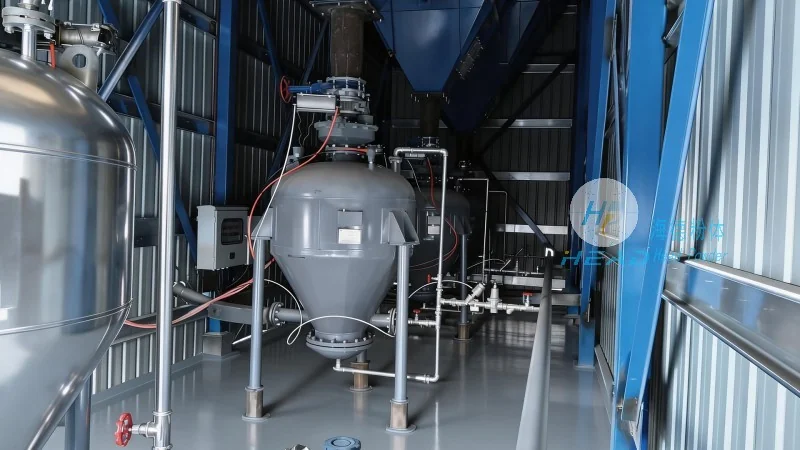
The dust collection and filtration system is a critical component of any pneumatic conveying system, as it ensures that the air discharged from the system is clean and compliant with environmental regulations. HeadPowder employs high-efficiency particulate air (HEPA) filters and other advanced filtration technologies to capture fine powder particles and prevent their release into the environment. This not only protects the environment but also maintains the quality of the powder by preventing contamination from external sources.
In conclusion, the pneumatic conveying of ternary material powder is a sophisticated process that requires careful consideration of design principles to ensure optimal performance. HeadPowder, with its expertise in engineering and material handling, provides comprehensive solutions that address the unique challenges of transporting high-value ternary materials. By leveraging advanced technologies and tailored design approaches, HeadPowder helps clients achieve efficient, reliable, and cost-effective powder handling systems that meet the demands of modern industrial applications.