For industries dealing with calcium carbonate powder, selecting the right material handling system is crucial for efficiency and cost-effectiveness. Pneumatic conveying systems have emerged as a reliable solution for transporting these fine powders over varying distances. This article explores the different types of pneumatic conveying systems and their practical applications in the context of calcium carbonate powder handling, with a focus on the expertise of Shandong HeadPowder Engineering Co., Ltd., a leading provider in the field.
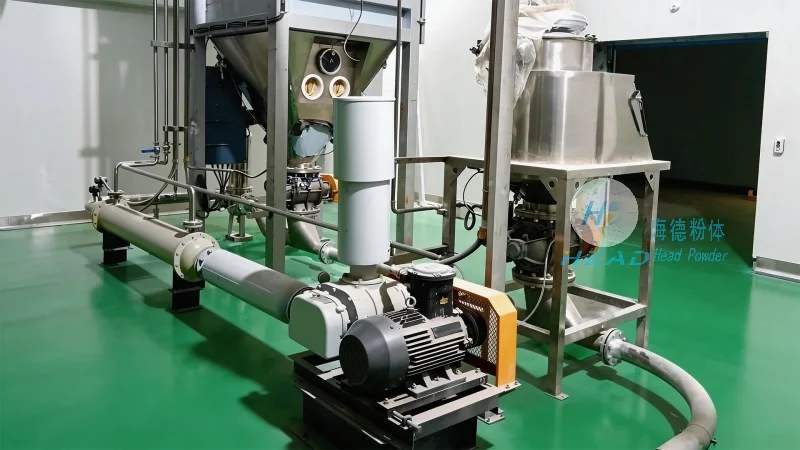
Calcium carbonate, a widely used industrial mineral, is often processed and transported in powder form. Traditional methods like belt conveyors or bucket elevators may not be suitable for fine powders due to issues such as dust generation, material degradation, and high maintenance costs. Pneumatic conveying systems offer a solution by using air to transport the powder, reducing these challenges and enhancing operational efficiency.
There are primarily two main categories of pneumatic conveying systems: positive pressure and negative pressure systems. Positive pressure systems, also known as pressure conveying, operate by blowing air into the system, pushing the powder through the pipeline. This method is ideal for short to medium distances and can handle a wide range of powder characteristics. Negative pressure systems, or vacuum conveying, use a vacuum to draw the powder into the system, which is suitable for longer distances and when the powder needs to be collected from multiple points. Mixed or hybrid systems combine elements of both, offering flexibility based on the specific requirements of the application.
When it comes to calcium carbonate powder, the choice of system depends on factors such as the particle size, moisture content, and the distance to be covered. For example, in applications where the powder is to be transported over short distances within a plant, a positive pressure system might be more economical. Conversely, for long-distance transport or when the powder is collected from multiple sources, a negative pressure system could be more appropriate. Shandong HeadPowder Engineering Co., Ltd. specializes in designing and implementing these systems tailored to the unique needs of each client, ensuring optimal performance and reliability.
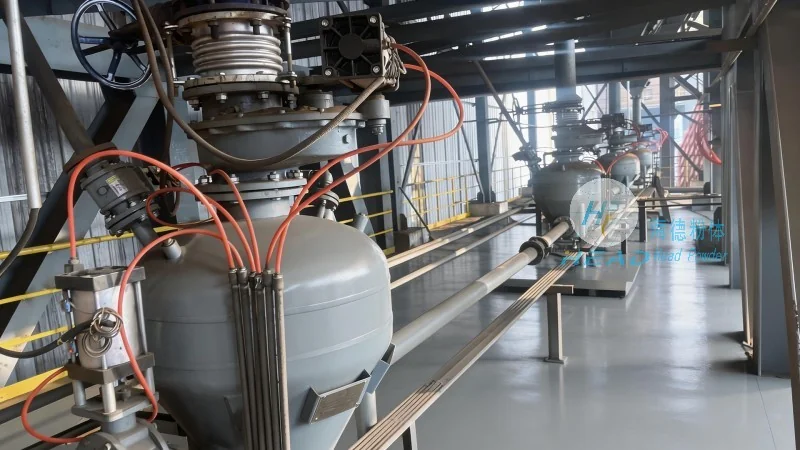
Positive pressure pneumatic conveying systems typically use a blower or compressor to generate the necessary air pressure. The powder is fed into the system using a hopper or feeder, and the air flow carries the powder through the pipeline to the destination. This method is effective for handling abrasive or sticky powders as the air flow helps to prevent blockages. The system is also relatively simple to install and maintain, making it a popular choice for many industrial applications.
Negative pressure systems, on the other hand, utilize a vacuum pump to create a suction effect. The powder is drawn into the system through a collection hopper, and the vacuum pulls the powder along the pipeline to the processing or storage area. This approach is particularly useful when the powder needs to be transported from multiple collection points or when the environment requires a dust-free operation. The vacuum system helps to contain dust and maintain a clean working environment, which is essential in industries dealing with fine powders.
Hybrid systems, which combine both positive and negative pressure elements, offer the best of both worlds. They can handle both short and long-distance transport, and can be adapted to different powder characteristics. For instance, a hybrid system might use a positive pressure section for the initial transport and a negative pressure section for the final delivery, optimizing the overall process. Shandong HeadPowder Engineering Co., Ltd. offers customized hybrid solutions that can be integrated into existing facilities or new plant designs, ensuring seamless operation and minimal disruption.
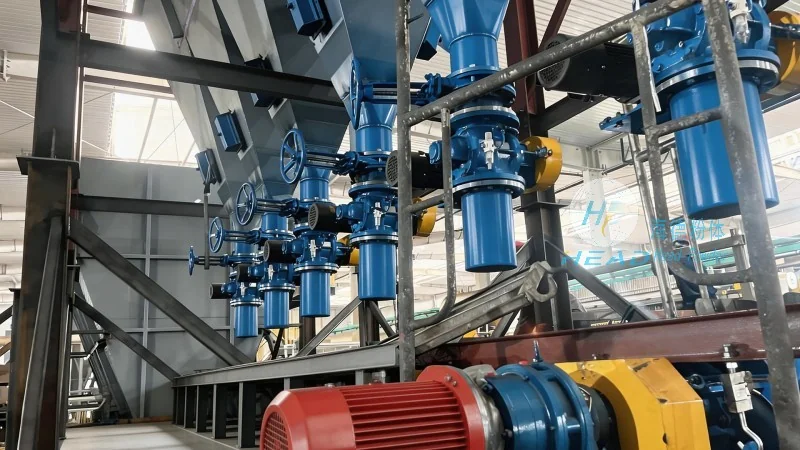
Another critical aspect of pneumatic conveying systems is the selection of the right components. This includes the type of airlock feeders, which control the flow of powder into the system, and the pipeline design, which affects the air flow and pressure drop. The choice of materials for the pipeline and components is also important, as calcium carbonate powder can be abrasive and may cause wear over time. High-quality materials such as stainless steel or special alloys are often used to ensure durability and longevity.
Operational considerations also play a significant role in the effectiveness of pneumatic conveying systems. Proper maintenance, including regular cleaning of the system and checking for air leaks, is essential to prevent blockages and maintain efficiency. The system's performance can also be affected by the moisture content of the powder, as high moisture levels can lead to clumping and reduced flow. Shandong HeadPowder Engineering Co., Ltd. provides comprehensive support, including maintenance services and technical advice, to ensure that the systems operate at peak performance throughout their lifecycle.
In conclusion, pneumatic conveying systems are a highly effective solution for calcium carbonate powder handling, offering advantages in efficiency, safety, and cost. The choice of system type—positive pressure, negative pressure, or hybrid—depends on the specific application requirements, including distance, powder characteristics, and operational constraints. With its expertise in designing and implementing these systems, Shandong HeadPowder Engineering Co., Ltd. helps clients achieve optimal material handling solutions that meet their production needs while ensuring reliability and sustainability.




