Limestone powder, a widely used industrial material, often requires efficient and reliable transportation methods to ensure smooth production processes. Pneumatic conveying equipment has emerged as a crucial solution for handling such powders, offering advantages like dust-free operation, flexibility in layout, and the ability to transport materials over long distances. This article delves into the operation process and working principles of limestone powder pneumatic conveying systems, highlighting key components, operational steps, and the technological advancements that enhance performance.
Key Components of the Pneumatic Conveying System
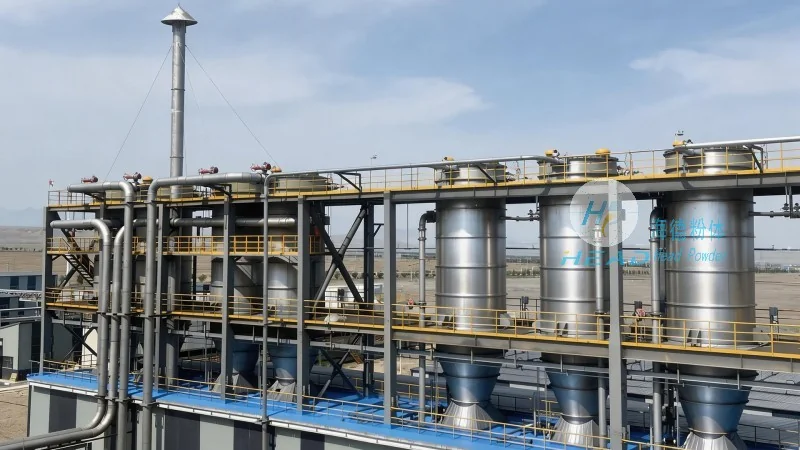
The limestone powder pneumatic conveying equipment typically consists of several core components that work in tandem to achieve efficient material transport. These include the hopper (or feeder) for material storage and feeding, the air compressor or blower to generate the necessary airflow, the pipeline system for conveying the material-air mixture, and the receiver or discharge unit for material collection. Each component plays a vital role in maintaining the system's efficiency and reliability. The hopper is designed to hold a sufficient quantity of limestone powder, ensuring a steady feed rate to the system. It may be equipped with a rotary valve or screw feeder to control the material flow into the pipeline. The air compressor or blower provides the pressurized air required to move the powder particles through the system. The pipeline network, often made of stainless steel or other corrosion-resistant materials, is carefully designed to minimize pressure drop and ensure smooth material transport. The receiver or discharge unit collects the limestone powder at the end of the conveying line, allowing for easy downstream processing or storage.
Working Principle of the Pneumatic Conveying Process
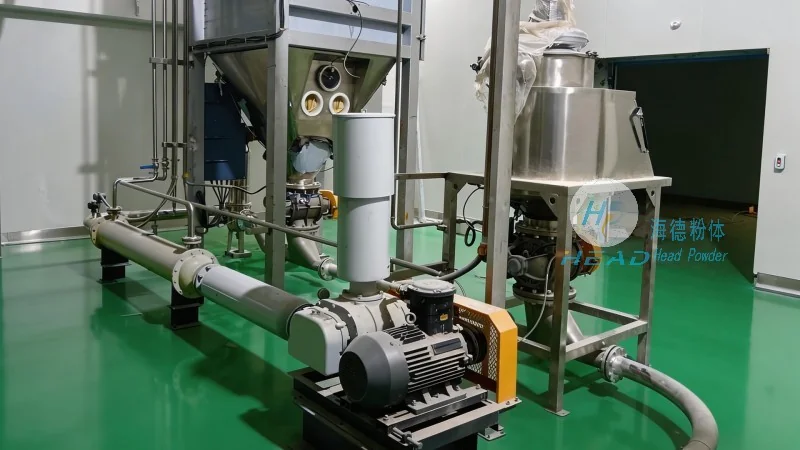
The working principle of the limestone powder pneumatic conveying system is based on the use of compressed air to transport the material. The process begins with the material being fed from the hopper into the pipeline. As the air compressor supplies pressurized air, the air and powder mixture is propelled through the pipeline. The air velocity is maintained at a level sufficient to keep the powder particles suspended and move them along the pipeline. The key to efficient conveying is achieving the correct air-to-material ratio, which ensures that the powder particles are fully entrained by the air and do not settle or cause blockages. The system may employ different conveying modes, such as dilute phase or dense phase, depending on the material characteristics and required transport distance. Dilute phase conveying uses higher air velocities to transport the material in a dispersed state, while dense phase conveying uses lower air velocities and higher pressure to move the material in a more concentrated form, reducing the risk of particle degradation and system wear.
Operation Process of the Limestone Powder Pneumatic Conveying Equipment
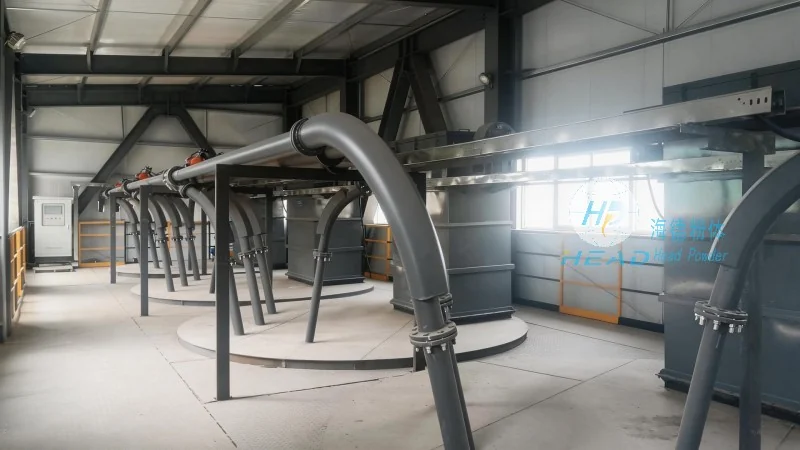
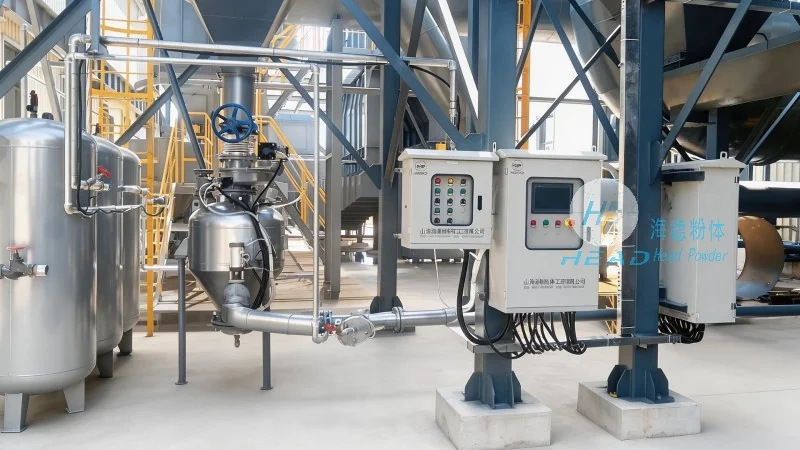
The operation process of the limestone powder pneumatic conveying equipment involves several sequential steps to ensure smooth and continuous material transport. First, the system is started by activating the air compressor and ensuring that the hopper is filled with limestone powder. The rotary valve or screw feeder then begins to feed the material into the pipeline at a controlled rate. Simultaneously, the air compressor supplies the required airflow, creating a pressure differential that drives the material-air mixture through the pipeline. The material is transported to the receiver or discharge unit, where it is collected and prepared for further processing. During operation, the system's pressure and airflow are monitored to ensure optimal performance. If any issues arise, such as blockages or pressure drops, the system may automatically shut down or alert operators to address the problem. Regular maintenance, including cleaning the pipeline, checking the air compressor, and inspecting the feeder, is essential to maintain the system's efficiency and longevity.
Advantages and Applications of Limestone Powder Pneumatic Conveying Equipment
Limestone powder pneumatic conveying equipment offers several advantages that make it suitable for various industrial applications. One of the primary benefits is the ability to transport the material in a dust-free environment, which improves workplace safety and reduces the risk of material contamination. The system also provides flexibility in layout, allowing for material transport over long distances or around obstacles without the need for complex mechanical systems. Additionally, the equipment can handle a wide range of limestone powder characteristics, including different particle sizes, moisture contents, and bulk densities. This makes it suitable for use in industries such as cement production, chemical processing, and food processing, where limestone powder is used as a raw material or additive. The equipment's reliability and low maintenance requirements also contribute to its widespread adoption in industrial settings.
About Shandong HeadPowder Engineering Co., Ltd.
Shandong HeadPowder Engineering Co., Ltd., commonly known as headpowder, is a leading manufacturer and supplier of pneumatic conveying equipment and related solutions. With a focus on innovation and quality, the company has established itself as a trusted partner for industries requiring efficient material handling solutions. Headpowder's products are designed to meet the specific needs of clients, offering customized solutions that enhance operational efficiency and reduce costs. The company's commitment to research and development ensures that its equipment incorporates the latest technological advancements, providing superior performance and reliability. Headpowder's headquarters is located in Shandong, China, where the company operates a state-of-the-art manufacturing facility and a dedicated research and development center. The company's team of experienced engineers and technicians work closely with clients to understand their requirements and provide tailored solutions that meet their operational needs.




