Shandong HeadPowder Engineering Co., Ltd., commonly known as headpowder, is a professional enterprise dedicated to the research, development, and application of powder pneumatic conveying technology. The company is headquartered in Shandong, China, and has been committed to providing high-quality solutions for powder material transportation, especially for products like ammonium bicarbonate. This article will introduce the operation process and working principle of the ammonium bicarbonate powder pneumatic conveying system, highlighting the technical aspects and practical applications.
Introduction to Ammonium Bicarbonate Powder Pneumatic Conveying
Ammonium bicarbonate is a white crystalline powder commonly used in the food, pharmaceutical, and chemical industries. Its fine particle size and hygroscopic nature make traditional bulk material handling methods challenging. Pneumatic conveying offers an efficient and reliable solution for transporting ammonium bicarbonate from storage silos to processing units, ensuring minimal product degradation and loss. The system designed by headpowder integrates advanced components and control strategies to meet the specific requirements of this application.
Key Components of the Pneumatic Conveying System
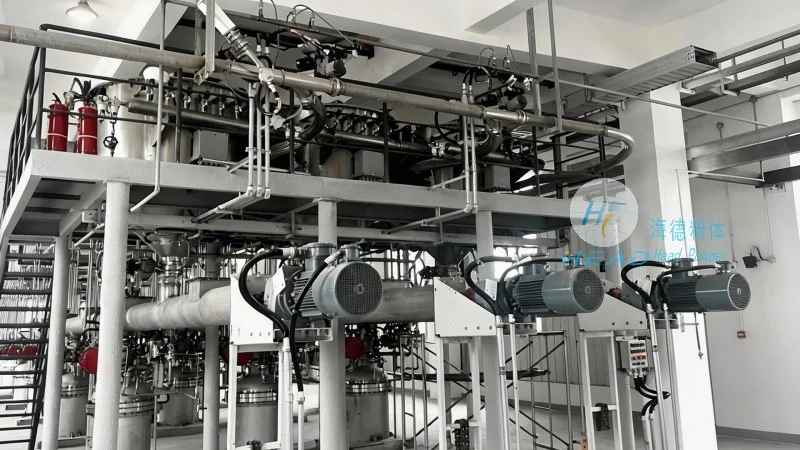
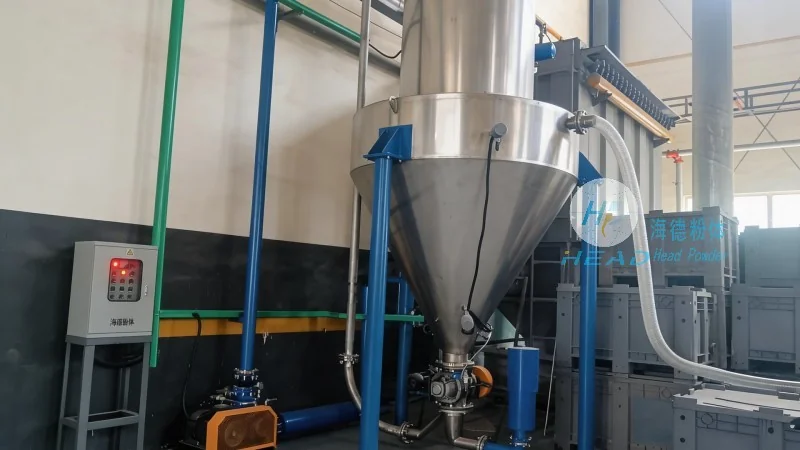
The pneumatic conveying system for ammonium bicarbonate typically consists of several core components, each playing a critical role in the overall operation. These include the material feed hopper, which holds the bulk ammonium bicarbonate and provides a controlled feed to the conveying line; the air compressor or vacuum pump, which generates the necessary pressure or vacuum to move the powder; the conveying pipeline, usually made of stainless steel or other corrosion-resistant materials to prevent product contamination; and the control system, which monitors and adjusts the air flow, pressure, and material flow rates in real-time. Additionally, the system may incorporate filters and cyclones to separate the powder from the air stream, ensuring clean and efficient operation.
Operation Process of the Ammonium Bicarbonate Pneumatic Conveying System
The operation process of the system begins with the preparation phase, where the ammonium bicarbonate is loaded into the feed hopper. The control system then initiates the air compressor or vacuum pump, depending on the chosen conveying mode (either pressure or suction). In the pressure mode, the compressor pushes air into the pipeline, creating a positive pressure that propels the powder forward. The material feed hopper is equipped with a rotary valve or feeder that regulates the flow rate of the ammonium bicarbonate into the pipeline, ensuring a consistent and controlled feed. As the powder travels through the pipeline, it is suspended and transported by the air stream. The system may include intermediate silos or transfer points to adjust the flow direction or buffer the material. The receiving hopper at the destination end collects the conveyed ammonium bicarbonate, and the air is filtered and discharged through the cyclone or filter system. The entire process is monitored by the control system, which adjusts parameters such as air pressure, flow rate, and feed rate to maintain optimal performance and prevent system overload or blockage.
Working Principle of Pneumatic Conveying for Ammonium Bicarbonate
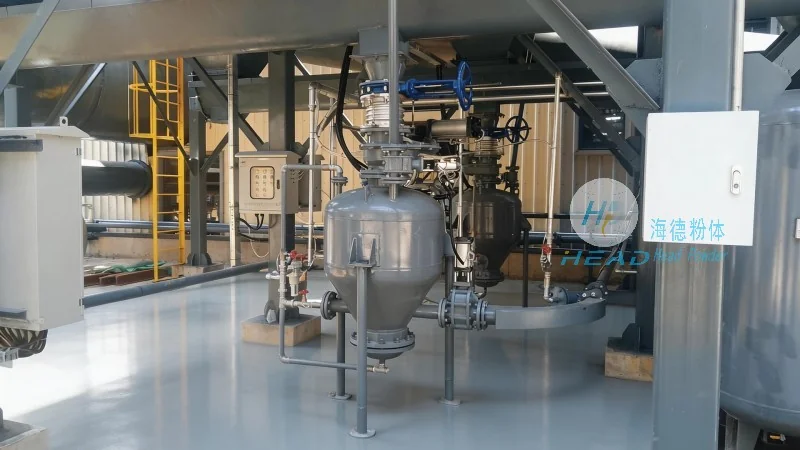
The working principle of pneumatic conveying relies on the interaction between the powder particles and the air stream. In the case of ammonium bicarbonate, the system can operate in either the pressure (positive pressure) or suction (negative pressure) mode. In the pressure mode, the air compressor supplies compressed air to the pipeline, creating a pressure differential that moves the powder. The powder particles are suspended in the air stream due to the drag force exerted by the air, and the system's design ensures that the particle size and air velocity are optimized to prevent particle separation or agglomeration. The suction mode, on the other hand, uses a vacuum pump to create a negative pressure in the pipeline, drawing the powder from the source and transporting it to the destination. This mode is often used for short-distance or low-pressure applications. The key to efficient operation is maintaining the correct air-to-powder ratio, which balances the conveying capacity with the energy consumption. The system's control system continuously adjusts these parameters to ensure stable and reliable operation, minimizing product degradation and maximizing system efficiency.
Advantages of Using Pneumatic Conveying for Ammonium Bicarbonate
Compared to traditional methods like belt conveyors or bucket elevators, pneumatic conveying offers several advantages for transporting ammonium bicarbonate. First, it provides a closed system, which prevents dust contamination and product exposure to the environment, maintaining product purity and quality. Second, the system is flexible and can handle varying material flow rates and distances, making it suitable for both small-scale and large-scale operations. Third, it reduces labor costs and operational complexity, as the system can be automated with minimal human intervention. Fourth, the system is energy-efficient, especially when operating in the suction mode, as it uses less power compared to pressure systems for short distances. Finally, the system is easy to maintain and clean, with components that can be easily disassembled and sanitized, which is crucial for food and pharmaceutical applications where hygiene is paramount.
Application Scenarios and Customization
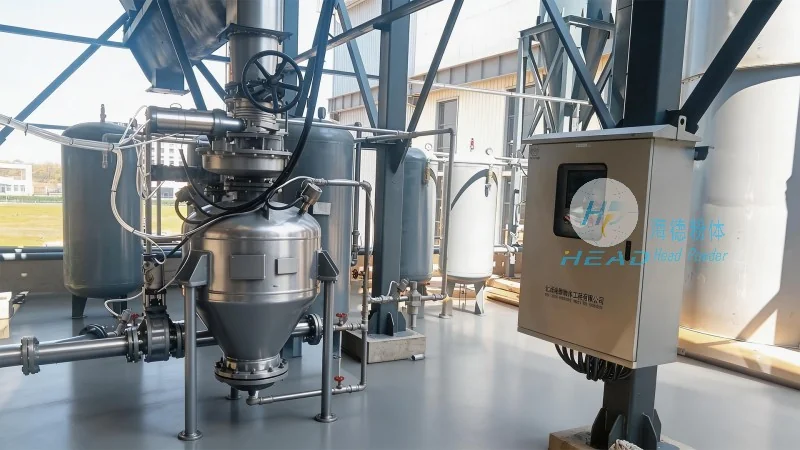
The ammonium bicarbonate pneumatic conveying system developed by headpowder is versatile and can be customized to meet the specific needs of various industries. For example, in the food industry, the system can be designed to meet food-grade standards, with stainless steel components and air filtration systems that ensure product safety. In the pharmaceutical industry, the system may include additional features such as product temperature control and traceability systems to meet regulatory requirements. The system can also be adapted for different conveying distances, from short-line conveyors for transferring material within a plant to long-distance pipelines for interplant transportation. The company's engineering team works closely with clients to assess their specific requirements, including material properties, flow rates, and operational constraints, to design a customized solution that maximizes efficiency and minimizes costs.
Conclusion and Future Development
Ammonium bicarbonate powder pneumatic conveying is an efficient and reliable method for transporting this hygroscopic and fine powder. The system developed by Shandong HeadPowder Engineering Co., Ltd. integrates advanced technology and control strategies to ensure stable operation, minimal product loss, and high purity. By understanding the operation process and working principle of the system, users can optimize their material handling processes and improve overall productivity. As technology advances, the company continues to innovate and develop new solutions to meet the evolving needs of the industry, ensuring that their pneumatic conveying systems remain at the forefront of powder material transportation technology.




