Shandong HeadPowder Engineering Co., Ltd., commonly known as HeadPowder, specializes in the design, manufacturing, and installation of advanced pneumatic conveying systems for various powder handling applications. Based in Shandong, China, the company leverages decades of industry experience to deliver efficient and reliable solutions tailored to the unique needs of clients in different sectors.
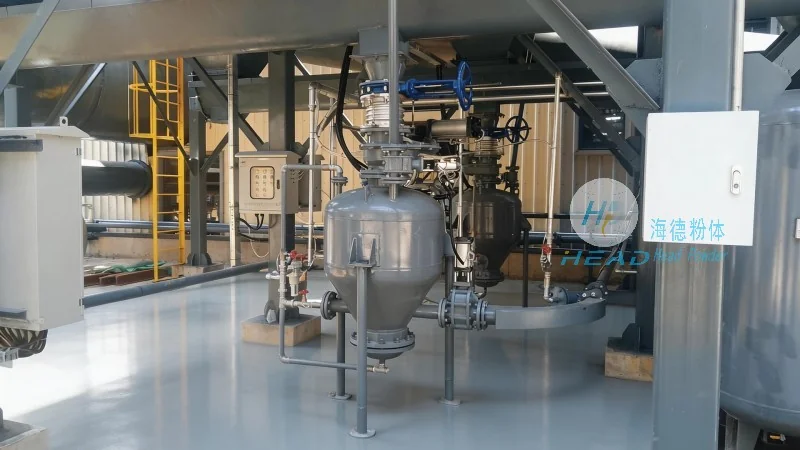
The Principle of Automatic Quantitative Powder Pneumatic Conveying
The core of an automatic quantitative powder pneumatic conveying line lies in its ability to transport bulk powders through a pressurized or vacuum system using air or other gases. The system typically comprises a hopper for material storage, a feeder to control the flow rate, a conveying pipeline, and a receiver for the discharged material. The quantitative feature is achieved through precise control mechanisms, such as volumetric or gravimetric feeders, which ensure accurate dosing of the powder. This technology eliminates the need for manual handling, reducing labor costs and minimizing the risk of contamination or product loss. The pressurized conveying mode is ideal for long-distance or high-rise applications, while the vacuum mode is suitable for short-distance or low-level operations. The system also incorporates safety features, including pressure relief valves and air filtration systems, to ensure safe and compliant operation.
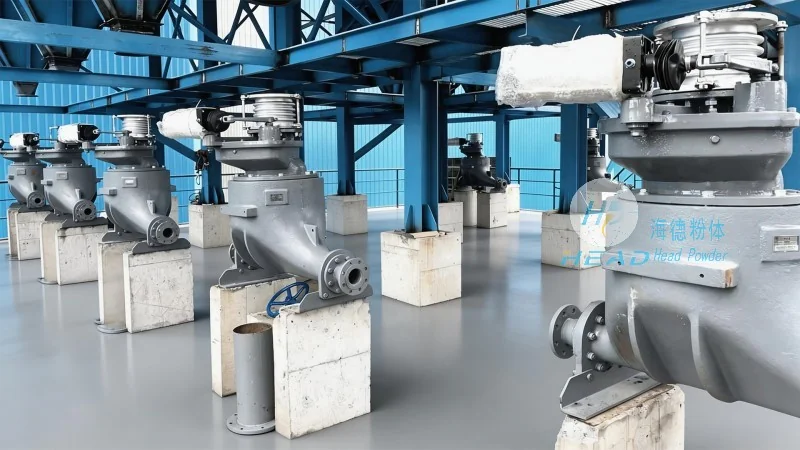
The Principle of Automatic Quantitative Powder Pneumatic Conveying (Detailed Mechanism)
Delving deeper into the operational mechanics, the pneumatic conveying system operates by creating a pressure differential between the hopper and the receiver. In the pressurized mode, compressed air is supplied to the hopper, forcing the powder through the pipeline to the receiver. The air velocity within the pipeline is maintained at a critical value, known as the "carrying velocity," which is sufficient to keep the powder particles suspended in the air stream. The carrying velocity is determined by factors such as particle size, density, and the air flow rate, and is optimized to prevent particle deposition and ensure smooth transport. The feeder, often a screw or rotary valve, regulates the flow rate by adjusting the speed of the rotating mechanism, which directly controls the amount of powder entering the pipeline. The gravimetric feeder, in particular, uses a load cell to measure the weight of the powder being discharged, providing real-time feedback to the control system. This closed-loop control ensures that the output matches the setpoint with high accuracy, typically within ±0.5% of the target weight. The conveying pipeline is constructed from materials such as stainless steel or polyethylene, depending on the chemical compatibility of the powder being handled. The pipeline includes bends and elbows with smooth transitions to minimize pressure loss and reduce wear on the system. The receiver is equipped with a dust collection system, which captures any fine particles that may escape during the conveying process, ensuring environmental compliance and product purity.
Working Scene Characteristics of the System
The automatic quantitative powder pneumatic conveying line is versatile and can be applied in diverse industrial settings. In pharmaceutical manufacturing, it ensures the safe and hygienic transfer of active pharmaceutical ingredients (APIs) and excipients, maintaining strict quality control standards. In food processing, the system handles powders like flour, sugar, and spices, preserving product freshness and preventing cross-contamination. In chemical industries, it transports reactive powders with precision, minimizing the risk of dust explosions and ensuring environmental compliance. The system's modular design allows for easy integration into existing production lines, and its compact footprint makes it suitable for both new installations and retrofitting in existing facilities. Additionally, the system's energy efficiency and low maintenance requirements contribute to long-term cost savings for the end-user.
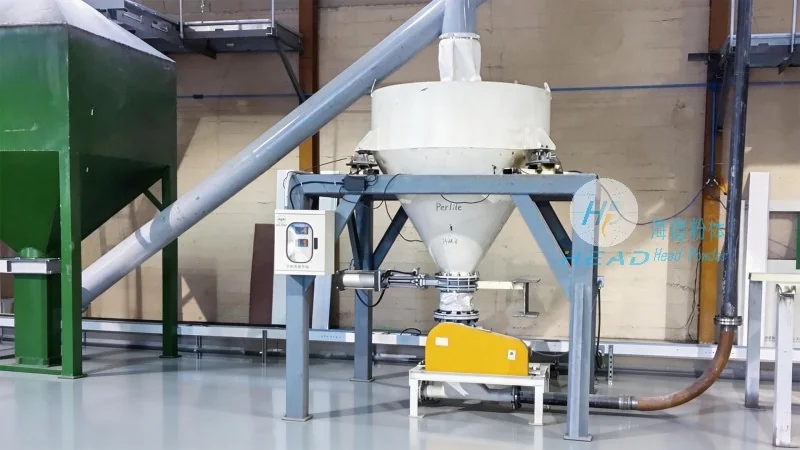
Application Examples in Different Industries
In the pharmaceutical sector, the automatic quantitative powder pneumatic conveying line is used to transfer raw materials such as lactose, starch, and microcrystalline cellulose into mixing and granulation units. The precise dosing capability of the system ensures that the correct proportions of each ingredient are added, which is critical for maintaining the efficacy and safety of the final drug product. The system's GMP-compliant design, including stainless steel construction and HEPA filtration, prevents any contamination from external sources, meeting the stringent regulatory requirements of the pharmaceutical industry. In the food processing industry, the system is employed to convey food-grade powders like cocoa powder, whey protein, and cornstarch from storage silos to packaging lines. The system's ability to operate under sanitary conditions, with easy-to-clean components, ensures that the powders remain free from bacteria and other contaminants. This is particularly important in the food industry, where product safety is paramount. In the chemical industry, the system is used to transport powders such as calcium carbonate, titanium dioxide, and polyethylene resin in polymer production plants. The quantitative control of the system helps in achieving consistent product quality, which is essential for the downstream processing steps. The system's robust construction and corrosion-resistant materials make it suitable for handling aggressive chemicals, ensuring long-term durability and reliability.




