Biomass powder pneumatic conveying systems are critical in industrial processes for efficiently transporting fine powders, including biomass materials. These systems utilize air or gas to move powder particles through a pipeline, offering a flexible and efficient method compared to traditional mechanical conveying. The equipment is designed to handle various biomass powders such as wood chips, agricultural residues, and other organic materials, making it essential for industries like biomass energy production, biofuel manufacturing, and agricultural processing.
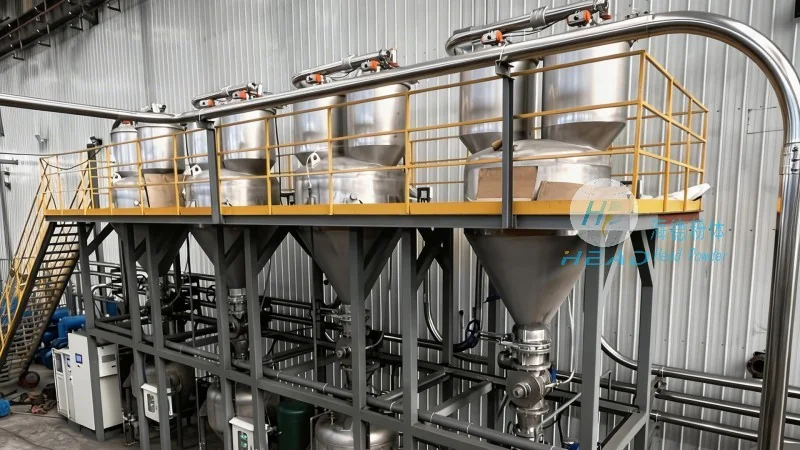
About HeadPowder: Your Trusted Partner in Pneumatic Conveying Solutions
HeadPowder, or Shandong HeadPowder Engineering Co., Ltd., is a leading manufacturer and supplier of advanced pneumatic conveying equipment. With a focus on innovation and quality, the company has established itself as a reliable partner for businesses seeking efficient and reliable biomass powder handling solutions. HeadPowder’s expertise lies in designing customized systems that meet the specific needs of clients, ensuring optimal performance and durability in demanding industrial environments. The company’s headquarters is located in Shandong, China, where it leverages local resources and expertise to deliver high-quality products and services.
Understanding the Core Components of Biomass Powder Pneumatic Conveying Systems
A typical biomass powder pneumatic conveying system consists of several key components that work together to ensure efficient powder transport. The main parts include the material feed hopper, which holds the biomass powder and feeds it into the system; the conveying line, which is a pipeline where air and powder are mixed and transported; the air supply system, which provides the necessary air or gas to move the powder; and the control system, which regulates the flow and pressure to maintain optimal operation. Additionally, the system may include accessories such as filters, cyclones, and dust collectors to manage air quality and prevent powder loss.
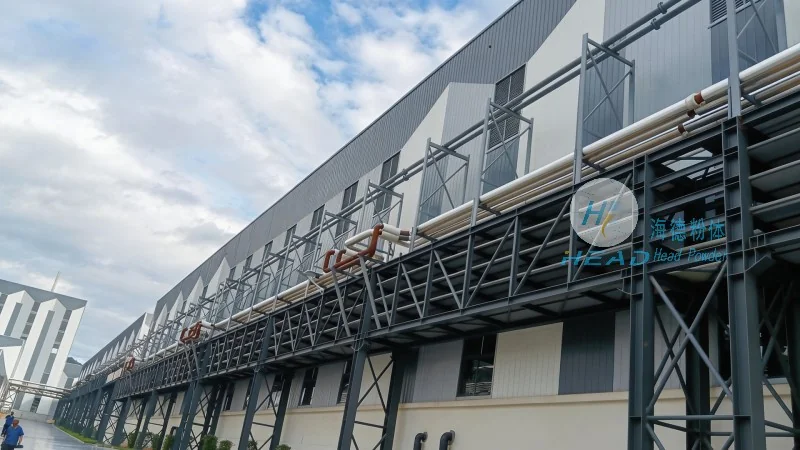
The Design Principles Behind Biomass Powder Pneumatic Conveying Systems
The design of biomass powder pneumatic conveying systems is based on fundamental principles of fluid dynamics and particle mechanics. The primary design principle is to create a sufficient pressure differential to overcome the resistance of the powder particles and the pipeline. This is achieved by using either positive pressure (where air is forced into the system) or negative pressure (where air is drawn out). The choice between positive and negative pressure depends on the application, with positive pressure systems being more common for long-distance and high-capacity transport. The design also considers factors such as powder characteristics (e.g., particle size, density, moisture content), system length, and required flow rate to ensure the system operates efficiently and safely. Engineers use computational fluid dynamics (CFD) and empirical formulas to model and optimize the system design, ensuring that the equipment can handle the specific biomass powder with minimal energy consumption and maximum reliability.
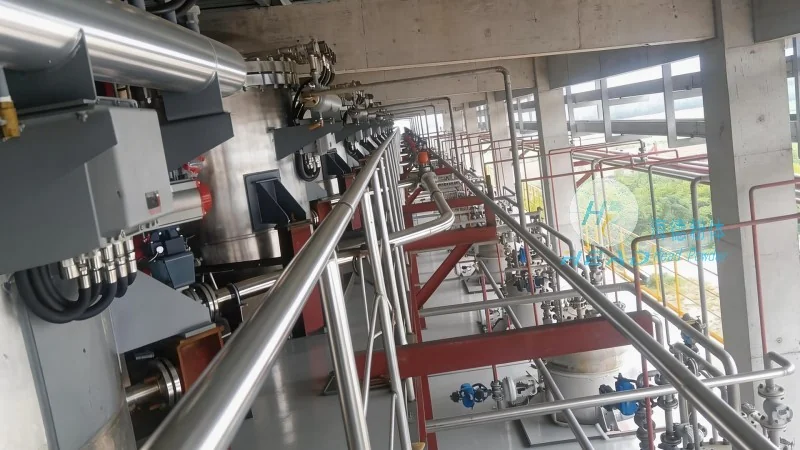
Key Features and Benefits of Biomass Powder Pneumatic Conveying Systems
Biomass powder pneumatic conveying systems offer several advantages over traditional conveying methods. One of the main benefits is the ability to transport powders over long distances without the need for multiple transfer points or intermediate storage. This reduces the risk of contamination and improves process efficiency. The systems are also flexible, allowing for easy integration into existing production lines and modifications to accommodate changes in production volume or powder types. Additionally, pneumatic conveying systems are less prone to clogging compared to mechanical systems, as the air flow helps to keep the powder particles in suspension. This reduces downtime and maintenance costs. The systems are also relatively compact, saving space in industrial facilities. Furthermore, modern systems are equipped with advanced control technologies, such as variable frequency drives (VFDs) and sensors, to monitor and adjust the system parameters in real-time, enhancing operational safety and efficiency.
Applications of Biomass Powder Pneumatic Conveying Systems
Biomass powder pneumatic conveying systems are widely used in various industries that handle biomass materials. In the biofuel industry, these systems are used to transport biomass powders from storage to processing units, such as pelletizers or gasifiers. In agricultural processing, they are used to move crop residues or animal feed powders from storage to processing equipment. The systems are also used in the production of biomass-based chemicals and materials, where fine powders need to be transported to reactors or mixing units. Additionally, in the power generation sector, biomass powder pneumatic conveying systems are used to feed biomass into boilers, ensuring a consistent and efficient fuel supply. The versatility of these systems makes them suitable for a wide range of applications, from small-scale operations to large industrial plants.




