Quartz sand powder pneumatic conveying systems are industrial solutions designed to transport fine quartz sand particles through a pipeline using compressed air or other gas streams. This method offers a dust-free, efficient, and flexible alternative to traditional bulk material handling methods such as belt conveyors or bucket elevators. The system is particularly valuable in industries where maintaining a clean environment and controlling particle dispersion are critical, such as in construction, glass manufacturing, and mineral processing. By leveraging the principles of fluidization and gas-solid flow, these systems enable the seamless movement of quartz sand from storage silos or processing units to end-use applications, ensuring consistent material flow and minimal operational downtime.
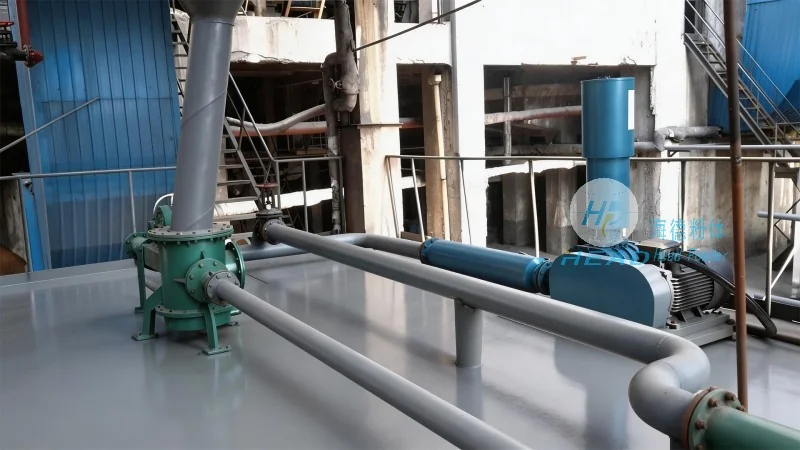
About HeadPowder: Your Expert in Pneumatic Conveying Solutions
HeadPowder, or Shandong HeadPowder Engineering Co., Ltd., is a leading provider of advanced pneumatic conveying systems tailored for diverse industrial needs. With a strong presence in China, particularly in Shandong, the company specializes in designing, manufacturing, and implementing customized solutions for handling fine powders like quartz sand. Their expertise lies in integrating cutting-edge technology with practical engineering to deliver systems that meet stringent performance, safety, and environmental standards. HeadPowder’s commitment to quality and customer satisfaction has established them as a trusted partner for businesses seeking reliable and efficient material handling solutions.
Core Design Principles of Quartz Sand Powder Pneumatic Conveying Systems
The design of a quartz sand powder pneumatic conveying system is built on several fundamental principles that ensure optimal performance and reliability. The first principle is the selection of appropriate air velocity and pressure, which directly impacts the system’s conveying capacity and the ability to handle different particle sizes and densities. For quartz sand, which typically consists of fine particles with specific gravity around 2.65, the system must be engineered to maintain sufficient air velocity to prevent particle settling and ensure smooth flow through the pipeline. This often involves calculating the minimum conveying velocity required to keep the particles in suspension, a critical parameter that depends on particle size distribution, density, and the system’s layout.
Another key design principle is the choice of pipeline configuration, including the use of straight or curved sections, bends, and expansion or contraction joints. The system’s layout must account for the natural tendency of fine powders to form cohesive layers or agglomerates, which can lead to blockages if not properly managed. To mitigate this, designers incorporate features such as pulse-jet or rotary airlocks, which help break up agglomerates and maintain consistent material flow. Additionally, the system includes components like silos, hoppers, and control valves that regulate the feed rate and prevent overloading, ensuring the conveying process operates within safe and efficient parameters.
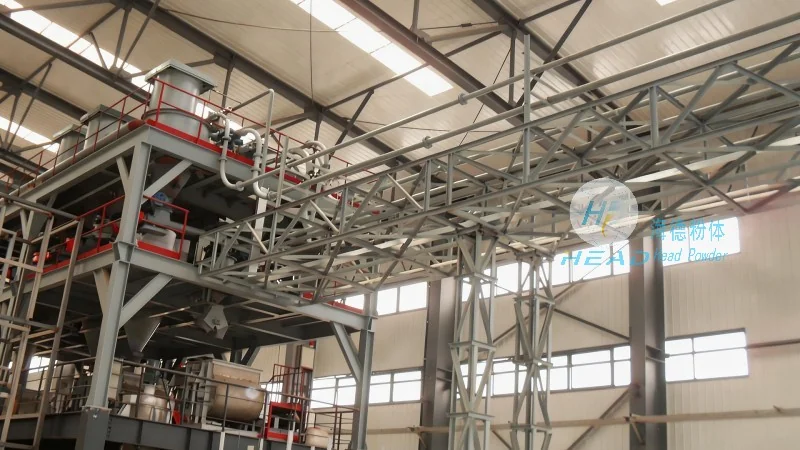
Energy efficiency is also a critical consideration in the design of these systems. The use of high-efficiency compressors and optimized air velocity reduces operational costs while minimizing environmental impact. HeadPowder’s engineers employ advanced computational fluid dynamics (CFD) simulations to model the flow behavior of quartz sand particles in the pipeline, allowing for precise adjustments to the system’s design before implementation. This approach ensures that the final system not only meets the required conveying capacity but also operates with minimal energy consumption and maximum reliability.
Key Components and Their Functions in a Quartz Sand Powder Pneumatic Conveying System
A typical quartz sand powder pneumatic conveying system consists of several interconnected components, each playing a vital role in the overall operation. The primary components include the material feed hopper, which stores and feeds the quartz sand into the system; the air compressor or blower, which generates the necessary pressure and flow of air; the pipeline network, which transports the sand-air mixture; and the discharge unit, which delivers the material to its final destination. Each component is carefully selected and sized to match the specific characteristics of the quartz sand and the system’s operational requirements.
The feed hopper is designed to maintain a consistent material level and prevent clogging. It often includes a rotary airlock or a star valve at the outlet to control the feed rate and prevent backflow. The air compressor, typically a positive displacement type such as a rotary lobe or screw compressor, provides the required pressure (usually between 0.5 to 2 bar) to move the sand particles through the pipeline. The pipeline itself is made of materials resistant to abrasion and corrosion, such as stainless steel or high-density polyethylene, to withstand the abrasive nature of quartz sand and the effects of compressed air.
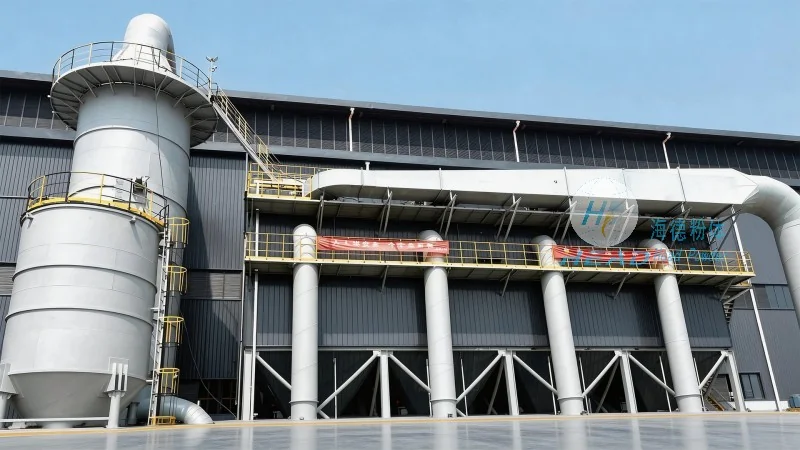
The system also includes control valves and sensors that monitor and regulate the flow of air and material. These components allow operators to adjust the conveying rate in real-time, respond to changes in material feed, and detect any abnormalities such as blockages or pressure drops. The discharge unit, which may be a rotary valve or a pressure vessel, ensures that the quartz sand is released smoothly and without dust generation, maintaining a clean and safe working environment.
Advantages of Quartz Sand Powder Pneumatic Conveying Systems
Compared to traditional material handling methods, quartz sand powder pneumatic conveying systems offer several distinct advantages that make them ideal for modern industrial applications. One of the most significant benefits is the elimination of dust and contamination, which is crucial in industries where product purity and worker safety are paramount. Unlike belt conveyors or bucket elevators, which can generate significant dust and require extensive dust control measures, pneumatic systems transport the material in a sealed environment, reducing the risk of particle loss and environmental pollution.
Another advantage is the flexibility and scalability of the system. Pneumatic conveying systems can be easily expanded or reconfigured to accommodate changes in production volume or material types, making them suitable for both small-scale and large-scale operations. The ability to transport materials over long distances without the need for multiple transfer points or intermediate storage also enhances operational efficiency. Additionally, these systems are less prone to mechanical failures compared to traditional equipment, as they have fewer moving parts and rely on the principles of fluid dynamics rather than mechanical friction.




