This article provides an overview of the equipment used in boron nitride pneumatic conveying systems and explains the underlying structural principles that enable efficient material transport. The content is presented by Shandong HeadPowder Engineering Co., Ltd., a leading manufacturer based in China.
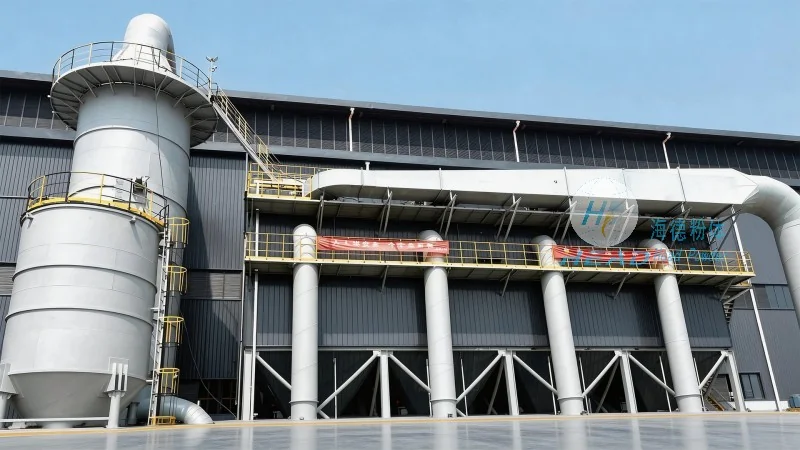
Boron nitride, a versatile ceramic material known for its excellent thermal stability, chemical inertness, and lubricating properties, is often transported using pneumatic conveying systems. These systems are designed to handle the unique characteristics of boron nitride, ensuring minimal particle degradation and consistent flow rates. The equipment involved in such systems includes feeders, conveyors, and control units, each playing a critical role in the overall operation.
Key Components of Boron Nitride Pneumatic Conveying Systems
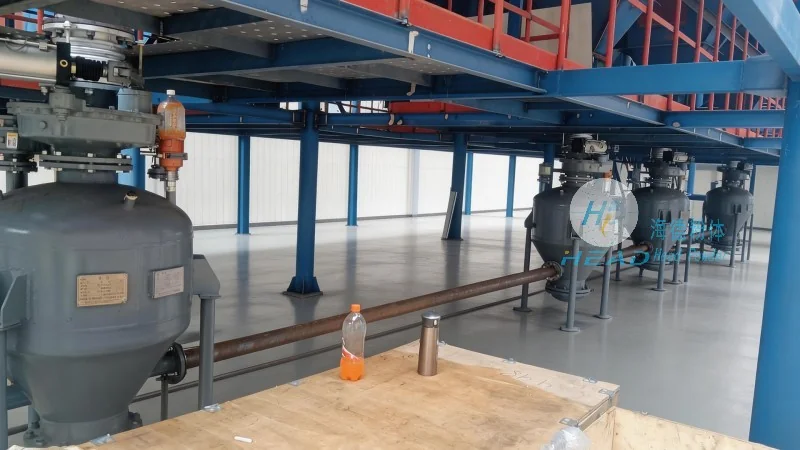
The core components of a boron nitride pneumatic conveying system are carefully engineered to handle the material's specific properties. The system typically starts with a material feeder, which can be a rotary valve or a screw feeder, designed to introduce boron nitride particles into the conveying line at a controlled rate. This ensures a steady flow and prevents clogging, which is crucial for maintaining system efficiency.
Following the feeder is the conveying pipeline, which may be made of materials resistant to the abrasive and chemical properties of boron nitride. The pipeline is often equipped with bends and elbows that are designed to minimize particle impact and maintain a smooth flow. The use of flexible hoses or rigid pipes depends on the specific application and the distance over which the material needs to be transported.
The system also includes a separator or cyclone, which separates the conveyed material from the air stream. This component is essential for recovering the boron nitride particles and returning them to the process or storage. The separator's design, including its size and angle, is optimized to achieve high separation efficiency without causing excessive pressure drops.
Structural Principles and Operational Mechanics
The structural principles of boron nitride pneumatic conveying systems are based on the physics of fluid dynamics and particle transport. The system operates by creating a pressure differential between the inlet and outlet of the conveying line. Air is drawn into the system, and the boron nitride particles are entrained in the air stream, moving through the pipeline under the force of the air flow.
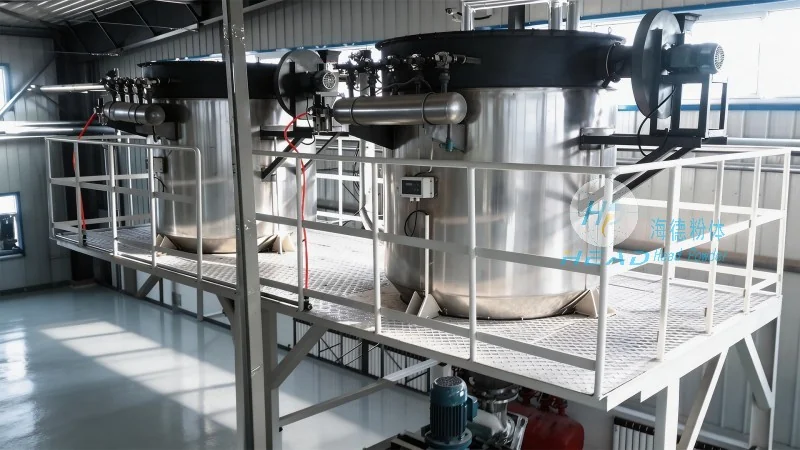
One of the key operational principles is the balance between the air velocity and the particle size. The air velocity must be sufficient to lift and transport the particles but not so high as to cause excessive wear on the system components or degrade the particles. This balance is achieved through careful design and control of the system's parameters, such as the air pressure and flow rate.
Another important principle is the prevention of material buildup and blockages. Boron nitride particles can have a tendency to stick to surfaces, especially at low velocities or in areas of low pressure. To mitigate this, the system may include features like vibration or agitation devices that keep the particles in motion and prevent clogging. Additionally, the use of anti-static coatings on the equipment can help reduce particle accumulation due to static electricity.
Advantages of Boron Nitride Pneumatic Conveying Systems
Implementing a pneumatic conveying system for boron nitride offers several advantages over traditional methods like bucket elevators or belt conveyors. One of the primary benefits is the ability to transport the material in a closed system, which minimizes dust exposure and improves safety in the workplace. This is particularly important for boron nitride, which can generate fine particles that are hazardous if inhaled.
Another advantage is the flexibility of the system. Pneumatic conveyors can be easily reconfigured to change the direction or distance of material transport, making them suitable for complex layouts in industrial facilities. The system can also handle varying material feed rates, adapting to changes in production demand without significant adjustments.
Furthermore, the closed system design helps maintain the purity of the boron nitride material, preventing contamination from external sources. This is critical for applications where the material's properties, such as its thermal stability or lubricity, need to be preserved. The system's ability to handle fine particles without degradation also enhances the quality of the final product.
Applications and Industry Use Cases
Boron nitride pneumatic conveying systems are widely used in various industries that rely on boron nitride as a key material. In the semiconductor industry, for example, boron nitride is used as a dielectric and lubricant in electronic components. The pneumatic conveying system ensures that the material is delivered to the production line in a clean and controlled manner, maintaining the high standards required for semiconductor manufacturing.
In the aerospace industry, boron nitride is used in thermal protection systems and as a lubricant for high-performance bearings. The ability of the pneumatic conveying system to handle the material's fine particles and transport it over long distances makes it ideal for applications in this sector. The system's reliability and efficiency contribute to the overall performance of aerospace components.
In the chemical and pharmaceutical industries, boron nitride is used as a filler or additive in various products. The closed system design of the pneumatic conveyor helps prevent contamination from the environment, ensuring that the final products meet the stringent quality standards of these industries. The system's ability to handle small batches and varying feed rates also makes it suitable for research and development applications.
Conclusion and Company Information
Boron nitride pneumatic conveying systems are sophisticated equipment designed to efficiently and safely transport this important ceramic material. The combination of specialized components and structural principles ensures that the material is handled with minimal degradation and maximum efficiency. Shandong HeadPowder Engineering Co., Ltd., with its headquarters in China, is a trusted provider of such systems, offering tailored solutions to meet the specific needs of various industries.
By understanding the key components, operational mechanics, and advantages of these systems, users can make informed decisions about implementing pneumatic conveying for their boron nitride applications. The expertise and experience of companies like Shandong HeadPowder Engineering Co., Ltd. are essential in ensuring that the systems are designed, installed, and maintained to achieve optimal performance and longevity.




