

Catalyst Pneumatic Conveying: Working Principle and Features
HeadPowder, a leading enterprise in the field of catalyst handling and processing, specializes in advanced pneumatic conveying systems designed for the efficient and reliable transport of catalyst materials. This article delves into the fundamental working principles and key characteristics of catalyst pneumatic conveying, providing a clear understanding of how these systems operate and their advantages in industrial applications.
The Working Principle of Catalyst Pneumatic Conveying
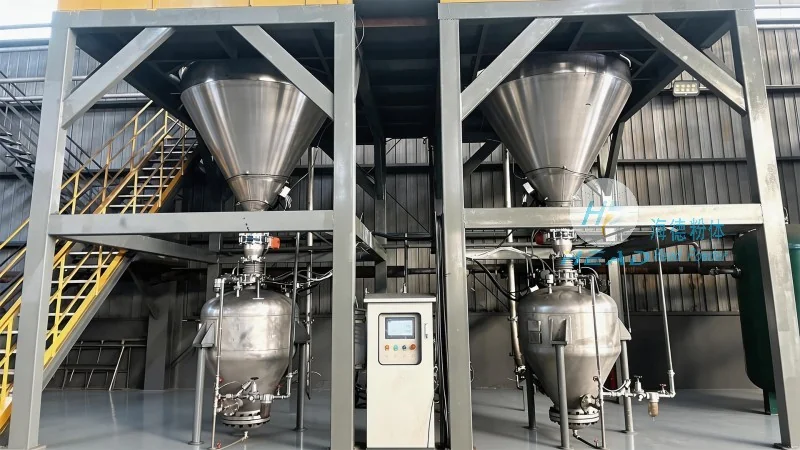
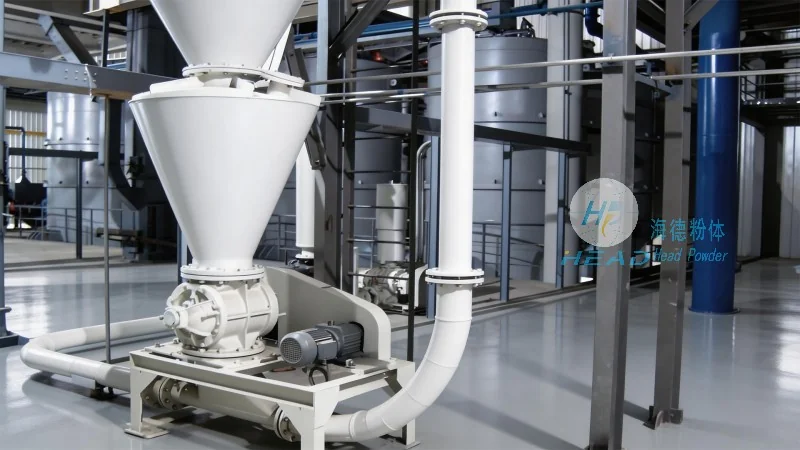
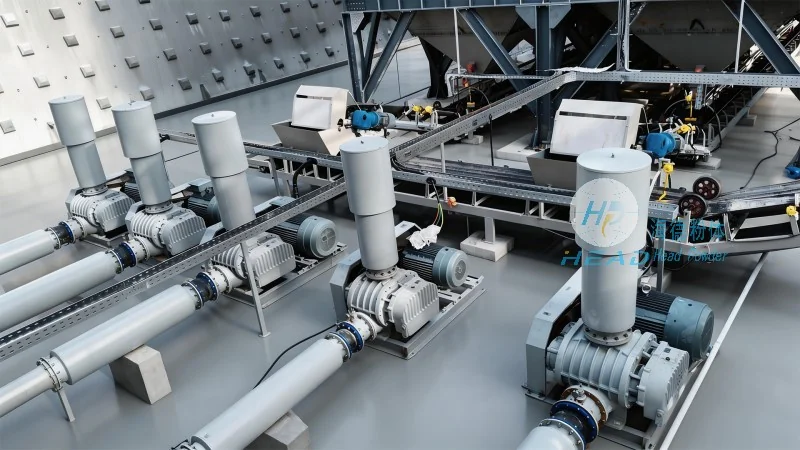
Catalyst pneumatic conveying operates on the principle of fluidization and transport, where compressed air or gas is introduced into a hopper containing the catalyst material. The air creates a low-pressure zone that lifts the particles, causing them to become suspended in the air stream. This suspension allows the particles to be carried through the pipeline to the discharge point. The system typically includes a blower or compressor to generate the necessary air pressure, a filter to remove moisture and contaminants from the air, and a receiver to collect the catalyst at the end of the line. The choice between suction and pressure systems depends on factors such as the distance to be covered, the height of the transfer, and the material's characteristics. Suction systems are suitable for short to medium distances and lower material loads, while pressure systems are preferred for longer distances or when higher material flow rates are required. The rotary valve at the hopper plays a critical role in controlling the flow rate, ensuring a steady supply of catalyst to the conveying line. Proper design of the pipeline, including the use of smooth, corrosion-resistant materials and appropriate bends and elbows, is essential to minimize pressure loss and maintain efficient transport.