Iron powder material handling systems are critical components in industrial settings, particularly in the manufacturing and processing of iron powder products. These systems are designed to efficiently transport iron powder from one location to another, ensuring smooth and consistent operation. The following content provides a detailed overview of the operation process and working principles of such systems, highlighting the key components and their functions.
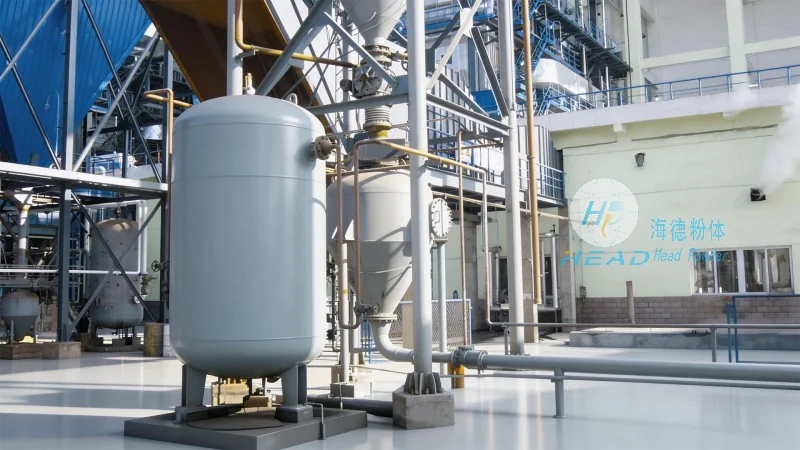
Key Components of Iron Powder Material Handling Systems
The iron powder material handling system typically consists of several essential components that work in tandem to achieve efficient material transport. These components include feeders, conveyors, storage silos, and control systems. Each component plays a vital role in the overall operation, contributing to the system's reliability and performance.
Feeding mechanisms are often used to introduce iron powder into the system. These may include screw feeders, vibratory feeders, or pneumatic feeders, depending on the specific requirements of the application. The feeder ensures a consistent and controlled flow of iron powder into the conveyor system, preventing blockages and maintaining uniform material movement.
Conveyors are the core of the material handling system, responsible for transporting iron powder from the feeding point to the discharge point. Common types of conveyors used in iron powder handling include belt conveyors, screw conveyors, and pneumatic conveyors. Belt conveyors are widely used due to their simplicity and effectiveness in moving bulk materials over long distances. Screw conveyors, on the other hand, are ideal for vertical or inclined transport, providing a compact solution for material elevation. Pneumatic conveyors utilize air pressure to move iron powder through a pipeline, offering a dust-free and flexible transport method.
Storage silos are an integral part of the system, providing a means to store iron powder before it is transported or processed. These silos are typically made of durable materials such as steel or concrete, designed to withstand the weight and potential abrasion of iron powder. The silos are equipped with level indicators and discharge valves to monitor and control the material level, ensuring safe and efficient storage.
Control systems are essential for managing the operation of the iron powder material handling system. These systems use sensors, controllers, and automation technologies to monitor the flow of iron powder, adjust conveyor speeds, and maintain system stability. Advanced control systems can also integrate with other production processes, enabling real-time monitoring and optimization of material handling operations.
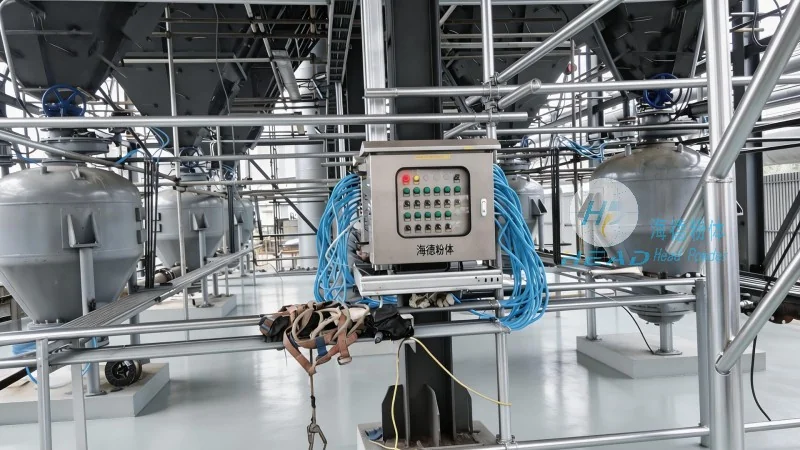
Operation Process of Iron Powder Material Handling Systems
The operation process of an iron powder material handling system involves several sequential steps, each carefully coordinated to ensure efficient material transport. The process begins with the loading of iron powder into the storage silo. The silo is then filled to a predetermined level, after which the feeder activates to start the material flow.
Once the feeder begins to discharge iron powder, the conveyor system receives the material and transports it to the discharge point. The conveyor speed is typically adjusted based on the material flow rate and the distance to be covered. In some systems, multiple conveyors may be used in series to transport iron powder over longer distances or to change the direction of material flow.
At the discharge point, the iron powder is collected in a container or transferred to the next processing stage. The control system continuously monitors the material level in the silo and the flow rate from the feeder, making adjustments as needed to maintain a stable operation. This feedback loop ensures that the system operates efficiently and prevents overfilling or underfilling of the silo.
During operation, the system may encounter various challenges, such as material bridging or blockages in the conveyor. Advanced control systems are equipped with sensors and alarms to detect these issues and trigger corrective actions. For example, if a blockage is detected in the screw conveyor, the system may automatically stop the feeder and alert operators to resolve the issue. This proactive approach minimizes downtime and ensures continuous operation.
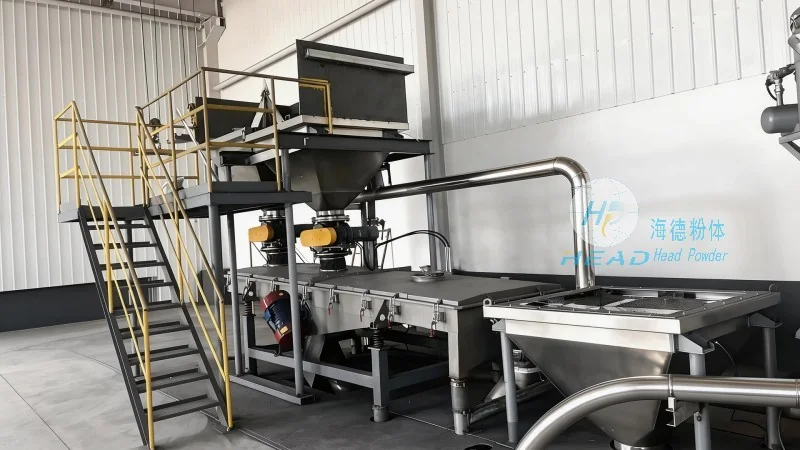
Working Principles of Iron Powder Material Handling Systems
The working principles of iron powder material handling systems are based on the principles of material flow and mechanical transport. The system utilizes gravity, mechanical force, or pneumatic pressure to move iron powder from one location to another. The specific principle employed depends on the type of conveyor or feeder used in the system.
For belt conveyors, the working principle involves the use of a moving belt that transports iron powder by friction. The belt is driven by a motor, and the material is placed on the belt at the feeding point. As the belt moves, the material is carried to the discharge point. The speed of the belt and the angle of inclination can be adjusted to control the flow rate and elevation of the material.
Screw conveyors operate on the principle of mechanical rotation. A screw, or helical blade, is mounted on a shaft and rotates within a trough. The rotation of the screw pushes the iron powder forward, similar to how a screw moves through a substance. The speed of the screw and the pitch of the helix determine the material flow rate and the degree of material compression.
Pneumatic conveyors use the principle of air pressure to transport iron powder. The system consists of a pipeline with a series of air nozzles and valves. Iron powder is introduced into the pipeline at the feeding point, and compressed air is then used to push the material forward. The pressure and flow rate of the air determine the speed and capacity of the material transport. Pneumatic conveyors are particularly effective for handling fine powders, as they minimize dust generation and provide a clean transport environment.
Control systems play a crucial role in the working principles of the iron powder material handling system. They use sensors to monitor various parameters, such as material level, flow rate, and temperature. The data collected by these sensors is processed by the control unit, which then adjusts the operation of the system to maintain optimal performance. For example, if the material level in the silo decreases, the control system may increase the speed of the feeder to maintain a consistent flow. This closed-loop control ensures that the system operates efficiently and reliably.




