When it comes to transporting limestone powder in industrial applications, selecting the right conveying method is crucial for efficiency, cost-effectiveness, and operational safety. Limestone powder, a key raw material in various industries such as cement production, construction, and chemical manufacturing, requires specialized handling due to its fine particle size and potential for dust generation. This article, produced by Shandong HeadPowder Engineering Co., Ltd. (headpowder), provides a detailed comparison of common limestone powder conveying methods, highlighting their advantages and disadvantages to help industrial operators make informed decisions.
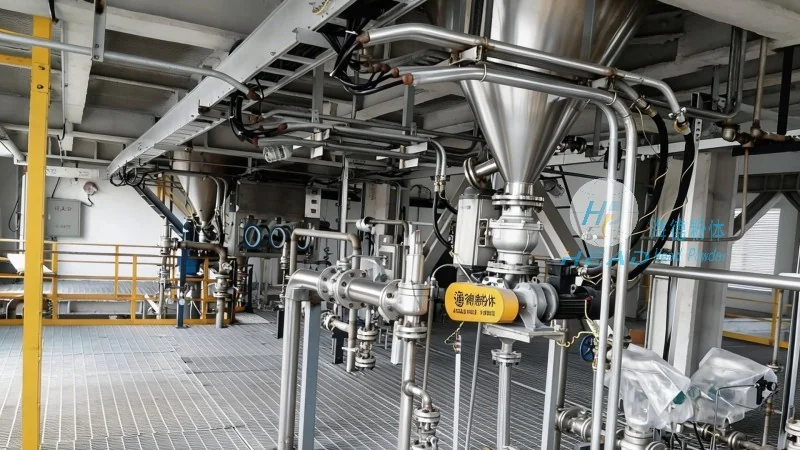
1. Pneumatic Conveying Systems
Pneumatic conveying, also known as air-assisted conveying, is a widely used method for transporting limestone powder. This system utilizes compressed air to move the powder through a pipeline. There are two main types: dilute-phase and dense-phase pneumatic conveying. Dilute-phase systems are suitable for short distances and low to medium material flow rates, while dense-phase systems are ideal for longer distances and higher material loads. The primary advantage of pneumatic conveying is its ability to handle fine powders without the need for mechanical components like belts or buckets. It also offers flexibility in routing and can be integrated with other processing equipment. However, the main disadvantages include higher energy consumption compared to other methods, potential for dust emissions if not properly sealed, and the need for regular maintenance of air compressors and filters. Additionally, the system may be less efficient for very long distances or high-volume applications due to pressure drop and material degradation.
2. Belt Conveyors
Belt conveyors are a classic and widely adopted solution for limestone powder transport. These systems consist of a continuous belt that moves over rollers or idlers, transporting the material from one point to another. Belt conveyors are particularly effective for long-distance and high-volume material handling. They offer several advantages, including high capacity, low maintenance costs, and the ability to handle a wide range of material sizes and types. The system is also relatively simple to install and operate, making it a cost-effective choice for many industrial settings. However, belt conveyors have some notable drawbacks. They require significant space for installation, which can be a limitation in compact facilities. Additionally, the belts are susceptible to wear and tear from abrasive limestone powder, leading to higher replacement costs over time. Dust control is another challenge, as the open design can lead to dust emissions unless proper sealing and enclosure are implemented. Moreover, belt conveyors may not be suitable for very fine powders, as the material can stick to the belt or cause excessive wear.
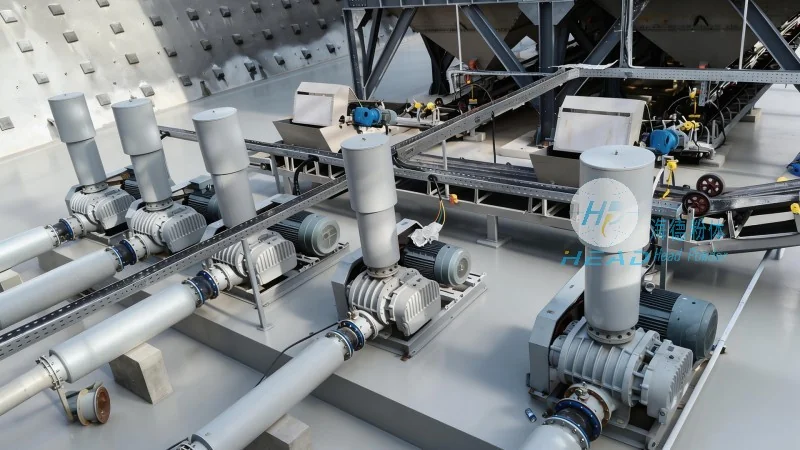
3. Screw Conveyors
Screw conveyors, also known as auger conveyors, are another common method for transporting limestone powder. These systems use a rotating screw (auger) to move the material along a tube or trough. Screw conveyors are particularly effective for vertical or inclined transport, as well as for handling bulk materials in a compact space. The primary advantage of screw conveyors is their simplicity and low maintenance. They have few moving parts, reducing the risk of mechanical failure and the need for frequent repairs. Screw conveyors are also relatively inexpensive to install and operate, making them a cost-effective solution for many applications. However, the disadvantages of screw conveyors include limited capacity compared to other methods, especially for very fine powders. The system can also experience material buildup or clogging, particularly if the powder is hygroscopic or has high moisture content. Additionally, screw conveyors are not suitable for long-distance transport, as the material may degrade or the system may become inefficient over extended distances. The rotating screw can also cause wear on the material and the conveyor itself, leading to higher long-term costs.
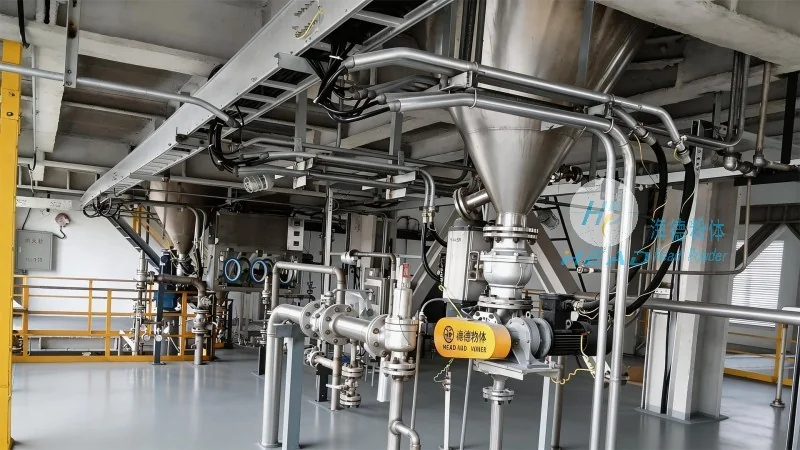
4. Bucket Elevators
Bucket elevators are a vertical conveying method that uses a series of buckets attached to a chain or belt to transport limestone powder from a lower to a higher level. This system is particularly effective for vertical transport in industrial settings, such as moving material from a storage silo to a processing plant. The main advantage of bucket elevators is their high capacity and ability to handle vertical distances efficiently. They are also relatively simple to operate and maintain, with fewer moving parts compared to other vertical systems. However, bucket elevators have several significant drawbacks. They require a large footprint for installation, which can be a limitation in space-constrained facilities. The system is also susceptible to material degradation due to the impact of buckets on the powder, which can affect the quality of the limestone. Additionally, bucket elevators may not be suitable for very fine powders, as the material can stick to the buckets or the conveyor, leading to inefficiencies. Dust control is another challenge, as the vertical design can cause dust emissions unless proper sealing and enclosure are implemented. Moreover, the system may experience mechanical issues, such as chain or belt wear, which can lead to downtime and maintenance costs.
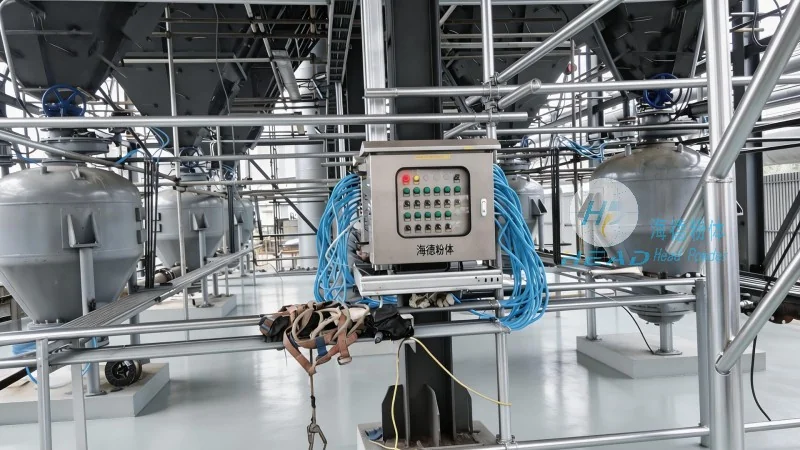
5. Hydraulic Conveying
Hydraulic conveying, also known as slurry transport, involves mixing limestone powder with water to form a slurry, which is then pumped through a pipeline. This method is particularly effective for long-distance transport and high-volume applications. The primary advantage of hydraulic conveying is its ability to handle very long distances and high material loads with relatively low energy consumption compared to pneumatic systems. It also offers good control over the material flow rate and can be integrated with other processing equipment. However, the disadvantages of hydraulic conveying include the need for additional equipment, such as pumps and water treatment systems, which increases initial costs. The system also requires regular maintenance of pumps and pipelines to prevent clogging or corrosion. Additionally, the slurry must be properly dewatered and disposed of, which adds to the operational complexity and cost. The method is also not suitable for applications where dust control is critical, as the slurry can generate dust during handling and processing. Moreover, the system may not be effective for very fine powders, as the slurry can become too viscous or cause excessive wear on the equipment.
6. Comparison Summary
When comparing these limestone powder conveying methods, several factors must be considered, including the distance of transport, material flow rate, particle size, and operational environment. Pneumatic conveying is suitable for short to medium distances and fine powders, while belt conveyors are ideal for long-distance and high-volume transport. Screw conveyors are best for vertical or inclined transport in compact spaces, and bucket elevators are effective for vertical transport in industrial settings. Hydraulic conveying is suitable for long-distance and high-volume applications but requires additional equipment and maintenance. Each method has its own advantages and disadvantages, and the choice of system should be based on the specific requirements of the industrial application. For example, a cement plant may prefer pneumatic conveying for its ability to handle fine limestone powder, while a construction site may opt for belt conveyors for its high capacity and low maintenance costs. Ultimately, selecting the right conveying method is essential for ensuring efficient, safe, and cost-effective limestone powder transport in industrial operations.




