Algae residue granules are a common byproduct in various industrial processes, particularly in the biorefinery and aquaculture sectors. Efficient and reliable conveying of these granules is crucial for maintaining operational efficiency and ensuring smooth downstream processing. This article provides a detailed comparison of the most common conveying methods used for algae residue granules, highlighting their advantages, limitations, and suitability for different applications. The information is presented by Shandong HeadPowder Engineering Co., Ltd., a leading provider of specialized material handling solutions.
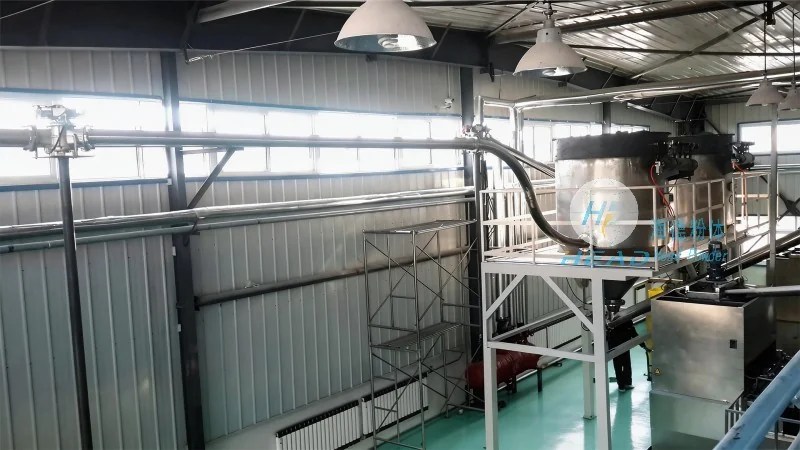
Introduction to Algae Residue Granule Conveying
Algae residue granules, often resulting from the processing of microalgae for biofuel, food, or pharmaceutical applications, present unique challenges in material handling. These granules can vary in size, moisture content, and density, making the selection of an appropriate conveying system critical. The primary goal of conveying is to transport the granules from a source point to a destination point with minimal loss, minimal degradation, and optimal energy efficiency. Various technologies are employed to achieve this, each with distinct characteristics that make them suitable for specific scenarios.
1. Screw Conveyor (Auger Conveyor) for Algae Residue Granules
Screw conveyors, also known as auger conveyors, are among the most widely used equipment for transporting granular materials, including algae residue. This method utilizes a rotating helical screw blade inside a U-shaped or tubular housing to move the material forward. The screw conveyor is particularly effective for horizontal or slightly inclined transport, with the ability to handle a wide range of particle sizes and moisture levels. For algae residue granules, the design of the screw (e.g., solid or sectional) and the speed of rotation are critical factors. Solid screw conveyors are suitable for dry or moderately moist granules, while sectional screw conveyors can accommodate wetter materials without clogging. The screw conveyor offers advantages such as simplicity, low maintenance, and the ability to operate in enclosed systems, which helps in controlling dust and odor. However, it has limitations, including high power consumption for long or steep inclines, potential for material degradation due to friction, and limited capacity for very large or abrasive granules. Shandong HeadPowder Engineering Co., Ltd. specializes in designing screw conveyors tailored to the specific characteristics of algae residue, ensuring optimal performance and durability.
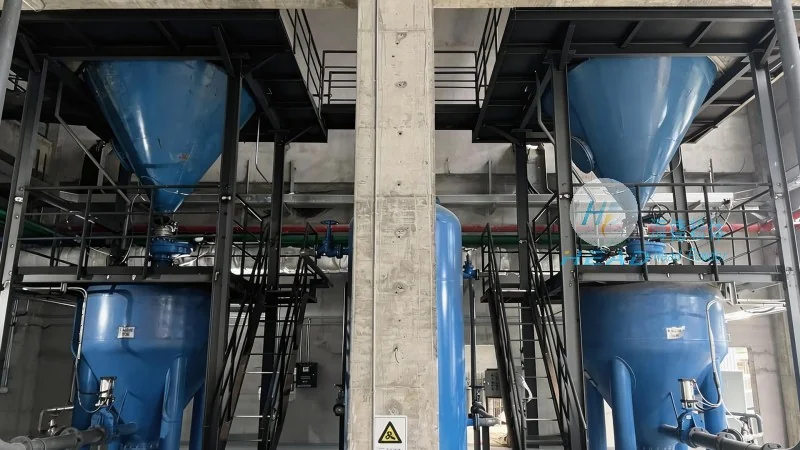
2. Pneumatic Conveying Systems for Algae Residue Granules
Pneumatic conveying systems use air or other gases to transport granular materials through a pipeline. This method is highly versatile and can handle a wide variety of particle sizes and moisture contents, making it suitable for both short and long-distance transport. Pneumatic systems are categorized into two main types: pressure and vacuum. Pressure systems use compressed air to push the material through the pipeline, while vacuum systems use a vacuum to draw the material. For algae residue granules, pressure systems are often preferred for long-distance or high-capacity applications due to their higher efficiency and ability to handle larger particles. The key components of a pneumatic conveying system include the hopper, feeder, pipeline, and receiver. The feeder is critical in ensuring a consistent flow of material into the pipeline, preventing blockages and maintaining system performance. Pneumatic conveying offers advantages such as the ability to transport materials over long distances, the flexibility to route the pipeline around obstacles, and the option to integrate with other processing equipment. However, it has limitations, including higher energy consumption compared to mechanical systems, potential for material degradation due to high air velocities, and the need for regular maintenance of the air filtration system to prevent clogging. Shandong HeadPowder Engineering Co., Ltd. provides advanced pneumatic conveying solutions that optimize air usage and minimize energy consumption, ensuring reliable transport of algae residue granules.
3. Belt Conveyor for Algae Residue Granules
Belt conveyors are another common method for transporting algae residue granules, particularly in applications requiring high capacity and long-distance transport. This system consists of a continuous belt that moves over rollers or pulleys, with the material placed on the belt and carried to the destination. Belt conveyors are highly efficient for horizontal or slightly inclined transport and can handle large volumes of material with minimal labor. The design of the belt conveyor, including the type of belt (e.g., rubber or plastic), the width of the belt, and the speed, is tailored to the characteristics of the algae residue. Rubber belts are commonly used due to their durability and ability to handle abrasive materials, while plastic belts may be preferred for wetter or more corrosive applications. Belt conveyors offer advantages such as high capacity, low maintenance, and the ability to transport materials over long distances with minimal energy consumption. However, they have limitations, including the need for a level or gently sloped surface, potential for material spillage, and the risk of belt damage due to heavy or sharp particles. Shandong HeadPowder Engineering Co., Ltd. designs belt conveyor systems that ensure smooth operation and minimal downtime, with features such as adjustable speed and material flow control.
4. Bucket Elevator for Algae Residue Granules
Bucket elevators are vertical or steeply inclined conveyors that use buckets attached to a chain or belt to lift and transport material. This method is ideal for vertical or high-angle transport of algae residue granules, especially when the material needs to be elevated from a lower to a higher level. The buckets are filled with material at the bottom of the elevator and then lifted to the top, where the material is discharged. Bucket elevators are highly efficient for vertical transport and can handle a wide range of particle sizes and moisture contents. The design of the bucket elevator, including the size and spacing of the buckets, the speed of the chain or belt, and the angle of inclination, is critical for optimal performance. Bucket elevators offer advantages such as high capacity, low space requirement, and the ability to transport material vertically without the need for additional horizontal space. However, they have limitations, including higher initial cost compared to other systems, potential for material degradation due to high impact forces, and the need for regular maintenance of the bucket chain or belt. Shandong HeadPowder Engineering Co., Ltd. provides customized bucket elevator solutions that ensure reliable vertical transport of algae residue granules, with features such as impact-resistant buckets and adjustable speed controls.
5. Vibrating Conveyor for Algae Residue Granules
Vibrating conveyors use vibrations to move material along a trough or conveyor bed. This method is suitable for transporting granular materials with low to moderate moisture content and is particularly effective for materials that are prone to clogging or bridging. The vibrating conveyor consists of a trough that is mounted on springs and driven by an electric motor, causing the material to move forward due to the vibrations. The frequency and amplitude of the vibrations can be adjusted to optimize the conveying performance. Vibrating conveyors offer advantages such as low power consumption, minimal material degradation, and the ability to handle sticky or cohesive materials. However, they have limitations, including the need for a level or gently sloped surface, potential for noise generation, and the risk of material spillage if the vibrations are too high. Shandong HeadPowder Engineering Co., Ltd. designs vibrating conveyor systems that are tailored to the specific characteristics of algae residue, ensuring smooth and efficient transport with minimal noise and vibration.
Conclusion: Selecting the Right Conveying Method for Algae Residue Granules
The selection of the appropriate conveying method for algae residue granules depends on several factors, including the characteristics of the material (e.g., size, moisture content, density), the distance and direction of transport, the required capacity, and the operational environment. Each conveying method has its own advantages and limitations, and the optimal choice is determined by a careful evaluation of these factors. Shandong HeadPowder Engineering Co., Ltd. provides comprehensive material handling solutions tailored to the specific needs of clients, ensuring that the selected conveying system is efficient, reliable, and cost-effective. By understanding the unique properties of algae residue granules and the capabilities of each conveying method, industrial operators can make informed decisions to enhance their material handling processes and improve overall operational efficiency.




