Shandong HeadPowder Engineering Co., Ltd., a professional manufacturer based in Shandong, China, specializes in the design, production, and installation of advanced pneumatic conveying systems for catalyst powder materials. This article provides a detailed overview of the operation process and working principle of a catalyst powder material pneumatic conveying line, highlighting the key components, operational steps, and technical advantages of such systems.
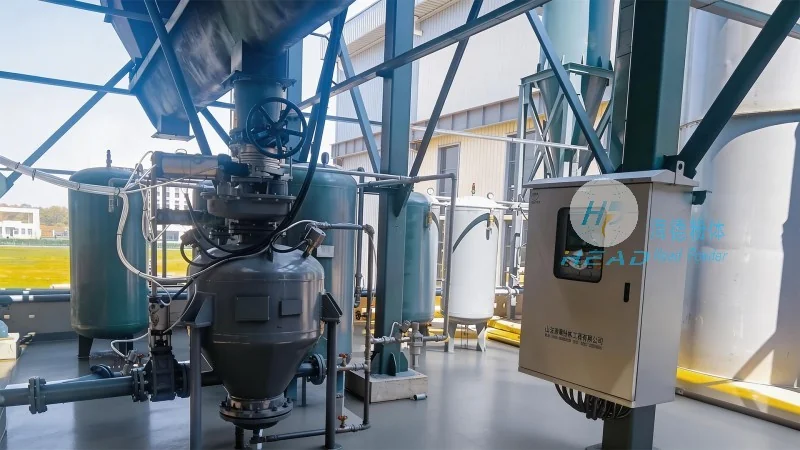
Introduction to Pneumatic Conveying Systems for Catalyst Powders
Pneumatic conveying lines are essential for the efficient and safe transportation of catalyst powders in industrial applications. These systems utilize air or other gases to move bulk materials through a pipeline network, eliminating the need for mechanical components like belts or buckets. The design of a catalyst powder pneumatic conveying line is tailored to handle the specific characteristics of catalyst powders, such as their fine particle size, high reactivity, and potential for dust generation. By leveraging the principles of fluidization and gas-solid flow, these systems ensure reliable material transfer while maintaining product integrity and minimizing operational risks.
Key Components of a Catalyst Powder Pneumatic Conveying Line
The operation of a catalyst powder pneumatic conveying line relies on several critical components that work in tandem to achieve efficient material transport. These components include the material feed hopper, which stores and feeds the catalyst powder into the system; the air compressor or blower, which generates the necessary airflow to move the material; the conveying pipeline, which transports the material from the feed point to the discharge point; the control valves and regulators, which manage the airflow and pressure; and the dust collection and filtration system, which ensures environmental compliance and product safety. Each component is carefully selected and integrated to optimize performance and durability for catalyst powder applications.
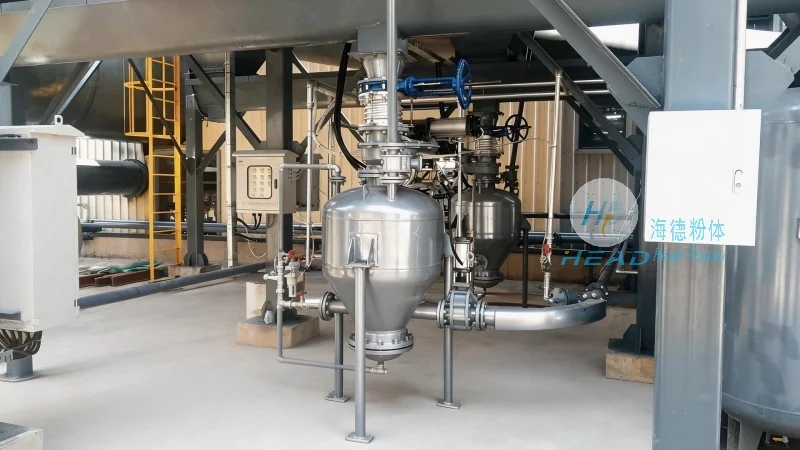
Operation Process of the Catalyst Powder Pneumatic Conveying Line
The operation process of a catalyst powder pneumatic conveying line typically involves the following sequential steps. First, the catalyst powder is loaded into the material feed hopper. The hopper is equipped with a feeder mechanism, such as a rotary valve or a screw feeder, which controls the flow rate of the material into the conveying line. Next, the air compressor or blower is activated, generating a high-pressure airflow that enters the conveying pipeline. The airflow creates a low-pressure zone at the feed point, which draws the catalyst powder into the pipeline as a slurry or suspension. As the material travels through the pipeline, it is mixed with the air, forming a dense phase or dilute phase flow, depending on the system design. The conveying line may include bends, expansions, or contractions to adjust the flow dynamics and maintain material stability. Finally, the material is discharged at the receiving end, where it is separated from the air using a cyclone separator or a bag filter. The separated catalyst powder is collected in a storage bin or directly transferred to the next processing stage, while the air is filtered and released back into the environment.
Working Principle of the Pneumatic Conveying System
The working principle of a catalyst powder pneumatic conveying line is based on the fundamental concept of fluidization and gas-solid flow. The system operates by creating a pressure differential between the feed and discharge points, which drives the material through the pipeline. In the dense phase conveying mode, the catalyst powder is carried as a continuous stream of solid particles suspended in the air, with a high solids concentration. This mode is suitable for short-distance transport and requires higher air velocities to maintain flow. In the dilute phase conveying mode, the catalyst powder is carried as individual particles dispersed in the air, with a lower solids concentration. This mode is suitable for long-distance transport and requires lower air velocities. The choice between dense phase and dilute phase operation depends on factors such as the material properties, pipeline length, and system efficiency requirements. The control system monitors parameters like airflow rate, pressure, and material flow rate to ensure stable operation and prevent blockages or surges.
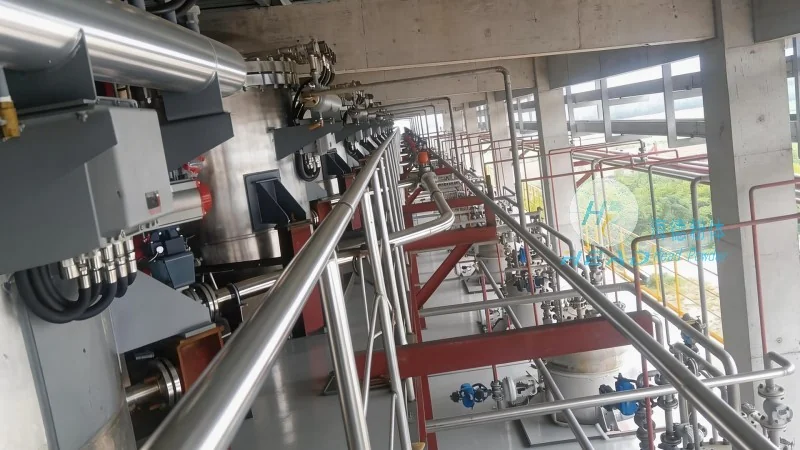
Advantages of Using a Catalyst Powder Pneumatic Conveying Line
Implementing a catalyst powder pneumatic conveying line offers several advantages over traditional mechanical conveying methods. Firstly, it eliminates the need for moving parts in the conveying path, reducing maintenance costs and increasing system reliability. Secondly, it provides a closed system that prevents dust contamination and environmental pollution, which is crucial for catalyst powders that may be hazardous or sensitive to moisture. Thirdly, it allows for precise control of material flow rates and pressure, enabling accurate dosing and process control. Fourthly, it can handle a wide range of particle sizes and shapes, making it suitable for various catalyst formulations. Finally, it offers flexibility in system layout, allowing for horizontal, vertical, or inclined transport, and can be integrated with other processing equipment for a seamless production line.
Conclusion and Application Scope
In conclusion, the operation process and working principle of a catalyst powder material pneumatic conveying line are designed to provide efficient, safe, and reliable transportation of catalyst powders in industrial settings. Shandong HeadPowder Engineering Co., Ltd. specializes in providing customized solutions that meet the specific needs of clients, ensuring optimal performance and durability. These systems are widely used in the chemical, petrochemical, and pharmaceutical industries, where the handling of catalyst powders requires precision and control. By understanding the key components, operational steps, and technical advantages of such systems, industries can enhance their production efficiency and product quality while minimizing operational risks and environmental impact.




