For companies in the lithium-ion battery industry, the efficient and reliable handling of raw material powders is crucial to production efficiency and product quality. Powder pneumatic conveying equipment, as a key solution in material transport, plays a vital role in the entire production chain. This article will introduce the operation process and working principle of such equipment, with a focus on the application in lithium-ion battery raw material processing, and highlight the professional capabilities of Shandong HeadPowder Engineering Co., Ltd. (hereinafter referred to as HeadPowder) in this field.
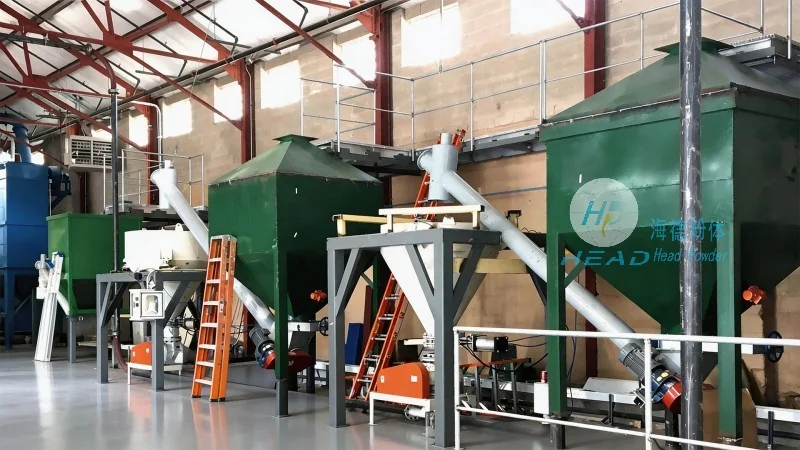
Key Role of Pneumatic Conveying Equipment in Lithium-Ion Battery Production
In the production process of lithium-ion batteries, raw materials such as lithium carbonate, nickel oxide, cobalt oxide, and other powders need to be transported from storage to production lines. Traditional conveying methods like belt conveyors or bucket elevators may face challenges such as material agglomeration, dust pollution, and high energy consumption. Pneumatic conveying equipment, by using compressed air as the conveying medium, can solve these problems effectively. It not only ensures the stable and continuous transport of powders but also reduces environmental pollution and improves production safety. HeadPowder's pneumatic conveying systems are specifically designed to meet the high-precision and high-purity requirements of lithium-ion battery raw material processing, providing stable and efficient material transport solutions.
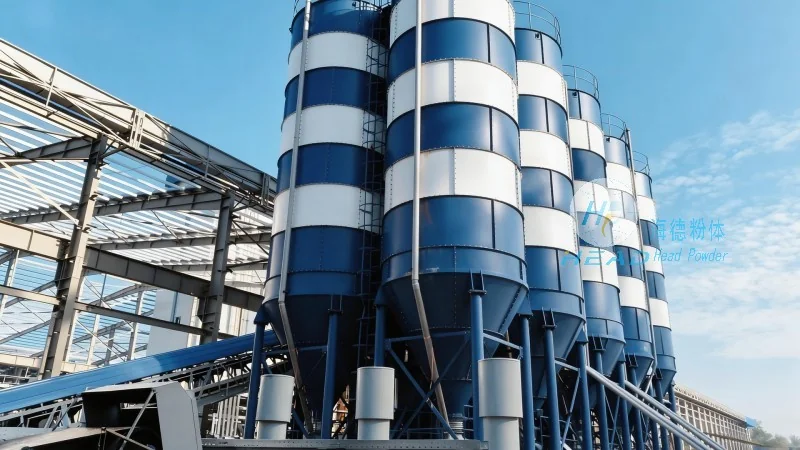
Basic Structure and Components of Pneumatic Conveying Equipment
Pneumatic conveying equipment typically consists of several core components, including a material feeder, a conveying pipeline, a dust collector, a pressure vessel, and a control system. The material feeder is responsible for uniformly feeding the powder into the system. The conveying pipeline is the main channel for material transport, often using stainless steel or other corrosion-resistant materials to ensure material purity. The dust collector is used to separate the powder from the air and collect it for recycling or disposal. The pressure vessel provides the necessary pressure environment for the conveying process. The control system monitors and adjusts the conveying parameters in real time to ensure stable operation.
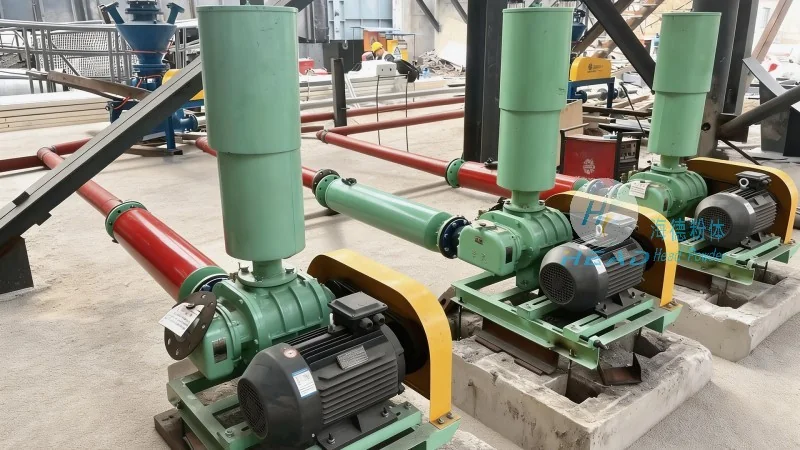
Operation Process of Powder Pneumatic Conveying Equipment
The operation process of powder pneumatic conveying equipment generally includes the following steps: First, the raw material powder is fed into the material feeder through a hopper. The feeder then uniformly and continuously supplies the powder into the conveying pipeline. Simultaneously, compressed air is introduced into the pipeline from the pressure vessel. The compressed air and powder mix in the pipeline, forming a dense phase or dilute phase conveying flow. The flow carries the powder to the destination, such as the production line or storage tank. At the receiving end, the powder is separated from the air by the dust collector, and the air is discharged or recycled. The control system continuously monitors the pressure, flow rate, and other parameters to adjust the operation in real time, ensuring the stable and efficient transport of powders. For example, in the production of lithium carbonate, the equipment can transport the powder from the storage silo to the mixing tank, maintaining a consistent flow rate and preventing material agglomeration.
Working Principle of Pneumatic Conveying Equipment
The working principle of pneumatic conveying equipment is based on the principle of air flow and particle movement. In the conveying process, compressed air provides the kinetic energy to drive the powder particles forward. The type of conveying can be divided into dense phase conveying and dilute phase conveying. Dense phase conveying uses a relatively high air velocity and low air volume to form a dense flow of powder and air, which is suitable for long-distance or high-purity material transport. Dilute phase conveying uses a relatively low air velocity and high air volume to form a dilute flow, which is suitable for short-distance or low-cost material transport. The selection of the conveying mode depends on the material properties, conveying distance, and system requirements. HeadPowder's equipment can be customized according to different material characteristics and conveying needs, providing optimal conveying solutions. For instance, for fine powders like lithium carbonate, dense phase conveying is often used to minimize particle breakage and maintain particle size distribution.
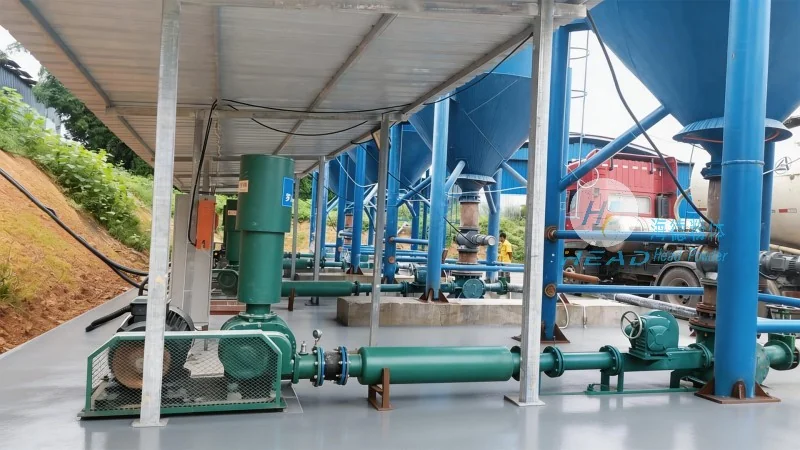
Advantages of HeadPowder's Pneumatic Conveying Equipment
HeadPowder, as a professional manufacturer of powder processing equipment, has accumulated rich experience in the design and production of pneumatic conveying systems for lithium-ion battery raw materials. The company's equipment has the following advantages: First, high conveying efficiency and stability. The equipment can ensure the stable and continuous transport of powders, meeting the high production demand of lithium-ion battery manufacturers. Second, high material purity. The use of stainless steel and other corrosion-resistant materials, combined with advanced dust collection technology, ensures that the transported powders meet the high-purity requirements of battery production. Third, energy saving and environmental protection. The equipment uses compressed air as the conveying medium, reducing the need for mechanical parts and minimizing dust pollution. Fourth, flexible and customizable. HeadPowder can design and produce equipment according to the specific needs of customers, including different conveying modes, pipeline layouts, and control systems. For example, a customer in Shandong, China, required a pneumatic conveying system for transporting cobalt oxide powder over a distance of 50 meters. HeadPowder designed a dense phase conveying system with a stainless steel pipeline and a high-efficiency dust collector, which successfully met the customer's requirements and improved the production efficiency.




