HeadPowder, a leading engineering firm based in Shandong, China, specializes in the design and implementation of advanced pneumatic conveying systems for industrial applications, particularly focusing on the efficient handling of materials like silica fume. This article provides a technical analysis of the two primary pneumatic conveying modes—positive pressure and negative pressure—and compares their characteristics, advantages, and applications in the context of silica fume transportation.
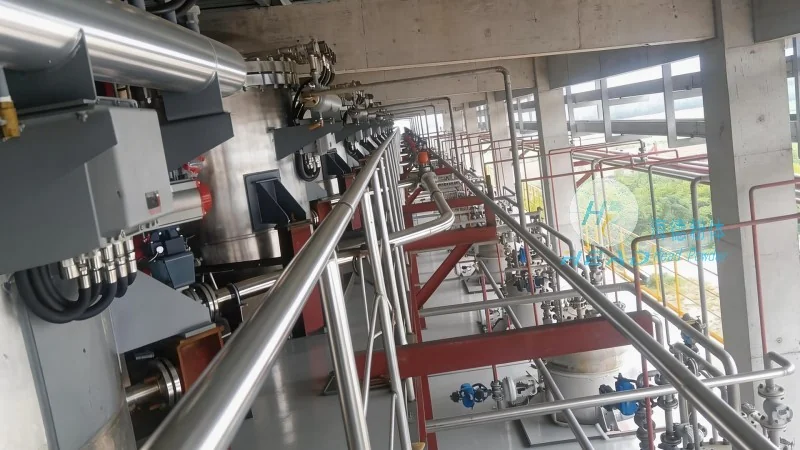
Introduction to Pneumatic Conveying Systems for Silica Fume
Silica fume, a byproduct of silicon metal production, is a fine powder with high reactivity and significant industrial value, often used as a supplementary cementitious material in concrete production. Efficient and reliable transportation of silica fume from storage to processing facilities is crucial for maintaining production efficiency and product quality. Pneumatic conveying systems offer a non-contact, dust-free, and automated method for moving such powders, making them an ideal solution for silica fume handling. HeadPowder, with its expertise in material handling engineering, has developed specialized systems tailored to the unique properties of silica fume.
Understanding Positive Pressure Pneumatic Conveying
Positive pressure pneumatic conveying systems operate by generating a higher pressure in the conveying line than the ambient air pressure. The system uses a blower or fan to force air (or a carrier gas) through the pipeline, carrying the silica fume particles along with it. This mode is often referred to as "pressure-fed" or "blown" conveying. The key components of a positive pressure system include a feed hopper, a rotary valve (or feeder), a conveying line, a dust collector, and a discharge point. The air flow is maintained at a consistent pressure, ensuring that the material is continuously transported from the source to the destination.
Advantages of positive pressure systems include their ability to handle long conveying distances, multiple transfer points, and high material loads. They are particularly effective for applications where the material needs to be conveyed over significant distances or through complex piping networks. The positive pressure also helps in maintaining a consistent flow rate, reducing the risk of material settling or blockages in the pipeline. However, these systems require more robust equipment, such as high-pressure blowers, and may generate higher noise levels due to the high air velocities.
Understanding Negative Pressure Pneumatic Conveying
Negative pressure pneumatic conveying, also known as "suction" or "vacuum" conveying, operates by creating a lower pressure in the conveying line compared to the ambient air. The system uses a vacuum pump to draw air and the silica fume particles from the source, moving them through the pipeline to the discharge point. The key components of a negative pressure system include a suction hopper, a rotary valve, a conveying line, a filter or cyclone separator, and a discharge point. The vacuum is maintained throughout the system, ensuring that the material is continuously drawn from the source.
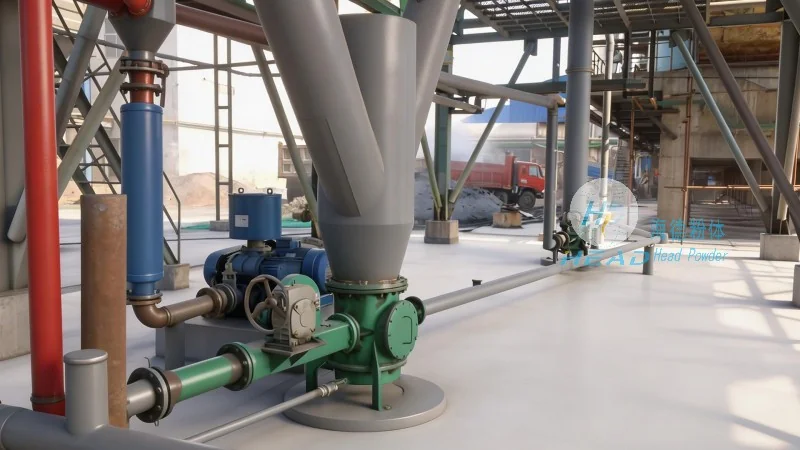
Advantages of negative pressure systems include their ability to handle fine powders with low bulk density, as the vacuum helps in lifting the material from the source. They are also more suitable for applications where the material needs to be collected from multiple points or where the source is at a higher elevation than the destination. Negative pressure systems are generally quieter and require less powerful equipment compared to positive pressure systems. However, they have limitations in terms of conveying distance and material load capacity, as the vacuum can drop over long distances, leading to reduced flow rates or blockages.
Technical Comparison: Positive vs. Negative Pressure Conveying
When comparing positive and negative pressure pneumatic conveying systems for silica fume, several factors need to be considered, including material properties, conveying distance, system complexity, and operational costs. The choice between the two modes depends on the specific requirements of the application.
Material properties play a significant role in the selection of the conveying mode. Silica fume is a fine, cohesive powder with a high surface area, which can lead to agglomeration and blockages in the pipeline. Positive pressure systems are generally better suited for handling such materials due to their ability to maintain consistent air flow and pressure, reducing the risk of material settling. Negative pressure systems, while effective for fine powders, may require additional measures, such as pre-drying or adding anti-caking agents, to prevent blockages.
Conveying distance is another critical factor. Positive pressure systems can handle longer distances more effectively, as the pressure can be maintained throughout the pipeline. Negative pressure systems are typically limited to shorter distances, as the vacuum can decrease over longer runs, leading to reduced material flow. For applications requiring long-distance transportation, such as moving silica fume from a storage silo to a concrete plant located several kilometers away, a positive pressure system is often the preferred choice.
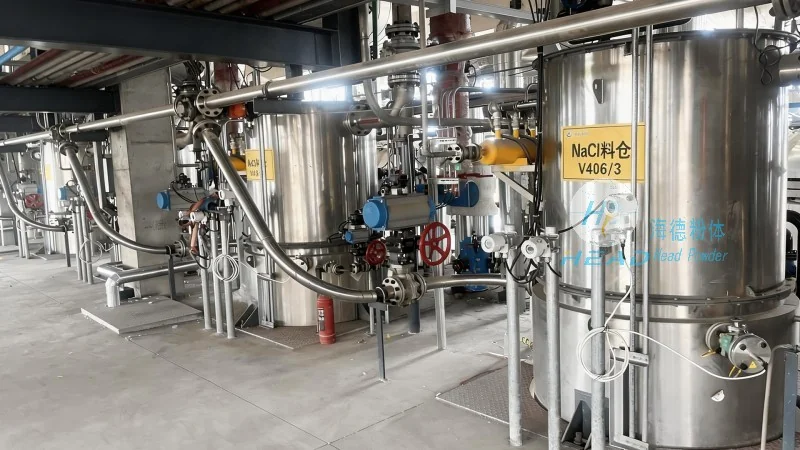
System complexity and operational costs also influence the decision. Positive pressure systems are generally more complex, requiring high-pressure blowers and robust piping, which can increase initial investment costs. However, they offer higher material throughput and are more reliable for long-term operation. Negative pressure systems are simpler and less expensive to install, but may require more frequent maintenance due to the vacuum pump and filter system. Operational costs, including energy consumption and maintenance, need to be evaluated based on the specific application and system design.
HeadPowder's Expertise in Silica Fume Pneumatic Conveying
HeadPowder Engineering Co., Ltd., based in Shandong, China, has extensive experience in designing and implementing both positive and negative pressure pneumatic conveying systems for silica fume applications. The company's engineering team leverages advanced technology and material handling expertise to develop customized solutions that meet the unique needs of each client. Whether a client requires a positive pressure system for long-distance transportation or a negative pressure system for fine powder handling, HeadPowder provides comprehensive services, including system design, equipment selection, installation, and maintenance.
HeadPowder's approach to silica fume pneumatic conveying involves a thorough analysis of the client's material properties, production requirements, and operational constraints. The company uses advanced simulation tools to model the conveying process, ensuring that the system is optimized for efficiency and reliability. For example, in a positive pressure system, the company may recommend a specific blower type and pressure level based on the silica fume's bulk density and particle size. In a negative pressure system, the company may suggest a vacuum pump size and filter capacity to maintain optimal suction and prevent material buildup.
HeadPowder also emphasizes safety and compliance in its system designs. Silica fume is a hazardous material due to its fine particle size and potential for respiratory issues. The company ensures that all conveying systems are equipped with dust collection and filtration systems to minimize airborne dust and comply with environmental regulations. Additionally, the company provides training and support to clients to ensure safe operation and maintenance of the systems.




