Efficient and reliable transport of desulfurization and denitrification agents is crucial for modern industrial processes, particularly in power generation and chemical manufacturing. The powder gas-liquid transport system, developed by Shandong HeadPowder Engineering Co., Ltd. (headpowder), addresses these needs by providing a robust solution for handling fine powders used in flue gas treatment. This system ensures consistent material delivery while maintaining operational safety and efficiency.
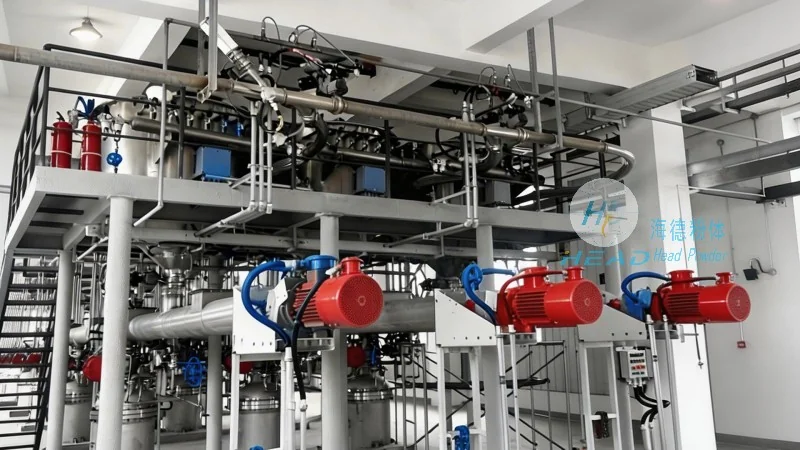
Overview of the Powder Gas-Liquid Transport System
The system is designed to handle desulfurization and denitrification agents, which are typically fine powders with specific chemical properties. These materials are essential for reducing sulfur dioxide (SO₂) and nitrogen oxides (NOₓ) emissions from industrial exhaust streams. The transport system integrates several key components, including a material feeder, a gas compressor, a transport pipeline, and a control system, all working in harmony to achieve seamless material transfer.
Key Components and Their Functions
1. Material Feeder: This component is responsible for feeding the desulfurization and denitrification powder into the transport system. It ensures a steady and controlled flow of the powder, preventing blockages and maintaining consistent material supply. The feeder is equipped with adjustable speed controls to match the system's output requirements.
2. Gas Compressor: The compressor generates the necessary air or gas pressure to move the powder particles through the pipeline. Depending on the system configuration, it may operate under positive or negative pressure conditions. The compressor's capacity is matched to the material's flow rate and the pipeline length, ensuring efficient transport without excessive energy consumption.
3. Transport Pipeline: The pipeline is constructed from materials resistant to the chemical properties of the desulfurization and denitrification agents, such as stainless steel or specialized coatings. It is designed to minimize particle degradation and prevent clogging, with internal surfaces treated to reduce friction and improve flow characteristics.
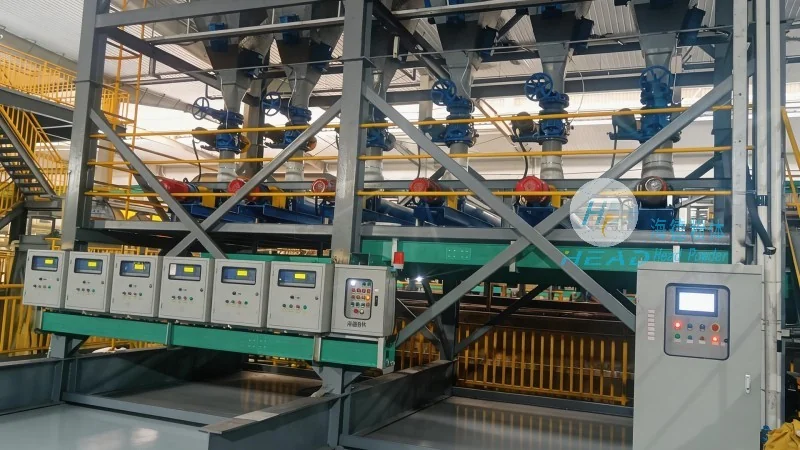
4. Control System: The control system monitors and regulates the entire operation, including pressure, flow rate, and material level. It uses sensors and automation technology to adjust the feeder speed and compressor output in real-time, ensuring optimal performance and preventing operational issues like over-pressurization or material starvation.
Operation Process of the System
The operation of the powder gas-liquid transport system for desulfurization and denitrification agents follows a systematic sequence. Initially, the material feeder receives the powder from a storage silo or hopper and feeds it into the transport pipeline. Simultaneously, the gas compressor starts and generates the required pressure, introducing the gas into the pipeline. The powder particles are then entrained by the gas stream and carried through the pipeline to the destination point, such as a reactor or injection point in the flue gas treatment system.
During the transport process, the control system continuously monitors key parameters, such as pressure drop, flow rate, and material level. If any deviations occur, the system automatically adjusts the feeder speed or compressor output to maintain stable operation. This feedback mechanism ensures that the material is delivered at the correct rate and under optimal conditions, minimizing downtime and maximizing system efficiency.
Working Principle of the Gas-Liquid Transport Mechanism
The core principle of the powder gas-liquid transport system is the entrainment of fine particles by a gas stream. This process, known as pneumatic conveying, relies on the interaction between the gas and the powder particles. The gas, typically air or a mixture of air and inert gases, flows through the pipeline at a velocity sufficient to lift and transport the powder particles. The key factors influencing this process include the gas velocity, particle size, density, and the pipeline diameter.
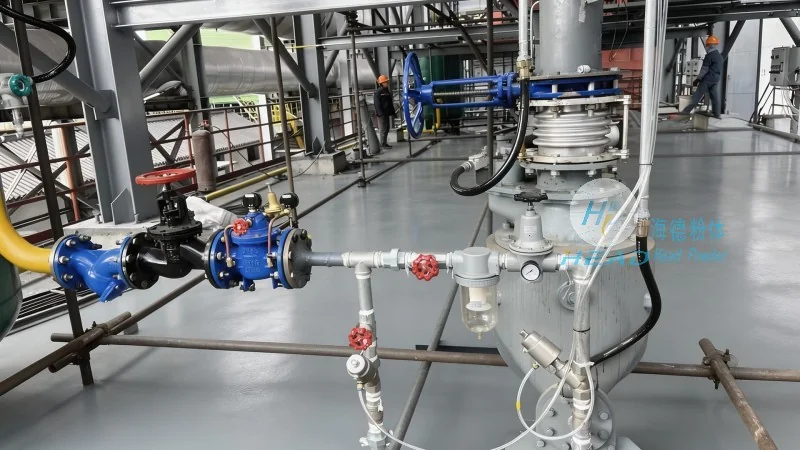
In positive pressure systems, the compressor supplies pressurized gas at the inlet of the pipeline, pushing the powder forward. The gas pressure is maintained throughout the pipeline, ensuring that the material is continuously moved toward the destination. In negative pressure systems, the pipeline is maintained under a slight vacuum, and the gas is drawn from the outlet, pulling the powder into the system. Both approaches are effective, but the choice depends on the application requirements, such as the distance to be covered and the material's sensitivity to pressure changes.
The system's efficiency is further enhanced by the use of specialized conveying techniques, such as dilute-phase or dense-phase transport. Dilute-phase conveying operates at higher gas velocities, resulting in a lower gas-to-powder ratio and is suitable for short distances or low material concentrations. Dense-phase conveying, on the other hand, uses lower gas velocities and higher gas-to-powder ratios, which is ideal for longer distances or when handling materials that are prone to clogging. The selection of the conveying method is based on the specific characteristics of the desulfurization and denitrification agents and the operational constraints of the plant.
Benefits and Advantages of the System
The powder gas-liquid transport system for desulfurization and denitrification agents offers several advantages over traditional methods, such as bucket elevators or screw conveyors. Firstly, it eliminates the need for mechanical contact with the material, reducing the risk of contamination and degradation. The system is also more flexible, as it can transport materials over long distances and through complex layouts without the need for multiple transfer points. Additionally, the pneumatic conveying process is less prone to blockages and can handle a wide range of particle sizes and shapes.
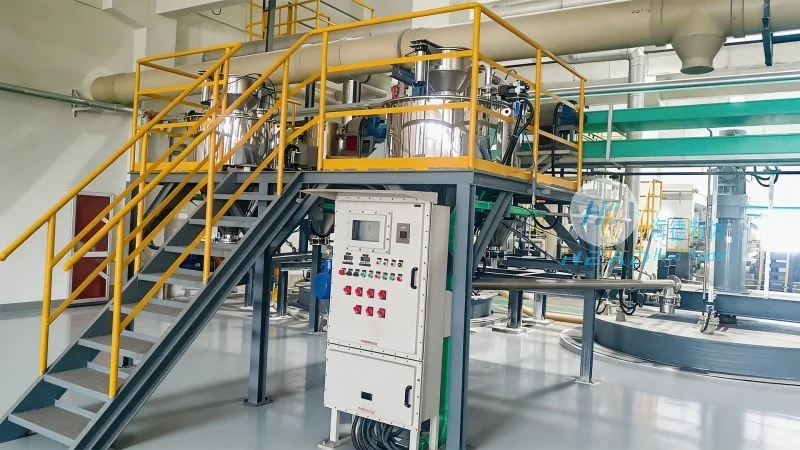
From an operational perspective, the system provides consistent and reliable material delivery, which is critical for maintaining the efficiency of flue gas treatment processes. The automated control system reduces the need for manual intervention, minimizing human error and improving overall safety. Furthermore, the system's energy efficiency is optimized through the use of variable-speed compressors and precise control of gas flow, leading to lower operational costs over time.
Application in Desulfurization and Denitrification Processes
The system is widely used in power plants and industrial facilities where flue gas treatment is required to meet environmental regulations. The desulfurization and denitrification agents, such as limestone or ammonia-based powders, are transported to the reaction chambers using the pneumatic system. The consistent delivery of these materials ensures that the chemical reactions occur at the desired rate, maximizing the removal efficiency of SO₂ and NOₓ from the exhaust gases.
In addition to power generation, the system is also applied in chemical manufacturing, where fine powders are used in various processes, including catalytic reactions and material synthesis. The reliability and efficiency of the transport system contribute to the overall productivity and quality of the end products, making it an essential component in modern industrial operations.
Conclusion
Shandong HeadPowder Engineering Co., Ltd. (headpowder) has developed a sophisticated powder gas-liquid transport system that effectively addresses the challenges of handling desulfurization and denitrification agents. Through its integrated components and advanced control systems, the system ensures efficient, safe, and reliable material transport, supporting the environmental and operational goals of industrial facilities. As a leading provider of engineering solutions, headpowder continues to innovate in this field, offering tailored systems that meet the specific needs of its clients in China and beyond.




