Aluminum nitride (AlN) powder is a critical material in modern industrial applications, widely used in electronics, ceramics, and advanced manufacturing due to its excellent thermal conductivity, electrical insulation properties, and chemical stability. The efficient handling and transportation of AlN powder is essential for maintaining product quality and operational efficiency in production lines. Pneumatic conveying, a method that uses compressed air to transport powders through a pipeline system, offers a non-contact, low-cost solution for AlN powder transfer. This article explores the operating process and working principle of aluminum nitride powder pneumatic conveying, detailing the key components, flow mechanisms, and practical considerations for effective implementation.
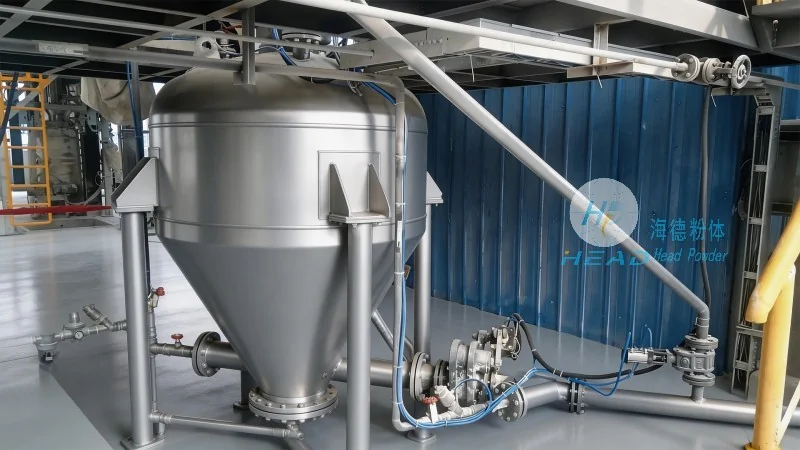
Overview of Pneumatic Conveying Systems for Aluminum Nitride Powder
Pneumatic conveying systems for aluminum nitride powder typically consist of several core components, including a hopper for powder storage, a feeder to control the flow rate, a conveying pipeline, a venturi or other air-drafting device to create the airflow, and a receiver or collection unit. The system operates by introducing compressed air into the pipeline, which generates a pressure differential that pulls the powder particles along with the air stream. This process allows for the safe and efficient transport of AlN powder from the source to the destination, minimizing the risk of contamination and product degradation.
Operating Process of Aluminum Nitride Powder Pneumatic Conveying
The operating process of aluminum nitride powder pneumatic conveying involves several sequential steps that ensure smooth and consistent material transfer. First, the AlN powder is loaded into the storage hopper, where it is held under controlled conditions to prevent agglomeration or moisture absorption. Next, a feeder mechanism, such as a rotary valve or screw feeder, regulates the powder discharge rate, ensuring a steady flow into the conveying pipeline. The compressed air is then introduced into the pipeline, typically at a pressure of 0.5 to 1.5 bar, creating a high-velocity air stream that entrains the powder particles. As the air and powder mixture travels through the pipeline, the venturi or other air-drafting device maintains the necessary airflow velocity to keep the powder suspended. The mixture then reaches the receiver, where the air is separated from the powder, often using a cyclone or filter system. The purified powder is collected in the receiver, while the air is either vented to the atmosphere or recirculated back to the system for energy efficiency.
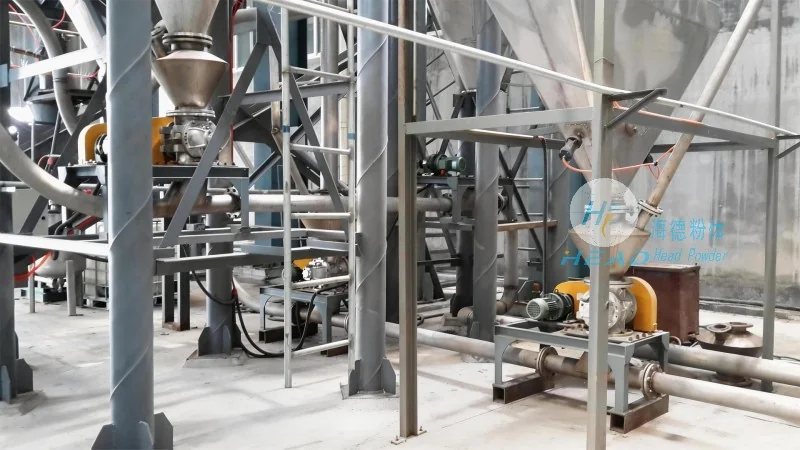
Working Principle of Pneumatic Conveying for Aluminum Nitride Powder
The working principle of aluminum nitride powder pneumatic conveying is based on the principles of fluid dynamics and particle transport. When compressed air is introduced into the pipeline, it creates a low-pressure zone that draws the powder particles into the air stream. The air velocity must be sufficient to overcome the gravitational force acting on the powder particles and to provide the necessary lift force to keep them suspended. The key parameters affecting the conveying performance include air pressure, flow rate, powder feed rate, and pipeline diameter. For AlN powder, which has a relatively high density and fine particle size, the system design must account for these characteristics to avoid particle deposition or blockage in the pipeline. The use of appropriate air-drafting devices, such as venturis or blowers, ensures that the air velocity remains within the optimal range for efficient conveying, typically between 20 to 40 m/s for fine powders like AlN.
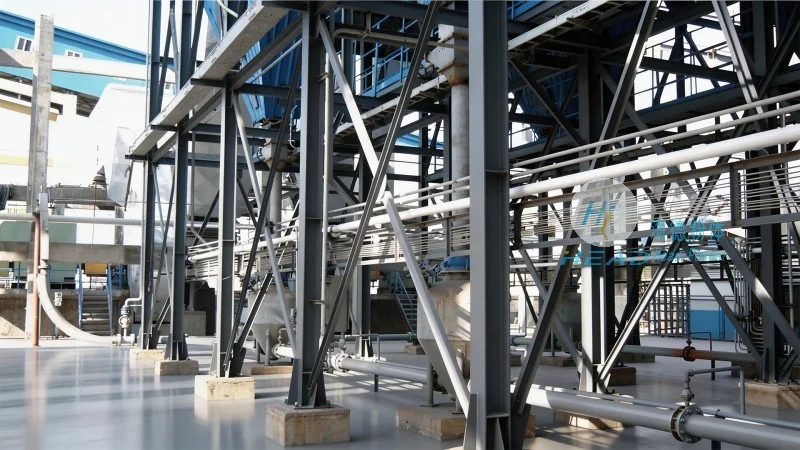
Key Components and Their Roles in Aluminum Nitride Powder Pneumatic Conveying
Several critical components are integral to the successful operation of aluminum nitride powder pneumatic conveying systems. The storage hopper is designed to accommodate the bulk quantity of AlN powder while maintaining a uniform flow. It often includes a discharge cone or cone valve to facilitate smooth powder release. The feeder is responsible for controlling the powder feed rate, which is crucial for preventing overloading or underloading of the system. Common feeder types include rotary valves, screw feeders, and vibratory feeders, each with specific advantages depending on the powder characteristics. The conveying pipeline is typically made of materials resistant to the chemical properties of AlN powder, such as stainless steel or PTFE-coated tubes, to prevent corrosion or contamination. The venturi or air-drafting device generates the airflow by converting the pressure energy of the compressed air into kinetic energy, creating the necessary velocity to entrain the powder. The receiver, often equipped with a cyclone or filter, separates the air from the powder, ensuring that the collected AlN powder is free from contaminants. Additionally, the system may include a pressure regulator and a filter to maintain air quality and prevent dust accumulation.
Company Introduction: Shandong HeadPowder Engineering Co., Ltd.
Shandong HeadPowder Engineering Co., Ltd., operating under the brand name headpowder, is a leading manufacturer and supplier of advanced powder handling solutions, including pneumatic conveying systems for aluminum nitride and other high-value powders. With a focus on innovation and quality, the company specializes in designing and manufacturing customized conveying systems tailored to the specific needs of industrial applications. Headpowder's expertise lies in understanding the unique properties of materials like aluminum nitride, ensuring that their pneumatic conveying solutions are optimized for efficiency, reliability, and product integrity. The company's facilities are located in Shandong, China, where it leverages local resources and expertise to deliver high-quality products and services to clients worldwide. By combining advanced engineering, rigorous testing, and customer-centric approach, headpowder has established itself as a trusted partner in the powder handling industry.




