Shandong HeadPowder Engineering Co., Ltd., a leading provider in the field of material handling solutions, specializes in the design, manufacturing, and installation of advanced pneumatic conveying systems. Headquartered in Shandong, China, the company has a strong presence in the domestic and international markets, serving a wide range of industries including power, cement, and chemical manufacturing. This article delves into the operation process and working principle of a typical pneumatic conveying system used for transporting dry desulfurization fly ash, highlighting the key components, operational procedures, and technical aspects that ensure efficient and reliable material transport.
System Overview and Key Components
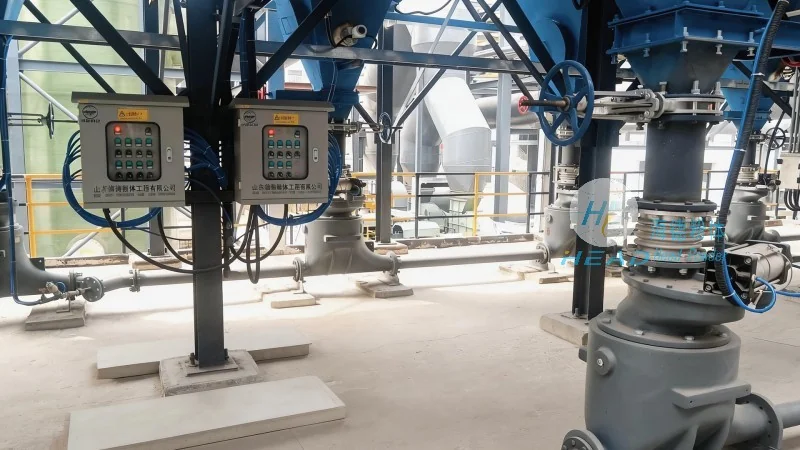
A pneumatic conveying system for dry desulfurization fly ash typically consists of several critical components that work in tandem to achieve effective material transport. The primary components include a material feed hopper, a rotary airlock valve, a positive displacement blower or a high-pressure air compressor, a conveying pipeline, and a discharge hopper or collection unit. Each component plays a vital role in the overall system performance, ensuring that the fly ash is conveyed safely and efficiently from the source to the destination.
Working Principle of the Pneumatic Conveying System
The fundamental principle behind pneumatic conveying is the use of air or gas to transport solid materials through a pipeline. In the case of dry desulfurization fly ash, the system operates on the positive pressure (pressure) or negative pressure (vacuum) method. The positive pressure system uses a blower to generate high-pressure air that pushes the fly ash particles through the pipeline, while the negative pressure system employs a vacuum pump to draw the material into the pipeline. The choice between these methods depends on factors such as the distance of transport, the particle size of the fly ash, and the required flow rate. For dry desulfurization fly ash, which often has a fine particle size and is lightweight, the positive pressure system is commonly preferred due to its ability to handle longer distances and higher material loads with less energy consumption.
Operation Process: Step-by-Step Guide
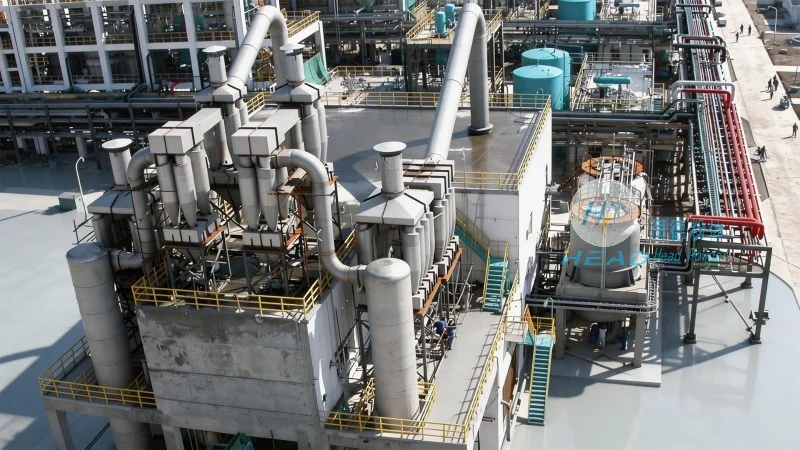
The operation of a pneumatic conveying system for dry desulfurization fly ash involves a series of sequential steps that ensure smooth and continuous material transport. The process begins with the loading of fly ash into the material feed hopper. The hopper is equipped with a level indicator to monitor the material level, and a rotary airlock valve is used to control the flow of fly ash into the conveying pipeline. The rotary airlock valve acts as a seal to prevent air leakage and ensures that the material is fed at a consistent rate. Once the fly ash enters the pipeline, it is mixed with the high-pressure air from the blower, forming a slurry-like mixture that is propelled forward by the air pressure.
As the mixture travels through the pipeline, it passes through various sections, including bends, expansions, and contractions, which are designed to minimize pressure loss and maintain the flow velocity. The pipeline is typically made of corrosion-resistant materials such as stainless steel or polyethylene to withstand the acidic and abrasive nature of the fly ash. At the discharge end, the mixture enters a discharge hopper or a collection silo, where the air and fly ash are separated. The air is either vented to the atmosphere or recirculated back to the system, while the fly ash is collected for further use or disposal.
Key Factors Influencing System Performance
Several factors can impact the performance of a pneumatic conveying system for dry desulfurization fly ash. The particle size and moisture content of the fly ash are critical parameters, as they affect the flowability and air resistance of the material. Larger or more moist particles may require higher air velocities or additional equipment such as a classifier to improve the conveying efficiency. The system's design, including the pipeline diameter, length, and layout, also plays a significant role in determining the pressure drop and energy consumption. Proper maintenance of the components, such as the blower, airlock valve, and pipeline, is essential to prevent clogging, wear, and damage, which can lead to system downtime and reduced efficiency.
Benefits and Applications
The pneumatic conveying system for dry desulfurization fly ash offers several advantages over traditional bulk material handling methods, such as belt conveyors or bucket elevators. These benefits include a compact design, which saves space in industrial facilities, and the ability to transport materials over long distances without the need for multiple transfer points. The system is also suitable for handling materials that are difficult to convey, such as fine powders or materials with high moisture content. In power plants, the system is commonly used to transport fly ash from the desulfurization unit to a storage facility or to a cement plant for use as a raw material. The system's efficiency and reliability make it an ideal solution for large-scale industrial applications, contributing to improved operational performance and reduced costs.
Conclusion
In conclusion, the pneumatic conveying system for dry desulfurization fly ash is a sophisticated and efficient solution for handling bulk materials in industrial settings. By understanding the operation process and working principle of the system, as well as the key factors that influence its performance, users can optimize the system for their specific applications and achieve reliable and cost-effective material transport. Shandong HeadPowder Engineering Co., Ltd. continues to innovate in the field of material handling, providing advanced systems that meet the evolving needs of the industry.




