Shandong HeadPowder Engineering Co., Ltd., commonly known as headpowder, is a professional manufacturer based in Shandong, China, specializing in the design, development, and production of dilute phase material pneumatic conveying equipment. Our company has accumulated extensive experience in the field, focusing on providing efficient and reliable solutions for various material handling applications.
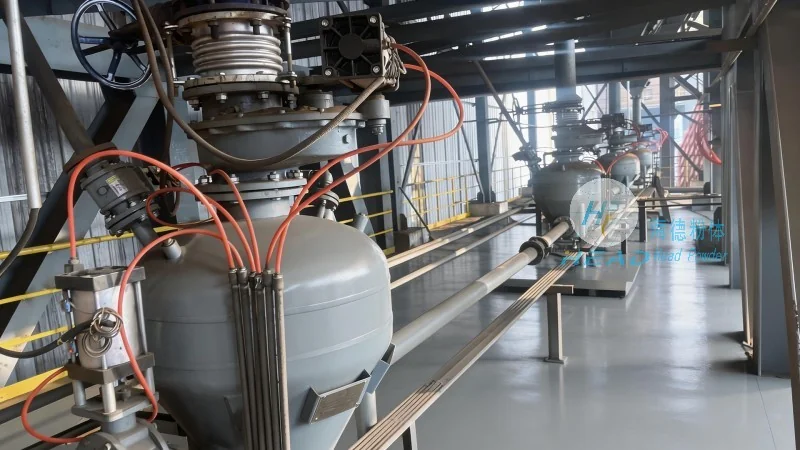
Overview of Dilute Phase Pneumatic Conveying Systems
Dilute phase pneumatic conveying systems are widely used in industries such as food, chemical, pharmaceutical, and bulk material processing. These systems operate by transporting solid particles suspended in a high-velocity air stream through a pipeline. The key advantage of this method is its ability to handle materials over long distances with minimal product degradation, making it suitable for sensitive or abrasive materials.
Key Components and Their Functions
The dilute phase pneumatic conveying equipment typically consists of several critical components, each playing a vital role in the overall system performance. These components include the air compressor, material feeder, conveying line, and dust collector. The air compressor generates the necessary pressure and airflow to move the material. The material feeder, often a rotary valve or screw feeder, controls the flow rate of the solid material into the system. The conveying line, usually made of stainless steel or other corrosion-resistant materials, ensures the material is transported efficiently. Finally, the dust collector captures any airborne particles, ensuring environmental compliance and product purity.
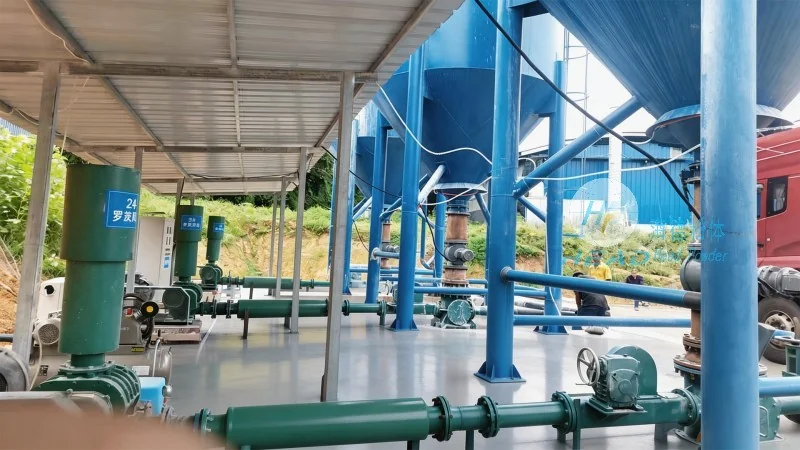
Operation Process of Dilute Phase Pneumatic Conveying
The operation process of our dilute phase material pneumatic conveying equipment involves several sequential steps. First, the air compressor is activated, producing a high-velocity air stream. Simultaneously, the material feeder starts feeding the solid particles into the conveying line. As the material enters the pipeline, it becomes suspended in the air stream, forming a dilute phase mixture. The mixture travels through the pipeline under the pressure generated by the compressor. At the receiving end, the material is separated from the air, often through a cyclone separator or a filter, and collected in a storage bin or processing unit. The separated air is then discharged or recirculated, depending on the system design.
Working Principle of the Conveying Mechanism
The working principle of dilute phase pneumatic conveying is based on the principles of fluid dynamics and particle motion. The air compressor provides the kinetic energy required to lift and transport the solid particles. The velocity of the air stream must be sufficient to overcome the gravitational force acting on the particles and to maintain them in suspension. This velocity is typically in the range of 20 to 40 meters per second, depending on the particle size, density, and the required conveying distance. The pressure drop along the pipeline is a critical factor, as it determines the power consumption and the overall efficiency of the system. Proper design of the pipeline diameter, length, and bends is essential to minimize pressure losses and ensure smooth material flow.
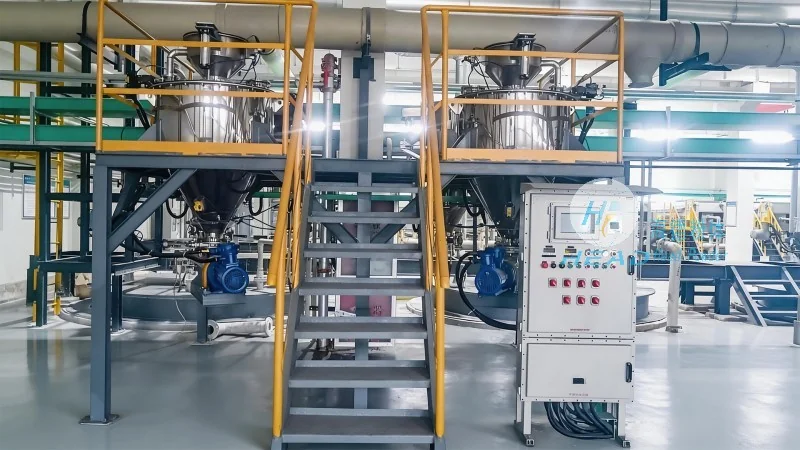
Advantages and Applications
Our dilute phase material pneumatic conveying equipment offers several advantages over traditional mechanical conveying methods. These include reduced product contamination, lower maintenance costs, and the ability to handle a wide range of materials, from fine powders to coarse granules. The system is particularly suitable for applications where product purity is critical, such as in the food and pharmaceutical industries. Additionally, the equipment can be integrated with other processing units, such as mixers, classifiers, or packaging machines, to form a complete production line. The flexibility of the system allows for easy adjustment of the conveying rate and distance, making it adaptable to various production requirements.
Customization and Technical Support
At headpowder, we understand that each customer has unique material handling needs. Therefore, we offer customized solutions tailored to specific applications. Our engineering team works closely with clients to design systems that meet their operational requirements, including material characteristics, conveying distance, and environmental regulations. We provide comprehensive technical support, from system design and installation to maintenance and troubleshooting. Our goal is to deliver reliable and efficient equipment that enhances the productivity and safety of our clients' operations.




