For industrial applications requiring efficient and reliable powder handling, the pneumatic conveying system stands as a crucial technology. This system, developed by Shandong HeadPowder Engineering Co., Ltd., is designed to transport bulk powders through a pipeline using air or other gas as the conveying medium. The following sections will detail the operation process and working principle of such a system, highlighting its key components and operational mechanisms.
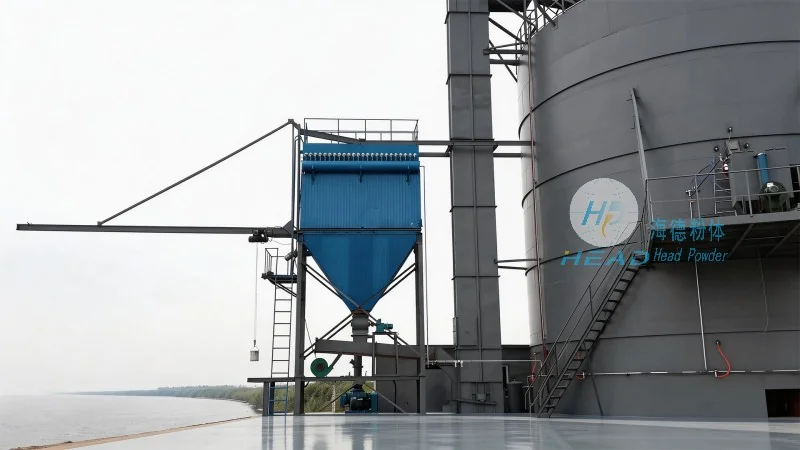
Overview of the Powder Pneumatic Conveying System
The powder pneumatic conveying system is a closed-loop or open-loop system that moves dry powders from a source to a destination. It typically consists of a hopper, a feeder, a conveying line, a separator, and a receiver. The system's design ensures minimal product degradation, low maintenance, and high efficiency in material transport. Shandong HeadPowder Engineering Co., Ltd. specializes in manufacturing and supplying customized pneumatic conveying solutions tailored to various industrial needs, from small-scale operations to large-scale production facilities.
Key Components and Their Functions
1. Hopper: The hopper is the storage vessel where the bulk powder is held before being fed into the system. It is designed with a conical or rectangular shape to facilitate uniform material flow and prevent clogging. The hopper is equipped with a discharge valve or a rotary valve to control the flow rate of the powder into the feeder.
2. Feeder: The feeder is responsible for accurately metering the powder and delivering it to the conveying line. Common types include rotary valves, star feeders, and screw feeders. The feeder ensures a consistent flow rate, which is critical for maintaining system stability and preventing pressure fluctuations.
3. Conveying Line: The conveying line is the main pipeline through which the powder and air mixture travels. It is usually made of stainless steel or other corrosion-resistant materials to handle various powder types and prevent material buildup. The line may include bends, elbows, and expansion joints to accommodate changes in direction and pressure.
4. Separator: The separator is a critical component that separates the powder from the air at the receiving end. It works by reducing the air velocity, causing the powder to fall out due to gravity. Separators can be cyclonic, bag, or electrostatic types, depending on the powder characteristics and system requirements.
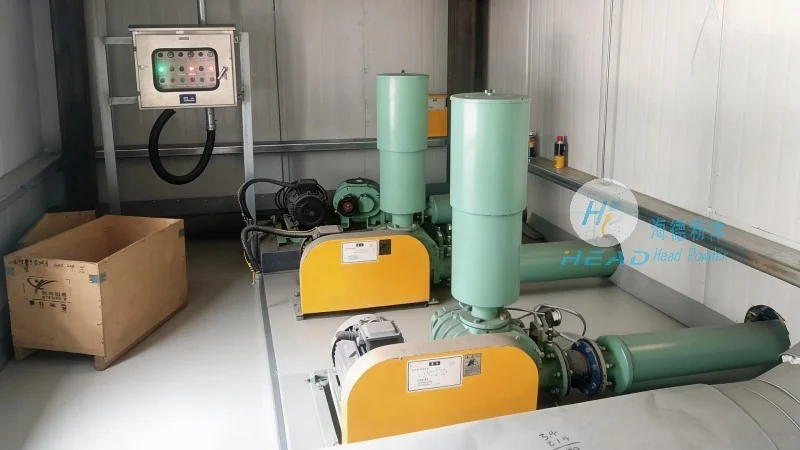
5. Receiver: The receiver is the final storage vessel where the conveyed powder is collected. It is designed to hold the processed material and may include a discharge valve for downstream processing or packaging.
Operation Process of the Pneumatic Conveying System
The operation process of a powder pneumatic conveying system involves several sequential steps to ensure efficient material transport. The process typically starts with the powder being loaded into the hopper. The feeder then meters the powder and feeds it into the conveying line, where it is mixed with compressed air. The air-powder mixture travels through the pipeline to the separator, where the powder is separated from the air. The separated powder falls into the receiver, while the air is either discharged to the atmosphere or recirculated back to the system.
During operation, the system maintains a consistent pressure and flow rate to ensure smooth material transport. The control system monitors key parameters such as pressure, flow rate, and temperature to prevent system failures and optimize performance. Shandong HeadPowder Engineering Co., Ltd. integrates advanced control systems into their pneumatic conveying solutions to enhance operational efficiency and reliability.
Working Principle of the Pneumatic Conveying System
The working principle of a powder pneumatic conveying system is based on the interaction between the powder particles and the conveying air. There are two main types of pneumatic conveying systems: pressure and vacuum systems. The pressure system operates by injecting compressed air into the conveying line at the discharge end, while the vacuum system uses a vacuum pump to create a negative pressure at the inlet end.
In a pressure system, the compressed air is introduced into the hopper or the feeder, creating a pressure differential that forces the powder into the conveying line. The air velocity is maintained above the minimum fluidization velocity of the powder to prevent particle settling and ensure stable transport. The separator then separates the powder from the air by reducing the air velocity, allowing the powder to settle due to gravity.
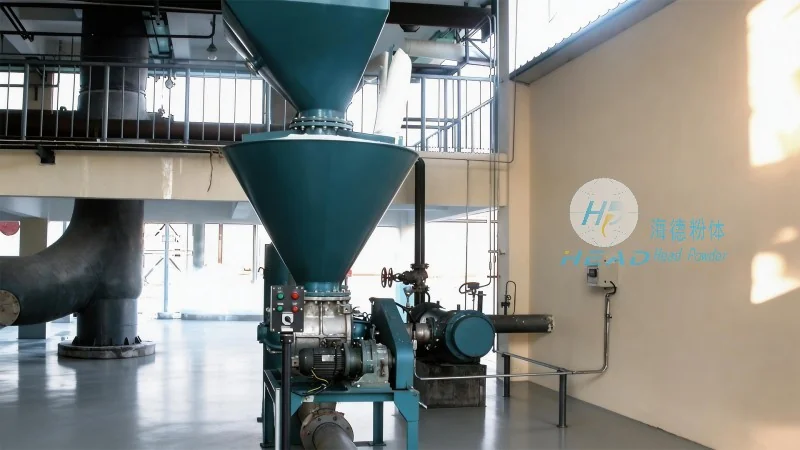
In a vacuum system, the vacuum pump creates a low pressure at the inlet, drawing the powder from the hopper into the conveying line. The air-powder mixture is then transported to the receiver, where the powder is separated from the air using a separator. The vacuum system is often used for long-distance or high-rise applications where pressure systems may not be feasible.
Advantages of the Powder Pneumatic Conveying System
Shandong HeadPowder Engineering Co., Ltd.'s pneumatic conveying systems offer several advantages over traditional mechanical conveying methods. These include:
1. Reduced Product Contamination: The closed-loop system minimizes exposure to external contaminants, ensuring the purity of the conveyed powder.
2. Low Maintenance: The system has fewer moving parts compared to mechanical conveyors, reducing the need for frequent maintenance and increasing operational uptime.
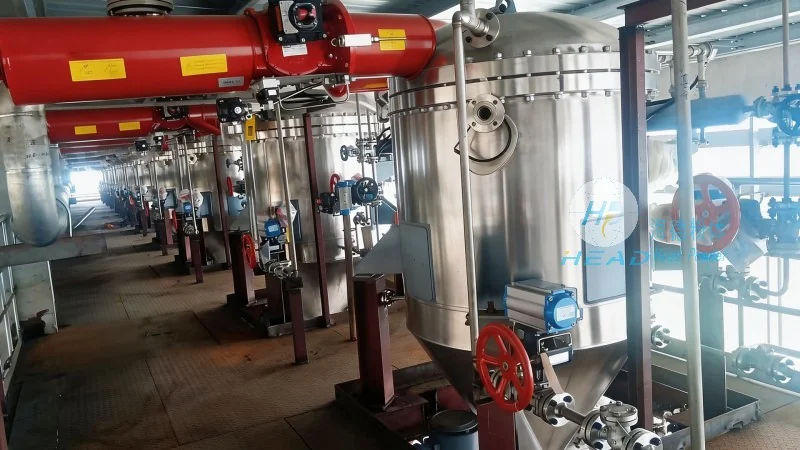
3. Flexibility in Layout: The system can be easily integrated into existing industrial layouts, allowing for flexible material transport paths.
4. Energy Efficiency: Advanced designs and control systems optimize energy consumption, reducing operational costs.
5. Scalability: The system can be scaled to handle various material volumes and flow rates, making it suitable for a wide range of industrial applications.
Customization and Application Examples
Shandong HeadPowder Engineering Co., Ltd. provides customized pneumatic conveying solutions tailored to specific industrial requirements. The company's engineers work closely with clients to understand their material characteristics, processing needs, and operational constraints to design a system that meets their unique demands.
For example, in the food industry, the system is used to transport dry ingredients such as flour, sugar, and spices, ensuring minimal product degradation and maintaining hygiene standards. In the chemical industry, it is used to transport powders like pigments, catalysts, and reagents, where contamination control is critical. In the pharmaceutical industry, the system is used to transport active pharmaceutical ingredients (APIs) and excipients, where strict quality control is required.




