When it comes to transporting limestone, selecting the right method is crucial for efficiency, cost-effectiveness, and operational reliability. Limestone, a widely used material in industries such as construction, cement production, and chemical manufacturing, requires specialized handling due to its bulk and sometimes abrasive nature. Among the various conveying options available, pneumatic conveying stands out as a versatile and efficient solution. This article explores common limestone conveying methods, with a focus on the advantages and applications of limestone pneumatic conveying systems.
Understanding Limestone and Its Conveying Requirements
Limestone is a sedimentary rock composed primarily of calcium carbonate (CaCO₃). It is commonly used as a raw material in cement production, as a flux in steelmaking, and in various construction applications. The physical properties of limestone, including its particle size, density, and moisture content, influence the choice of conveying method. For instance, limestone can be in the form of crushed stone, powder, or slurry, each requiring different handling techniques. Traditional methods like belt conveyors or bucket elevators may struggle with fine limestone powders, as the material can easily fall through the belt or cause excessive wear. This is where pneumatic conveying systems offer a superior alternative.
Common Limestone Conveying Methods
Several methods are employed for limestone transportation, each with its own set of advantages and limitations. The primary options include:
Belt Conveyors
Belt conveyors are one of the most common bulk material handling systems. They use a continuous belt to transport limestone from one location to another. This method is particularly effective for transporting larger limestone pieces or bulk quantities over short to medium distances. Belt conveyors are known for their simplicity, low maintenance, and ability to handle heavy loads. However, they have limitations when dealing with fine limestone powders, as the material can easily fall through the belt or cause excessive wear. Additionally, belt conveyors require significant space and may not be suitable for vertical or high-angle incline transport.
Bucket Elevators
Bucket elevators are another traditional method for vertical or inclined limestone transport. These systems consist of a series of buckets attached to a chain or belt that moves vertically. The buckets scoop up limestone from a hopper and discharge it at the top. Bucket elevators are efficient for vertical transport and can handle a wide range of limestone sizes. They are commonly used in cement plants and other industrial facilities where vertical movement is necessary. However, they can be noisy and may experience wear on the buckets and chains over time. Moreover, bucket elevators are not ideal for transporting fine powders, as the material can escape through the buckets or cause blockages.
Pneumatic Conveying Systems
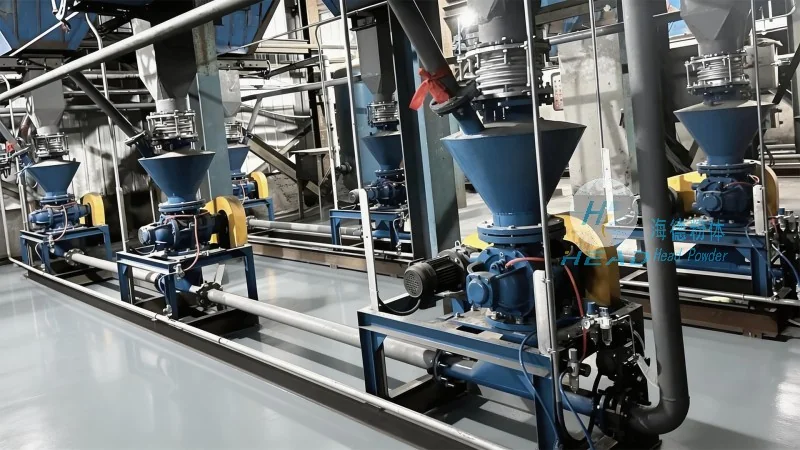
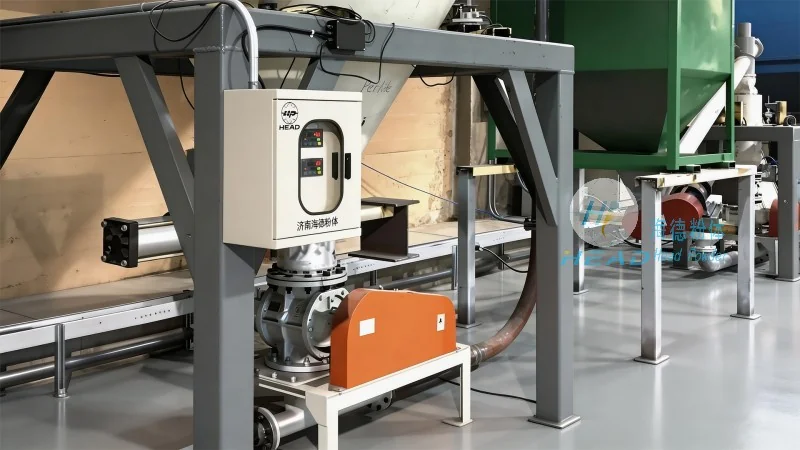
Pneumatic conveying, also known as air conveying, is a method that uses air pressure or vacuum to transport limestone particles through a pipeline. This technology offers several advantages over traditional methods, making it particularly suitable for limestone applications. Pneumatic systems can handle fine powders, slurries, and even wet limestone without degradation. They are also capable of vertical and horizontal transport, providing flexibility in system design. The key components of a limestone pneumatic conveying system include a blower or vacuum pump, a hopper for material storage, a conveying line, and a receiver for the material at the destination. The system can operate in either positive pressure (blowing air) or negative pressure (suction) modes, depending on the application requirements.
Advantages of Limestone Pneumatic Conveying
Compared to belt conveyors and bucket elevators, limestone pneumatic conveying systems offer several key benefits. First, they provide a closed system, which helps in controlling dust and preventing material contamination. This is particularly important for limestone used in food or pharmaceutical industries, where purity is critical. Second, pneumatic systems are highly efficient in terms of energy consumption, especially when transporting fine powders over long distances. They can achieve higher throughput with lower operational costs compared to mechanical systems. Third, the closed pipeline design reduces the risk of material spillage and environmental contamination, making it more environmentally friendly. Additionally, pneumatic conveying systems are relatively compact and can be easily integrated into existing industrial facilities, minimizing space requirements.
Applications of Limestone Pneumatic Conveying
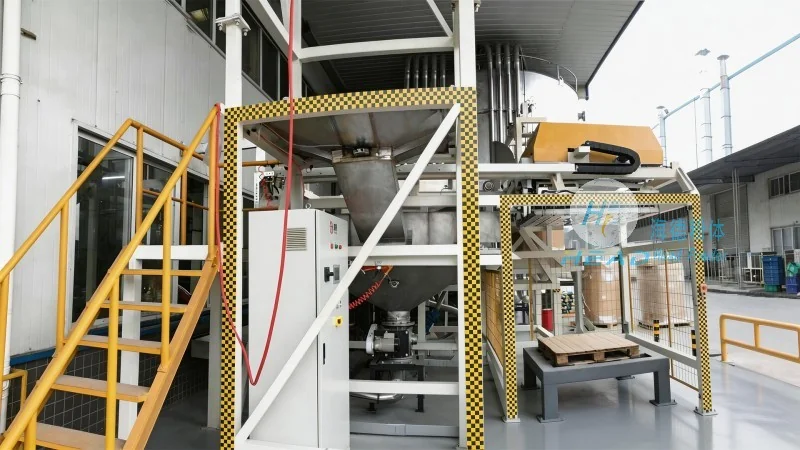
Limestone pneumatic conveying systems are widely used in various industries due to their versatility. In the cement industry, these systems are used to transport limestone from storage silos to the raw mill or kiln. The ability to handle fine limestone powders ensures consistent quality in cement production. In the chemical industry, pneumatic conveying is used to transport limestone for flue gas desulfurization (FGD) systems, where limestone is used to neutralize sulfur dioxide emissions. The systems can also be used in the construction industry for transporting limestone to job sites, especially in areas with limited access or difficult terrain. Furthermore, in power plants, limestone is used as a sorbent in flue gas treatment, and pneumatic conveying systems ensure efficient and reliable transport of the material.
Choosing the Right Limestone Conveying System
When selecting a limestone conveying system, several factors need to be considered. The first is the material characteristics, including particle size, moisture content, and bulk density. Fine powders and high moisture content may require a more robust system, such as a high-pressure pneumatic conveyor. The second factor is the distance and layout of the transport route, including vertical and horizontal components. For long distances or complex layouts, pneumatic systems are often more suitable than mechanical systems. The third factor is the operational environment, including dust control and environmental regulations. If the facility is in a sensitive area or has strict dust emission limits, a closed pneumatic system is the preferred choice. Finally, the budget and maintenance requirements should be considered. While pneumatic systems may have higher initial costs, their lower maintenance and operational costs over time make them a cost-effective solution.
Conclusion
In conclusion, limestone conveying methods vary based on the specific requirements of the application. Belt conveyors and bucket elevators are effective for certain scenarios, particularly when dealing with larger limestone pieces or simple transport needs. However, for applications involving fine powders, vertical transport, or stringent dust control, limestone pneumatic conveying systems offer superior performance. The advantages of closed systems, energy efficiency, and flexibility make pneumatic conveying a preferred choice in many industries. As the demand for limestone continues to grow, the adoption of advanced conveying technologies like pneumatic systems will likely increase, ensuring efficient and reliable material handling. For businesses looking to optimize their limestone transport operations, considering a pneumatic conveying system from a reputable supplier like Shandong HeadPowder Engineering Co., Ltd. can provide significant benefits in terms of efficiency, cost savings, and operational reliability.




