For manufacturers in the lithium battery industry, the efficient and safe transportation of mineral powders is a critical operational challenge. Different conveying methods are employed based on specific production requirements, material characteristics, and operational environments. This article provides a detailed comparison of common lithium battery mineral powder conveying methods, highlighting their advantages and disadvantages to help industry professionals make informed decisions. Shandong HeadPowder Engineering Co., Ltd., a leading provider of bulk material handling solutions based in Shandong, China, offers expertise in selecting and implementing the most suitable conveying systems for lithium battery production facilities.
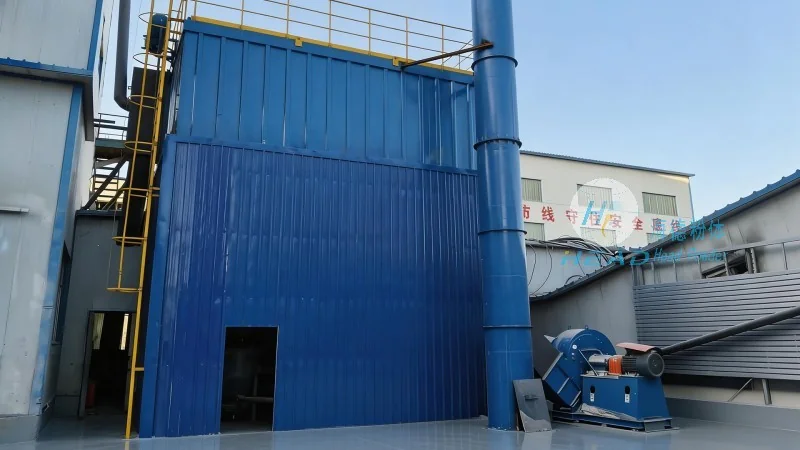
Screw Conveyors: Traditional and Reliable
Screw conveyors, also known as auger conveyors, are one of the most widely used equipment for transporting bulk materials, including lithium battery mineral powders. These systems consist of a rotating screw (auger) inside a U-shaped or tubular housing. The screw rotates, pushing the material forward through the housing. The design is simple, making it easy to install and maintain. Screw conveyors are particularly effective for short to medium-distance transport, with a typical range of 5 to 30 meters. They are also capable of handling powders with a moderate to high bulk density, such as lithium carbonate or lithium hydroxide powders. One of the key advantages of screw conveyors is their ability to operate in a fully enclosed environment, which helps prevent dust leakage and contamination. This is crucial for maintaining a clean and safe working environment in lithium battery production facilities. Additionally, screw conveyors can be easily integrated with other processing equipment, such as mixers or classifiers, due to their compact design and straightforward control systems.
However, screw conveyors have several limitations that must be considered. The primary drawback is their relatively low conveying capacity compared to other methods, especially for large-scale production lines. The screw and housing are prone to wear and tear, particularly when handling abrasive or sticky powders, leading to increased maintenance costs and potential downtime. Another limitation is the restriction on the angle of inclination; they are generally limited to a maximum of 20 degrees, which restricts their use in vertical or steeply inclined applications. Furthermore, the design may not be suitable for powders with high moisture content or those that tend to agglomerate, as the screw can cause blockages if the material becomes sticky.
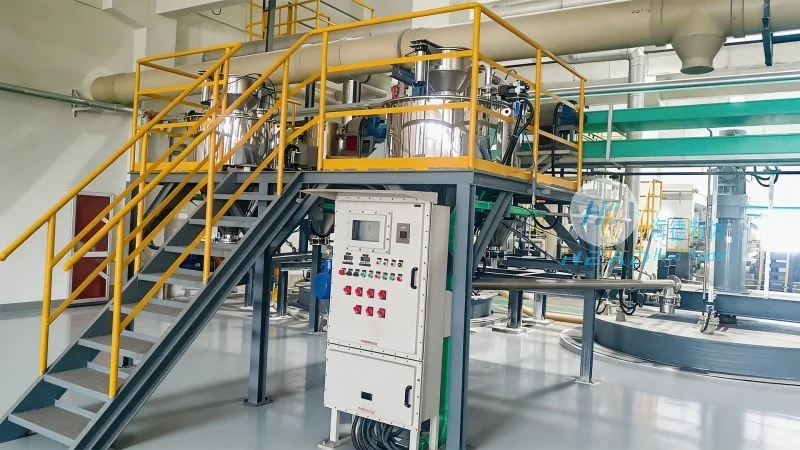
Pneumatic Conveying Systems: High Efficiency and Versatility
Pneumatic conveying systems use air or other gases to transport mineral powders through a pipeline network. These systems can be categorized into two main types: pressure and vacuum. Pressure systems use compressed air to push the material forward, while vacuum systems use a vacuum to draw the material into the pipeline. Pneumatic conveying offers significant advantages in terms of flexibility and efficiency. It can transport powders over long distances, up to several hundred meters, without the need for multiple transfer points. The enclosed pipeline design ensures that dust is contained and does not spread into the environment, which is essential for meeting environmental regulations and maintaining a clean production area. Pneumatic systems are also highly automated, with the ability to integrate with sensors and control systems for real-time monitoring and adjustment of flow rates. This level of automation improves operational efficiency and reduces the risk of human error.
Despite these benefits, pneumatic conveying systems have notable disadvantages that affect their adoption. The initial investment cost is generally higher than that of screw or belt conveyors, as they require specialized components such as air compressors, filters, and control valves. The maintenance of these systems is more complex, as they involve regular checks of air pressure, filter cleanliness, and pipeline integrity. Additionally, the performance of pneumatic conveying is highly dependent on the physical properties of the powder, such as particle size, density, and moisture content. Powders that are too fine or have high moisture content may cause clogging in the pipeline, leading to system failures. The energy consumption of pneumatic systems is also higher compared to other methods, as they require continuous air flow to maintain the conveying process.
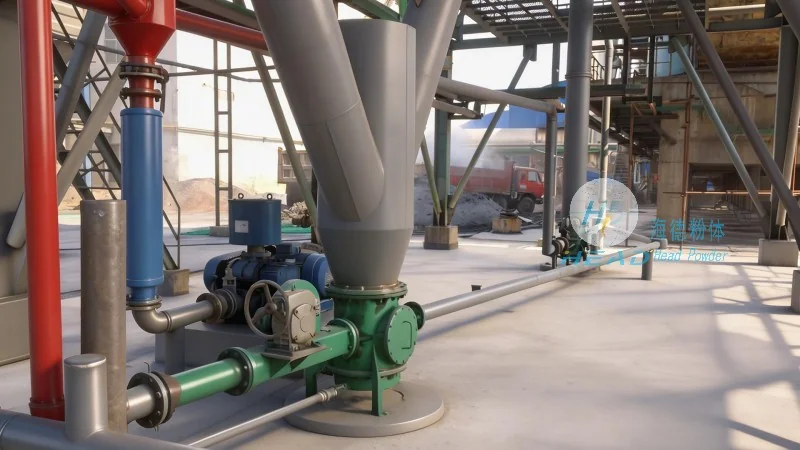
Belt Conveyors: Large Capacity and Long-Distance Transport
Belt conveyors are widely used in bulk material handling for their ability to transport large quantities of material over long distances. In the context of lithium battery mineral powders, belt conveyors are particularly suitable for applications requiring high throughput and extended transport distances, such as from raw material storage to processing lines or from processing to packaging areas. The system consists of a continuous belt that moves over rollers or idlers, with the material placed on the belt and carried along its path. Belt conveyors can handle a wide range of material types, including coarse or fine powders, and can transport materials over distances of up to several kilometers. One of the primary advantages of belt conveyors is their high conveying capacity, which can reach several hundred tons per hour, making them ideal for large-scale production facilities. The design is also relatively simple and robust, with minimal moving parts, which reduces the risk of mechanical failure and simplifies maintenance. Belt conveyors are also cost-effective in the long run, as they have a lower initial investment compared to pneumatic systems and require less energy per unit of material transported.
However, belt conveyors have significant drawbacks that limit their use in certain applications. The most notable limitation is the large footprint required for the system, as the conveyor belt and supporting structure need ample space. This can be a challenge in facilities with limited floor area or in urban settings where space is at a premium. Belt conveyors are also susceptible to environmental factors, such as dust, moisture, and temperature fluctuations, which can affect the performance and longevity of the belt and rollers. For example, exposure to moisture can cause the belt to stretch or deform, while high temperatures can reduce the belt's tensile strength. Additionally, belt conveyors are not suitable for vertical transport or steep inclines, as the belt may slip or the material may fall off. The enclosed design is also less effective at containing dust compared to screw or pneumatic systems, which can lead to environmental contamination and health hazards.




