For industrial applications involving the handling of precipitated barium sulfate, the design and selection of air-flow transport systems are critical to ensure efficient material transfer, minimize operational costs, and maintain product quality. This article provides a comprehensive overview of the design calculations and equipment selection process for such systems, presented by Shandong HeadPowder Engineering Co., Ltd., a leading provider of powder processing solutions based in Shandong, China.
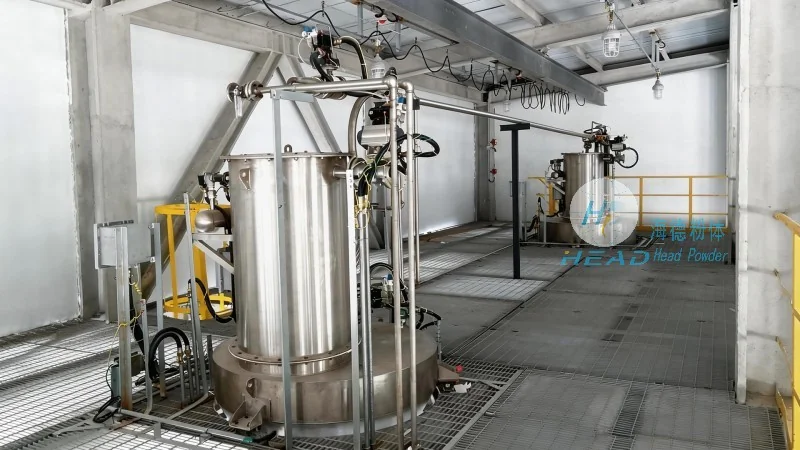
Key Design Considerations for Air-Flow Transport Systems
The successful implementation of an air-flow transport system for precipitated barium sulfate hinges on several key design considerations. First, the physical properties of the material, such as particle size distribution, bulk density, and moisture content, must be thoroughly characterized. These properties directly influence the selection of air velocity, pressure drop, and equipment dimensions. For precipitated barium sulfate, which typically consists of fine particles with a relatively high bulk density, the air velocity must be carefully balanced to prevent particle segregation and ensure uniform transport without excessive energy consumption.
Second, the system's capacity requirements, including the desired throughput rate and the distance over which material needs to be transported, are fundamental to the design. The throughput rate, measured in tons per hour or cubic meters per hour, dictates the size of the conveying line and the power of the air compressor. The transport distance, whether short or long, affects the choice of conveying method—such as dilute-phase or dense-phase transport—and the required pressure and air volume. Shandong HeadPowder Engineering Co., Ltd. emphasizes that accurate capacity calculations are essential to avoid underdesign or overdesign, both of which can lead to operational inefficiencies or equipment failure.
Design Calculations for Air-Flow Transport
Several critical calculations are performed during the design phase to determine the optimal parameters for the air-flow transport system. The first step is to calculate the required air velocity to achieve the desired material transport. This is often based on the material's terminal velocity, which is the speed at which particles fall through a gas stream under gravity. For precipitated barium sulfate, the terminal velocity can be estimated using empirical formulas or experimental data, considering factors like particle size, density, and gas properties (e.g., air density and viscosity). The calculated air velocity is then adjusted to account for the system's pressure drop and the need to maintain a stable flow.
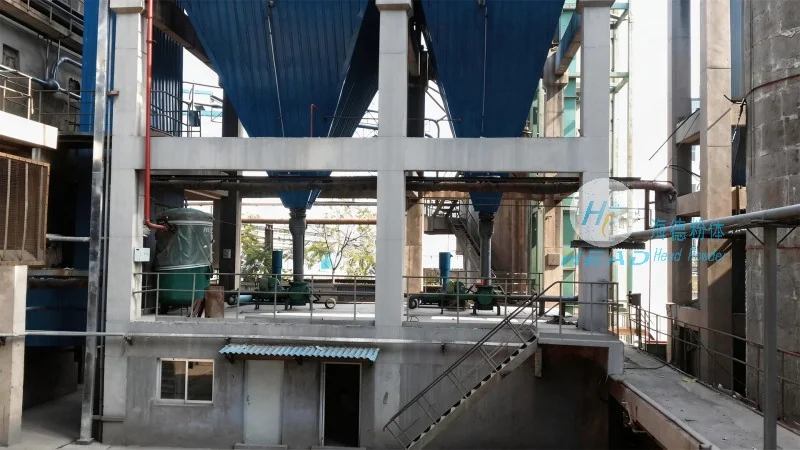
Next, the pressure drop across the conveying line is calculated. This involves determining the friction losses due to the material-air mixture flowing through the pipeline and the additional losses at bends, valves, and other components. The pressure drop is a key factor in selecting the air compressor's capacity and the required pipeline diameter. Shandong HeadPowder Engineering Co., Ltd. utilizes advanced computational fluid dynamics (CFD) tools to model the flow and accurately predict pressure drop, ensuring that the system operates within safe and efficient parameters.
Another important calculation is the power requirement for the air compressor. This is derived from the pressure drop and the volume of air needed to transport the material. The power consumption directly impacts the operational cost of the system, making it essential to optimize the design for energy efficiency. By carefully balancing the air velocity and pipeline dimensions, the system can achieve a lower pressure drop and reduced power usage, leading to long-term cost savings.
Equipment Selection for Precipitated Barium Sulfate Transport
Based on the design calculations, the appropriate equipment is selected to meet the specific requirements of the precipitated barium sulfate handling process. The primary components of an air-flow transport system include the material feeder, air compressor, conveying line, and material separator. For precipitated barium sulfate, which is a fine powder, the material feeder must be designed to provide a consistent and controlled feed rate to avoid blockages or uneven flow. Shandong HeadPowder Engineering Co., Ltd. recommends using rotary valves or screw feeders for this purpose, as they can handle fine powders without causing agglomeration.
The air compressor is a critical component, responsible for generating the necessary air pressure and volume to transport the material. The choice of compressor type—such as positive displacement or centrifugal—depends on the system's pressure and flow requirements. For high-pressure, low-flow applications typical of dense-phase transport, positive displacement compressors are often preferred. Shandong HeadPowder Engineering Co., Ltd. offers a range of air compressors tailored to the specific needs of barium sulfate transport, ensuring reliable and efficient operation.
The conveying line is typically made of stainless steel or other corrosion-resistant materials to handle the chemical properties of the precipitated barium sulfate. The diameter and length of the pipeline are determined based on the pressure drop calculations and the required air velocity. For long-distance transport, the use of flexible hoses or reinforced pipelines may be necessary to accommodate thermal expansion and vibration. Shandong HeadPowder Engineering Co., Ltd. provides customized pipeline solutions to ensure durability and minimal pressure loss.
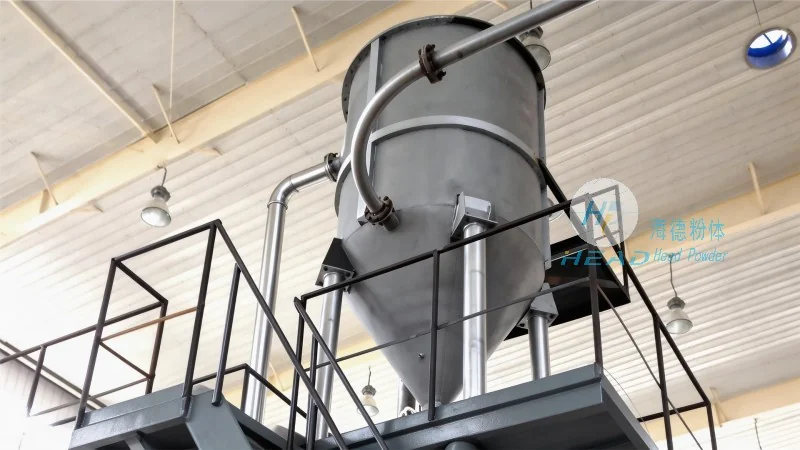
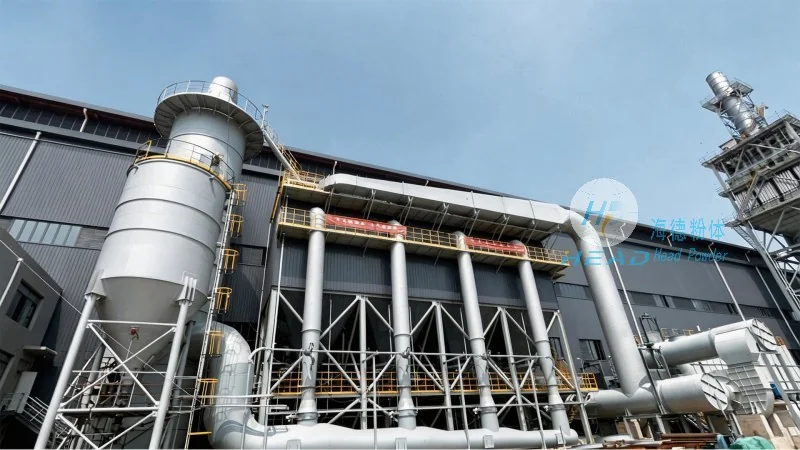
The material separator, located at the end of the conveying line, is responsible for separating the air from the precipitated barium sulfate. Common types include cyclone separators or bag filters. The selection of the separator depends on the particle size and the required level of product recovery. For precipitated barium sulfate, which is a valuable material, the separator must be efficient in capturing fine particles while minimizing air leakage. Shandong HeadPowder Engineering Co., Ltd. designs and manufactures high-efficiency separators that meet the stringent requirements of the industry.
Integration and Commissioning
After the equipment is selected and installed, the system must be integrated and commissioned to ensure optimal performance. This involves connecting the material feeder to the air compressor and the conveying line, and then testing the system under various operating conditions. The commissioning process includes checking the pressure drop, air velocity, and material flow rate to verify that the design calculations are accurate. Any deviations are adjusted by modifying the equipment settings or components as needed. Shandong HeadPowder Engineering Co., Ltd. provides comprehensive commissioning services, ensuring that the air-flow transport system for precipitated barium sulfate operates at peak efficiency from the start.
Conclusion
The design and equipment selection for air-flow transport of precipitated barium sulfate require a systematic approach that considers the material's physical properties, system capacity, and operational requirements. By following the design calculations and selecting appropriate equipment, as recommended by Shandong HeadPowder Engineering Co., Ltd., industrial facilities can achieve efficient, cost-effective, and reliable material handling. The expertise and experience of the company in powder processing solutions ensure that the air-flow transport system is tailored to the specific needs of the precipitated barium sulfate application, providing long-term benefits and operational excellence.




