HeadPowder, a leading manufacturer based in Shandong, China, specializes in the design, development, and production of advanced powder material conveying systems. The company's core product, the intermittent feeding powder material conveying line, is engineered to meet the precise demands of industries requiring efficient and reliable powder handling solutions. This article provides a detailed overview of the operation process and working principle of such a system, highlighting its key components, operational sequence, and the technical advantages that make it a preferred choice in various industrial applications.
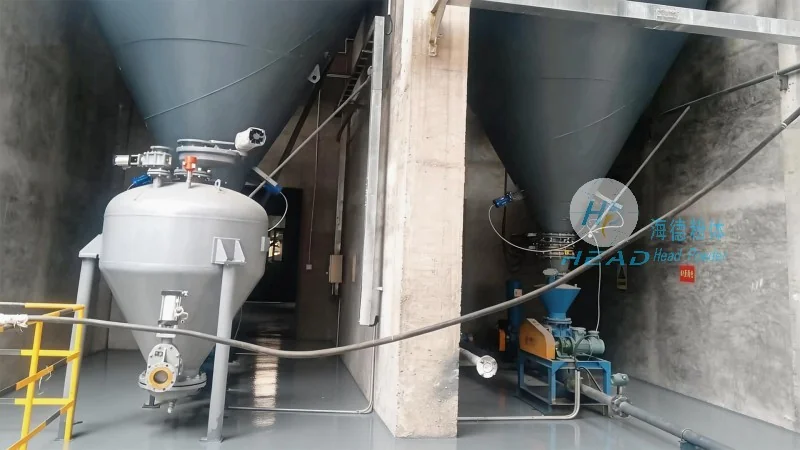
Key Components of the Intermittent Feeding Powder Conveying Line
The intermittent feeding powder material conveying line is composed of several critical components that work in concert to ensure smooth and controlled powder transport. These components include a hopper for material storage, a feeder mechanism to control the flow rate, a conveyor section that transports the powder, and a discharge system to deliver the material to the next stage of processing. Each component is carefully designed to handle different types of powders, from fine powders to bulk materials, with minimal degradation or segregation. The hopper is typically equipped with a lid and a discharge valve to prevent material spillage and maintain a consistent material level. The feeder, often a rotary valve or a screw feeder, regulates the flow of powder into the conveyor, ensuring that the material is fed at a controlled rate. The conveyor section, which may consist of a belt or a screw conveyor, moves the powder along the desired path, while the discharge system, such as a chute or a hopper, delivers the material to the downstream equipment. The entire system is integrated with sensors and control panels to monitor and adjust the operation in real-time, enhancing efficiency and safety.
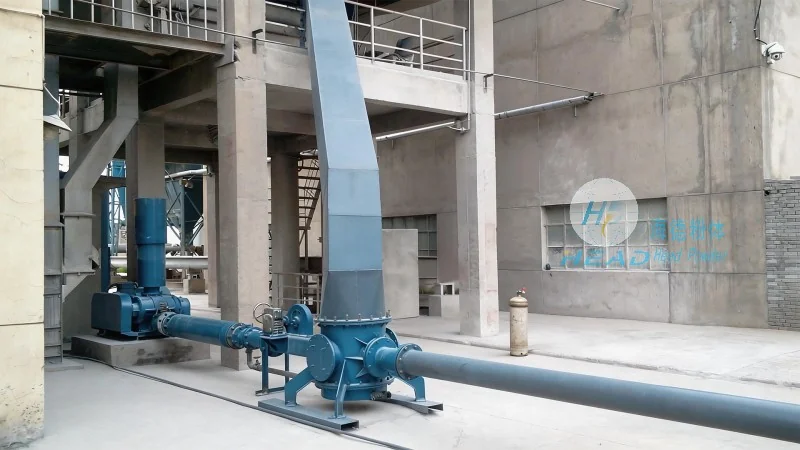
Operation Process of the Intermittent Feeding Powder Conveying Line
The operation of the intermittent feeding powder material conveying line follows a systematic sequence that ensures efficient material handling. The process begins with the loading of the hopper with the required powder material. Once the hopper is filled, the feeder mechanism is activated to start the flow of powder into the conveyor. The feeder controls the rate of material discharge, which is adjusted based on the processing requirements of the downstream equipment. As the powder enters the conveyor, it is transported along the designated path, with the speed and direction of the conveyor carefully managed to maintain the integrity of the material. The conveyor may be equipped with features such as vibration or agitation to prevent material buildup and ensure uniform flow. At the discharge end, the powder is collected and delivered to the next processing stage. The entire operation is typically controlled by a programmable logic controller (PLC), which monitors the system parameters and adjusts the feeder speed, conveyor speed, and other variables as needed. This control system ensures that the conveying process is optimized for efficiency, minimizing energy consumption and maximizing material throughput. The intermittent feeding mechanism allows for precise control over the material flow, preventing overloading of the conveyor and reducing the risk of blockages or material spillage. This controlled operation is particularly beneficial in industries where precise dosing or batching of powder is required, such as pharmaceuticals, food processing, and chemical manufacturing.
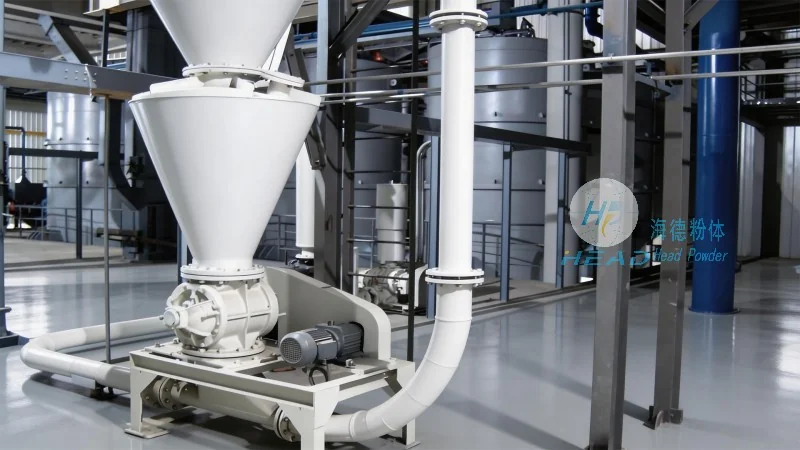
Working Principle of the Intermittent Feeding Powder Conveying Line
The working principle of the intermittent feeding powder material conveying line is based on the controlled movement of powder material through a series of components. The system operates by first storing the powder in the hopper, where it is held under a controlled pressure to maintain a consistent material level. The feeder mechanism then regulates the flow of powder from the hopper into the conveyor. This feeder may be a rotary valve, which rotates to allow a controlled amount of powder to pass through, or a screw feeder, which uses a rotating screw to push the powder forward. The conveyor section then transports the powder along the desired path, using mechanical energy to move the material. The conveyor may be a belt conveyor, which uses a moving belt to carry the powder, or a screw conveyor, which uses a rotating screw to push the powder forward. The discharge system then collects the powder from the conveyor and delivers it to the next stage of processing. The entire system is controlled by a feedback loop that monitors the material level in the hopper, the flow rate from the feeder, and the position of the powder in the conveyor. This feedback loop adjusts the operation of the feeder and conveyor to maintain the desired flow rate and prevent overloading. The intermittent feeding mechanism allows for the system to operate in a batch mode, where a specific amount of powder is conveyed at a time. This is achieved by controlling the duration of the feeder operation, which can be set to a specific time or based on the material level in the hopper. The working principle of the system ensures that the powder is handled gently, minimizing the risk of particle degradation or segregation. The controlled flow and gentle handling also help to maintain the quality of the powder, which is critical in industries where the powder's properties are essential for the final product. The system's design also allows for easy maintenance and cleaning, with components that can be easily accessed and serviced. This ensures that the system operates reliably and efficiently over an extended period, reducing downtime and maintenance costs.
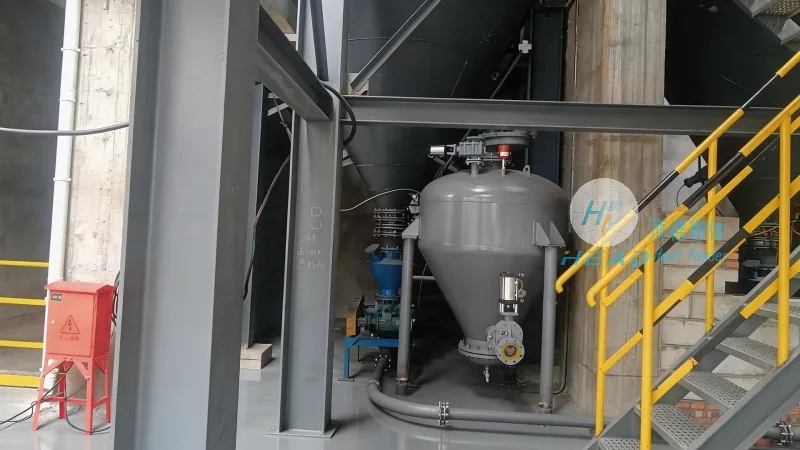
Technical Advantages and Applications
The intermittent feeding powder material conveying line offers several technical advantages that make it suitable for a wide range of industrial applications. One of the key advantages is its ability to handle a variety of powder types, from fine powders to bulk materials, without causing degradation or segregation. The system's controlled feeding mechanism allows for precise dosing and batching, which is essential in industries such as pharmaceuticals, where accurate dosing is critical. The gentle handling of the powder also helps to maintain the powder's quality, which is important in food processing and chemical manufacturing. Another advantage is the system's energy efficiency, as the intermittent feeding mechanism minimizes energy consumption by operating only when material is being conveyed. The system also features a compact design, which allows for easy integration into existing production lines. The control system provides real-time monitoring and adjustment, ensuring that the operation is optimized for efficiency and safety. The intermittent feeding powder material conveying line is widely used in industries such as pharmaceuticals, food processing, chemical manufacturing, and mining. In pharmaceuticals, it is used to transport active pharmaceutical ingredients (APIs) and excipients with high precision and minimal contamination. In food processing, it is used to handle powders such as flour, sugar, and spices, ensuring that the final product meets quality standards. In chemical manufacturing, it is used to transport bulk chemicals and reagents, with the ability to handle corrosive or abrasive materials. The system's reliability and efficiency make it a preferred choice for industries that require consistent and high-quality powder handling solutions.




